Leafy Quotes
Recently added
The newest book quotes in the Leafy Quotes collection — passages readers have just added, each with its author, book and the page it came from.
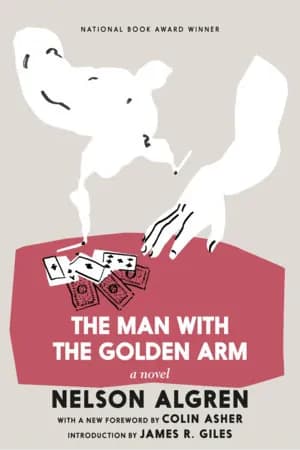
He was simply a man who didn't know what to do with himself, for he didn't yet know who he was. It's sometimes easier to find a job than to find oneself and John hadn't yet gotten around to doing the first. How could he know who he was? Some find themselves through joy, some through suffering and some through toil. Johnny had till now tried nothing but whisky. A process which left him feeling like somebody new every day. / [...] He was many men and no man at all. He was a hysterical little bundle of possibilities that could never come true.
‘He was just so afraid he wasn't good enough for me, that's all his braggin' was,’ Violet explained. ‘He didn't think he was good enough for anybody, he was tryin' so hard to show he was somebody. So it was up to me to show him he was somebody all by hisself – that's the first thing a woman got to do for a man. 'N of course there's no sense tryin' to prove somethin' like that standin' up. The least a girl owes to herself is to be comfortable about it.’
For those nearest our hearts are the ones most likely to tread upon them. What she could not gain through love she sought to possess by mockery. He was too dear to her: into everything he did she must read some secret hatred of herself.
‘Lies are just a poor man's pennies,’ Violet told her.
The great, secret and special American guilt of owning nothing, nothing at all, in the one land where ownership and virtue are one. Guilt that lay crouched behind every billboard which gave each man his commandments; for each man here had failed the billboards all down the line. No Ford in this one's future nor ever any place all his own.
‘She got too big a heart, that girl,’ Antek explained of Molly when John had left. ‘A guy can walk into her heart with army boots on.’
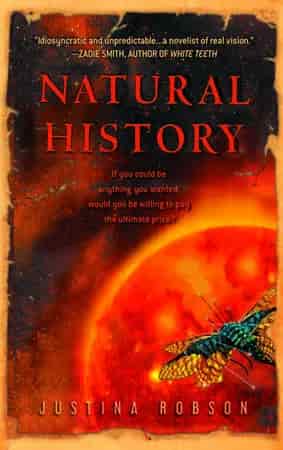
What’s the point of history, if it has nothing to say to the present?
p. 56
Cages. Consider a birdcage. If you look very closely at just one wire in the cage, you cannot see the other wires. If your conception of what is before you is determined by this myopic focus, you could look at that one wire, up and down the length of it, and be unable to see why a bird would not just fly around the wire any time it wanted to go somewhere. Furthermore, even if, one day at a time, you myopically inspected each wire, you still could not see why a bird would have trouble going past the wires to get anywhere. There is no physical property of any one wire, nothing that the closest scrutiny could discover, that will reveal how a bird could be inhibited or harmed by it except in the most accidental way. It is only when you step back, stop looking at the wires one by one, microscopically, and take a macroscopic view of the whole cage, that you can see why the bird does not go anywhere; and then you will see it in a moment. It will require no great subtlety of mental powers. It is perfectly obvious that the bird is surrounded by a network of systematically related barriers, no one of which would be the least hindrance to its flight, but which, by their relations to each other, are as confining as the solid walls of a dungeon.
p. 5
The gun is a consequence of our minds. If we were in love with peace, and had no will to destroy each other, there would be no gun.
p. 291
Do you really want to kill a little boy? No matter what your so-called God tells you, isn’t it wrong? When your beliefs tell you to murder, doesn’t a voice inside you tell you it is wrong?
Right and wrong doesn’t come from God. It’s inside us. And we know it. And even if God appears right in front of us, and tells us to our faces to murder, it’s still wrong.
It is the rare person who can stand aside and observe that our minds and identities are largely constructs of our social order, that we are abstract and arbitrary collections of ideas that resemble dusty archives in the galleries of a museum, visited by nobody, and maintained by a series of those insensible robots that are our habits.
p. 254