 Leafy Quotes
Recently added
The newest book quotes in the Leafy Quotes collection — passages readers have just added, each with its author, book and the page it came from.
As the days went slowly by he came to see that Christianity and the denial of Christianity after all met as much as any other extremes do; it was a fight about names — not about things; practically the Catholic Church|Church of Rome, the Church of England, and the freethinker have the same ideal standard and meet in the gentleman; for he is the most perfect saint who is the most perfect gentleman. Then he saw also that it matters little what profession, whether of religion or irreligion, a man may make, provided only he follows it out with charitable inconsistency, and without insisting on it to the bitter end. It is in the uncompromisingness with which dogma is held and not in the dogma or want of dogma that the danger lies.
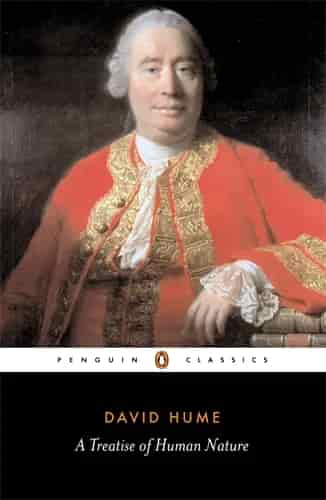
Methinks I am like a man, who having struck on many shoals, and having narrowly escap'd shipwreck in passing a small frith, has yet the temerity to put out to sea in the same leaky weather-beaten vessel, and even carries his ambition so far as to think of compassing the globe under these disadvantageous circumstances.
But I did not yield at once; I enjoyed the process of being argued with too keenly to lose it by a prompt concession; besides, a little hesitation rendered the concession itself more valuable.
A man is the resultant and exponent of all the forces that have been brought to bear upon him, whether before his birth or afterwards. His action at any moment depends solely upon his constitution, and on the intensity and direction of the various agencies to which he is, and has been, subjected. Some of these will counteract each other; but as he is by nature, and as he has been acted on, and is now acted on from without, so will he do, as certainly and regularly as though he were a machine.
We do not generally admit this, because we do not know the whole nature of any one, nor the whole of the forces that act upon him. We see but a part, and being thus unable to generalise human conduct, except very roughly, we deny that it is subject to any fixed laws at all, and ascribe much both of a man's character and actions to chance, or luck, or fortune; but these are only words whereby we escape the admission of our own ignorance; and a little reflection will teach us that the most daring flight of the imagination or the most subtle exercise of the reason is as much the thing that must arise, and the only thing that can by any possibility arise, at the moment of its arising, as the falling of a dead leaf when the wind shakes it from the tree.
No Erewhonian believes that the world is as black as it has been here painted, but it is one of their peculiarities that they very often do not believe or mean things which they profess to regard as indisputable.
I call it to mind and delight in it now, but I did not notice it at the time. We next to never know when we are well off: but this cuts two ways,--for if we did, we should perhaps know better when we are ill off also; and I have sometimes thought that there are as many ignorant of the one as of the other. He who wrote, “O fortunatos nimium sua si bona norint agricolas,” might have written quite as truly, “O infortunatos nimium sua si mala norint”; and there are few of us who are not protected from the keenest pain by our inability to see what it is that we have done, what we are suffering, and what we truly are. Let us be grateful to the mirror for revealing to us our appearance only.
“To be born,” they say, “is a felony--it is a capital crime, for which sentence may be executed at any moment after the commission of the offence. You may perhaps happen to live for some seventy or eighty years, but what is that, compared with the eternity you now enjoy? And even though the sentence were commuted, and you were allowed to live on for ever, you would in time become so terribly weary of life that execution would be the greatest mercy to you.
And should we not be guilty of consummate folly if we were to reject advantages which we cannot obtain otherwise, merely because they involve a greater gain to others than to ourselves?
I felt comparatively happy, but I can assure the reader that I had had a far worse time of it than I have told him; and I strongly recommend him to remain in Europe if he can; or, at any rate, in some country which has been explored and settled, rather than go into places where others have not been before him. Exploring is delightful to look forward to and back upon, but it is not comfortable at the time, unless it be of such an easy nature as not to deserve the name.
When he had left the room, I mused over the conversation which had just taken place between us, but I could make nothing out of it, except that it argued an even greater perversity of mental vision than I had been yet prepared for. And this made me wretched; for I cannot bear having much to do with people who think differently from myself.
A human life, I think, should be well rooted in some spot of native land, where it may get the love of tender kinship for the face of earth, for the labours men go forth to, for the sounds and accents that haunt it, for whatever will give that early home a familiar unmistakeable difference amidst the future widening of knowledge: a spot where the definiteness of early memories may be inwrought with affection, and kindly acquaintance with all neighbours, even to the dogs and donkeys, may spread not by sentimental effort and reflection, but as a sweet habbit of the blood. At five years old, mortals are not prepared to be citizens of the world, to be stimulated by abstract nouns, to soar above preference into impartiality; and that prejudice in favour of milk with which we blindly begin, is a type of the way body and soul must get nourished at least for a time. The best introduction to astronomy is to think of the nightly heavens as a little lot of stars belonging to one's own homestead.
It is a distinguishing peculiarity of the Erewhonians that when they profess themselves to be quite certain about any matter, and avow it as a base on which they are to build a system of practice, they seldom quite believe in it. If they smell a rat about the precincts of a cherished institution, they will always stop their noses to it if they can.