Leafy Quotes
Recently added
The newest book quotes in the Leafy Quotes collection — passages readers have just added, each with its author, book and the page it came from.
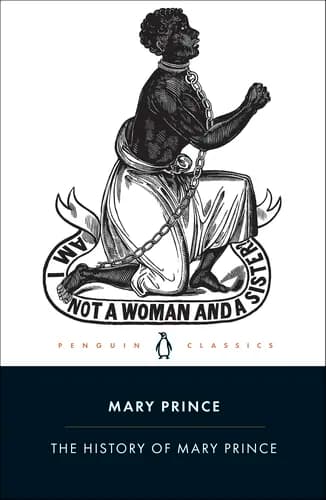
We followed my mother to the market-place, where she placed us in a row against a large house, with our backs to the wall and our arms folded across our breasts. I, as the eldest, stood first, Hannah next to me, then Dinah; and our mother stood beside, crying over us. My heart throbbed with grief and terror so violently, that I pressed my hands quite tightly across my breast, but I could not keep it still, and it continued to leap as though it would burst out of my body. But who cared for that? Did one of the many bystanders, who were looking at us so carelessly, think of the pain that wrung the hearts of the negro woman and her young ones? No, no! They were not all bad, I dare say, but slavery hardens white people's hearts towards the blacks; and many of them were not slow to make their remarks upon us aloud, without regard to our grief—though their light words fell like cayenne on the fresh wounds of our hearts. Oh those white people have small hearts who can only feel for themselves.
p. 4
I then saw my sisters led forth, and sold to different owners; so that we had not the sad satisfaction of being partners in bondage. When the sale was over, my mother hugged and kissed us, and mourned over us, begging of us to keep up a good heart, and do our duty to our new masters. It was a sad parting; one went one way, one another, and our poor mammy went home with nothing.
p. 4
“D’you know what homeostasis is?”
“I used to, before I rotted my brain with politics.”
p. 390
The farther and wider that the discovery and knowledge of such an enormous evil, as the base and villainous treatment and slavery which the poor unfortunate Black People meet with, is spread and made known, the cry for justice, even virtue lifting up her voice, must rise the louder and higher, for the scale of equity and justice to be lifted up in their defence.
p. 19
It was night when I reached my new home. The house was large and built at the bottom of a very high hill; but I could not see much of it that night. I saw too much of it afterward. The stones and the timber were the best things in it; they were not so hard as the hearts of the owners.
p. 5
I was soon surrounded by strange men, who examined and handled me in the same manner that a butcher would a calf or a lamb he was about to purchase, and who talked about my shape and size in like words—as if I could no more understand their meaning than the dumb beasts. I was then put up for sale. The bidding commenced at a few pounds, and gradually rose to fifty seven, when I was knocked down to the highest bidder; and the people who stood by said that I had fetched a great sum for so young a slave.
p. 4
As to any other laws that slave-holders may make among themselves, as respecting slaves, they can be of no better kind, nor give them any better character, than what is implied in the common report—that there may be some honesty among thieves.
p. 4
I’d make a case for saying anything that propagates itself in an intentional way qualifies to be thought of as alive.
p. 485
It is not clear to me whether the insouciance of youth will be the doom of humanity or its salvation. I prefer to think the latter, but I have my doubts.
p. 446
In telling my own sorrows, I cannot pass by those of my fellow-slaves—for when I think of my own griefs, I remember theirs.
p. 12
I am often much vexed, and I feel great sorrow when I hear some people in this country say, that the slaves do not need better usage, and do not want to be free. They believe the foreign people, who deceive them, and say slaves are happy. I say, Not so. How can slaves be happy when they have the halter round their neck and the whip upon their back? and are disgraced and thought no more of than beasts?—and are separated from their mothers, and husbands, and children, and sisters, just as cattle are sold and separated?
p. 22
I was not permitted to see my mother or father, or poor sisters and brothers, to say good bye, though going away to a strange land, and might never see them again. Oh the Buckra people who keep slaves think that black people are like cattle, without natural affection. But my heart tells me it is far otherwise.
p. 9