


Joseph Mitchell
Quotes
"I've long since lost my taste for good coffee," he says. "I much prefer the kind that sooner or later, if you keep on drinking it, your hands will begin to shake and the whites of your eyes will turn yellow."
p. 2
Even today, I sometimes get really quite painfully homesick for Norwood. A sour smell that reminds me of the tanneries will bring it on, such as the smell from a basement down in the Italian part of the Village where some old Italian is making wine. That's one of the damnedest things I ever found out about human emotions and how treacherous they can be — the fact that you can hate a place with all your heart and soul and still be homesick for it. Not to speak of the fact that you can hate a person with all your heart and soul and still long for that person.
p. 67
I was young then, and much more courteous to older people — and to everyone else, for that matter, as I look back on it — than I should have been. Also, I had not yet found out about time; I was still under the illusion that I had plenty of time — time for this, time for that, time for everything, time to waste.
p. 127
As the young reporter listens, it dawns on him that it is not the South that he longs for but the past, the South's past and his own past, neither of which, in the way that he has been driven by homesickness to think of them, ever really existed, and that it is time for him to move out of the time gone by and into the here and now — it is time for him to grow up. When the sermon is over, he goes back downtown feeling that the old man has set him free, and that he is now a citizen of the city and a citizen of the world.
p. 144
When things get too much for me, I put a wild-flower book and a couple of sandwiches in my pockets and go down to the South Shore of Staten Island and wander around awhile in one of the old cemeteries down there.
p. 89
"My grandfather used to like the word 'mitigate,'" Harry said. "He liked the sound of it, and he used it whenever he could. When he was a very old man, he often got on the subject of dying. 'You cant talk your way out,' he'd often say, 'and you can't buy your way out, and you can't shoot your way out, and the only thing that mitigates the matter in the slightest is the fact that nobody else is going to escape. Nobody — no, not one.'" "I know, I know," said Mr. Hewitt, "but what's the purpose of it?" "You supported your wife, didn't you?" asked Harry. "You raised a family, didn't you? That's the purpose of it." "That's no purpose," said Mr. Hewitt. "The same thing that's going to happen to me is going to happen to them." "The generations have to keep coming along," said Harry. "That's all I know." "You're put here, " said Mr. Hewitt, "and you're allowed to eat and draw breath and go back and forth a few short years, and about the time you get things in shape where you can sit down and enjoy them you wind up in a box in a hole in the ground, and as far as I can see, there's no purpose to it whatsoever."
p. 240
It is perhaps an ugly comment on the American press, but the function of the interviewer on most newspapers is to entertain, not to shed light. ... An interviewer soon begins to judge public figures on the basis of their entertainment value, overlooking their true importance. It is not easy to get an interview with Professor Franz Boas, the greatest anthropologist in the world, across a city desk, but a mild interview with Oom the Omnipotent will hit the bottom of page one under a two-column head. ... It is safe to write accurately only about the nuts and the bums. When a public figure does something ridiculous reporters may then write about him accurately.
p. 26
All information of a spiritual or personal nature will have to come from our father, who art in Heaven, and I think he's in New York City right now.
p. 116
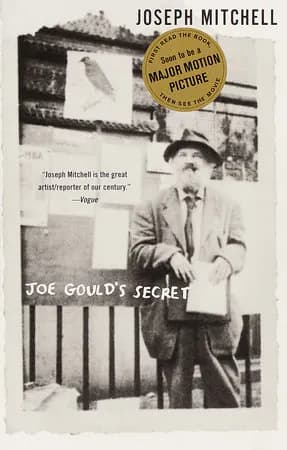





That’s all the quotes.
8 quotes in the collection · come back when we add more