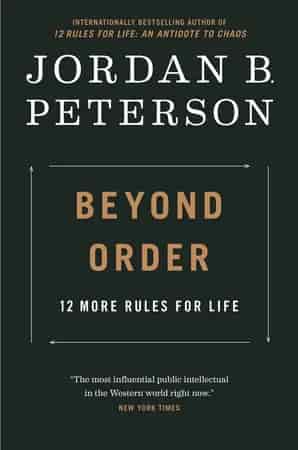
Jordan B. Peterson
Quotes
People organize their brains with conversation. If they don't have anyone to tell their story to, they lose their minds. Like hoarders, they cannot unclutter themselves.
p. 250
If you aim at nothing, you become plagued by everything.
p. 184
Ambition is often—and often purposefully—misidentified with the desire for power, and damned with faint praise, and denigrated, and punished. And ambition is sometimes exactly that wish for undue influence on others. But there is a crucial difference between sometimes and always. Authority is not mere power, and it is extremely unhelpful, even dangerous, to confuse the two. When people exert power over others, they compel them, forcefully. They apply the threat of privation or punishment so their subordinates have little choice but to act in a manner contrary to their personal needs, desires, and values. When people wield authority, by contrast, they do so because of their competence—a competence that is spontaneously recognized and appreciated by others, and generally followed willingly, with a certain relief, and with the sense that justice is being served.
p. 26
Who dares wins—if he does not perish. And who wins also makes himself irresistibly desirable and attractive, not least because of the development of character that adventure inevitably produces. And this is what makes us forever more than rabbits.
p. 80
It took untold generations to get you where you are. A little gratitude might be in order. If you’re going to insist on bending the world to your way, you better have your reasons.
p. 242
Freud was, after all, a genius. You can tell that because people still hate him.
p. 243
Much that is great starts small, ignorant, and useless. […] But today’s beginner is tomorrow’s master.
p. 18
That ghostly figure, the ideal union of what is best in both personalities, should be constantly regarded as the ruler of the marriage—and, indeed, as something as close to divine as might be practically approached by fallible individuals.
p. 275
We have been telling [young people] for decades to demand what they are owed by society. We have been implying that the important meanings of their lives will be given to them because of such demands, when we should have been doing the opposite: letting them know that the meaning that sustains life in all its tragedy and disappointment is to be found in shouldering a noble burden.
p. 161
There are three fundamental states of social being: tyranny (you do what I want), slavery (I do what you want), or negotiation.
p. 278
Making something beautiful is difficult, but it is amazingly worthwhile. If you learn to make something in your life truly beautiful—even one thing—then you have established a relationship with beauty. From there you can begin to expand that relationship out into other elements of your life and the world. That is an invitation to the divine. That is the reconnection with the immortality of childhood, and the true beauty and majesty of the Being you can no longer see. You must be daring to try that.
p. 202
That is what happens two people fall under the spell of love. For a while, both become better than they were, and see that, but then that magic fades away. Both receive that experience as a gift. Both have their eyes open and can see what is visible to no one else. Such love is a glimpse of what could be, if the relationship remained true. It is delivered as a gift initially, from fate, but requires tremendous effort to realize and maintain. And once that is understood, the goal is clear.
p. 269