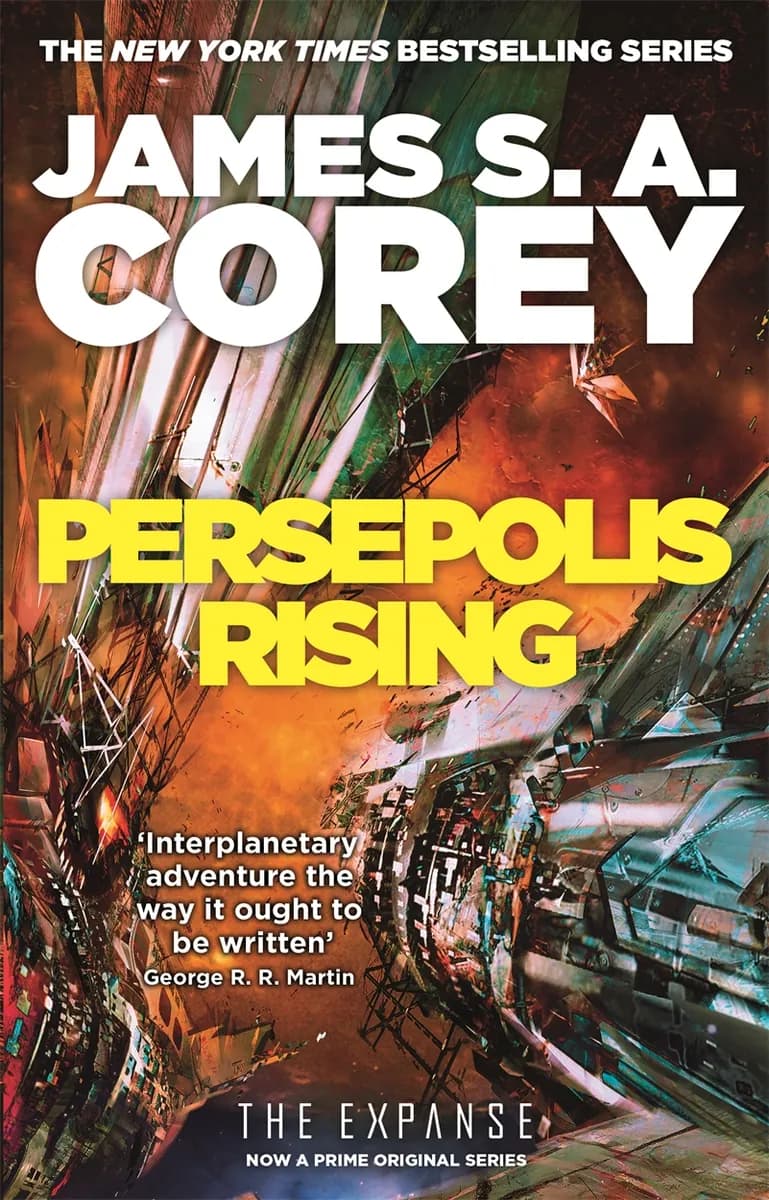
James S. A. Corey
Quotes
He was curious because he chose to be. It didn’t make him stupid.
p. 243
Humans are structureless. They live in conflict with themselves and each other. Their great genius is rationalization: lying into mirrors until they bully and seduce themselves into things they would never otherwise do. They are creatures of self-delusion, regret, and desire.
p. 373
Looked at in a wide enough frame, maybe her problems weren’t so large. They just seemed that way when she held them up against her eyes where they’d block out all the light.
p. 51
Of all the unthinkable events in his life, the fact that the universe had put him beside this woman felt the most unlikely.
p. 265
She warned me that raising children would require patience. It’s why I never had any of my own.
p. 12
Most people were cowards. Being angry about that was like being angry at time for passing.
p. 365
Good and evil are constructs lesser beings build to create divisions in places where rigor and intelligence are insufficient. It is a sloppy shorthand, and prone to error.
p. 71
A leader must be utterly decisive, especially when giving orders that conflict with the ones from the day before.
p. 158
The dysfunctions and idiosyncrasies of childhood became the self-evident norms of adulthood.
p. 96
“You’re not picking a fight with the things that made the protomolecule. You’re picking a fight with whatever killed them. Orders of magnitude above the things that were orders of magnitude above us. You’ve got to know this is going to escalate if we keep using these technologies.”
“We were always going to keep using these technologies. That was inevitable the moment we opened the gates,” Duarte said. “If you’ve studied any history at all, you know that. Never in human history have we discovered something useful and then chosen not to use it.”
p. 548
“We knew that, though.”
“We suspected it.”
“Do we know it now?”
“We suspect it harder,” Elvi said. “We’re scientists. We only know things until someone shows us we’re wrong.”
p. 151
Owning your mistakes meant not making them twice.
p. 231