Harriet Beecher Stowe
Quotes
Do you say that the people of the free state have nothing to do with it, and can do nothing? Would to God this were true! But it is not true. The people of the free states have defended, encouraged, and participated; and are more guilty for it, before God, than the South, in that they have not the apology of education or custom.
If the mothers of the free states had all felt as they should, in times past, the sons of the free states would not have been the holders, and, proverbially, the hardest masters of slaves; the sons of the free states would not have connived at the extension of slavery, in our national body; the sons of the free states would not, as they do, trade the souls and bodies of men as an equivalent to money, in their mercantile dealings. There are multitudes of slaves temporarily owned, and sold again, by merchants in northern cities; and shall the whole guilt or obloquy of slavery fall only on the South?
Northern men, northern mothers, northern Christians, have something more to do than denounce their brethren at the South; they have to look to the evil among themselves.
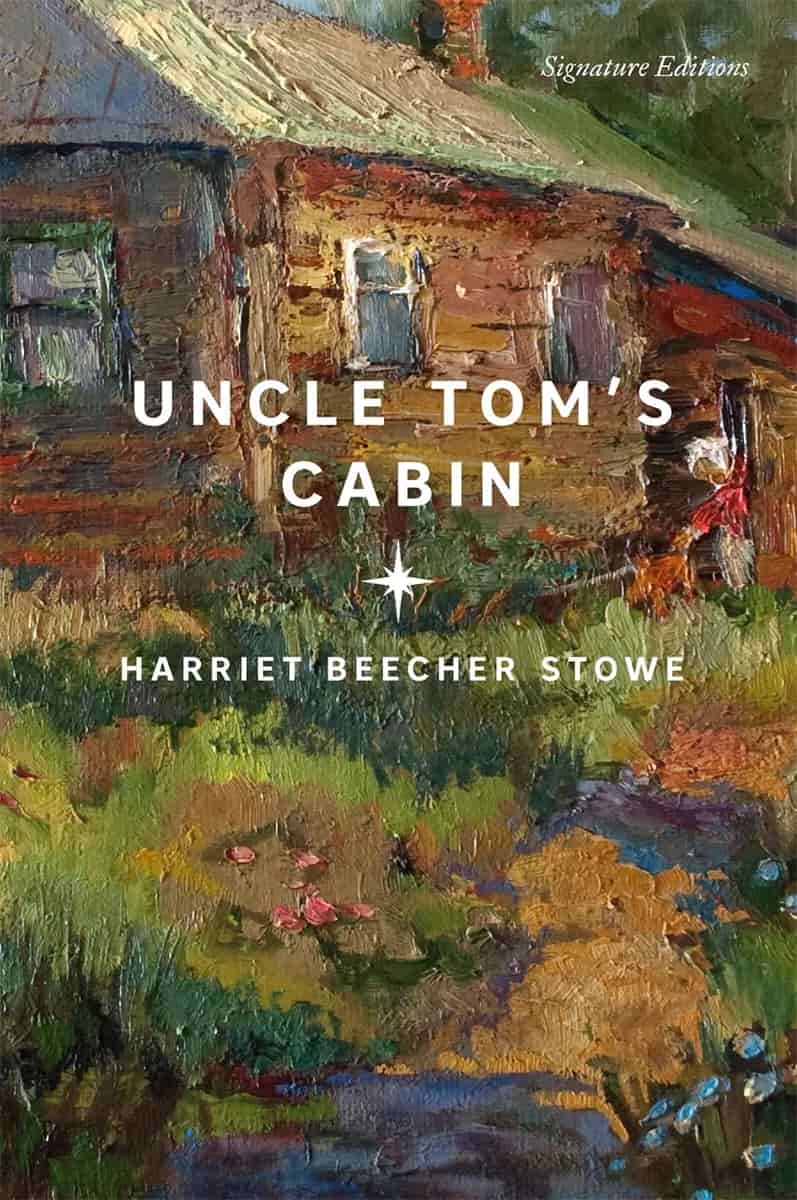
 Uncle Tom's Cabin
What can any individual do? Of that, every individual can judge. There is one thing that every individual can do, — they can see to it that they feel right. An atmosphere of sympathetic influence encircles every human being; and the man or woman who feels strongly, healthily and justly, on the great interests of humanity, is a constant benefactor to the human race. See, then, to your sympathies in this matter! Are they in harmony with the sympathies of Christ? or are they swayed and perverted by the sophistries of worldly policy?
Uncle Tom's CabinIs man ever a creature to be trusted with wholly irresponsible power? And does not the slave system, by denying the slave all legal right of testimony, make every individual owner an irresponsible despot? Can anybody fall to make the inference what the practical result will be? If there is, as we admit, a public sentiment among you, men of honor, justice and humanity, is there not also another kind of public sentiment among the ruffian, the brutal and debased? And cannot the ruffian, the brutal, the debased, by slave law, own just as many slaves as the best and purest? Are the honorable, the just, the high-minded and compassionate, the majority anywhere in this world?
Uncle Tom's CabinTo fill up Liberia with an ignorant, inexperienced, half-barbarized race, just escaped from the chains of slavery, would be only to prolong, for ages, the period of struggle and conflict which attends the inception of new enterprises.
Uncle Tom's CabinThe author hopes she has done justice to that nobility, generosity, and humanity, which in many cases characterize individuals at the South. Such instances save us from utter despair of our kind. But, she asks any person, who knows the world, are such characters common, anywhere?
For many years of her life, the author avoided all reading upon or allusion to the subject of slavery, considering it as too painful to be inquired into, and one which advancing light and civilization would certainly live down. But, since the legislative act of 1850, when she heard, with perfect surprise and consternation, Christian and humane people actually recommending the remanding escaped fugitives into slavery, as a duty binding on good citizens, — when she heard, on all hands, from kind, compassionate and estimable people, in the free states of the North, deliberations and discussions as to what Christian duty could be on this head, — she could only think, These men and Christians cannot know what slavery is; if they did, such a question could never be open for discussion. And from this arose a desire to exhibit it in a living dramatic reality. She has endeavored to show it fairly, in its best and its worst phases. In its best aspect, she has, perhaps, been successful; but, oh! who shall say what yet remains untold in that valley and shadow of death, that lies the other side?
Uncle Tom's CabinA day of grace is yet held out to us. Both North and South have been guilty before God; and the Christian church has a heavy account to answer. Not by combining together, to protect injustice and cruelty, and making a common capital of sin, is this Union to be saved, — but by repentance, justice and mercy; for, not surer is the eternal law by which the millstone sinks in the ocean, than that stronger law, by which injustice and cruelty shall bring on nations the wrath of Almighty God!
Uncle Tom's CabinHave not many of us, in the weary way of life, felt, in some hours, how far easier it were to die than to live?
The martyr, when faced even by a death of bodily anguish and horror, finds in the very terror of his doom a strong stimulant and tonic. There is a vivid excitement, a thrill and fervor, which may carry through any crisis of suffering that is the birth-hour of eternal glory and rest.
But to live, — to wear on, day after day, of mean, bitter, low, harassing servitude, every nerve dampened and depressed, every power of feeling gradually smothered, — this long and wasting heart-martyrdom, this slow, daily bleeding away of the inward life, drop by drop, hour after hour, — this is the true searching test of what there may be in man or woman.
Uncle Tom's CabinWell, good-by, Uncle Tom; keep a stiff upper lip.
Uncle Tom's CabinBy what strange law of mind is it that an idea long overlooked, and trodden under foot as a useless stone, suddenly sparkles out in new light, as a discovered diamond?
Uncle Tom's CabinThe horrid cruelties and outrages that once and a while find their way into the papers — such cases as Prue's, for example — what do they come from? In many cases, it is a gradual hardening process on both sides — the owner growing more and more cruel, as the servant more and more callous. Whipping and abuse are like laudanum; you have to double the dose as the sensibilities decline.
Uncle Tom's CabinSo much has been said and sung of beautiful young girls, why doesn't somebody wake up to the beauty of old women?
Uncle Tom's CabinWhoever visits some estates there, and witnesses the good-humored indulgence of some masters and mistresses, and the affectionate loyalty of some slaves, might be tempted to dream the oft-fabled poetic legend of a patriarchal institution, and all that; but over and above the scene there broods a portentous shadow — the shadow of law. So long as the law considers all these human beings, with beating hearts and living affections, only as so many things belonging to a master — so long as the failure, or misfortune, or imprudence, or death of the kindest owner, may cause them any day to exchange a life of kind protection and indulgence for one of hopeless misery and toil — so long it is impossible to make anything beautiful or desirable in the best regulated administration of slavery.
Uncle Tom's Cabin