Quotes
A person who has not done one half his day's work by ten o'clock runs a chance of leaving the other half undone.
If I work hard and am rewarded, then I haven't really gained anything. It has been a trade: I've put in, and I've gotten back. Only if I am rewarded without having done anything have I actually come out ahead. The best way to gain the most is to do nothing.
With sociology one can do anything and call it work.
Man came into this world, not to sit down and muse, not to befog himself with vain subtleties, but to gird up his loins and to work. Mystery is in the morning, and mystery in the night, and the beauty of mystery is everywhere; but still the plain truth remains, that mouth and purse must be filled. If, hitherto, you have supposed me a visionary, be undeceived. I am no one-ideaed one, either; no more than the seers before me.
All office workers are afraid of being late for work.
The word 'service' comes from serving, and serving means being dependent.
The possibility that a void exists after death has motivated me to work hard so I can make a difference — so that my thoughts and ideas will not die. When I was working on my Ph.D., a coworker in our lab told me that the world's libraries contain our extra soma, or out-of-body genes. Ideas are passed on like genes, and I have a great urge to spread my ideas. I read an article in the newspaper about an official at the New York Public Library who said that the only place on earth where immortality is provided is in libraries. This is the collective memory of humanity. I put this on a sign and placed it over my desk. It helped me to persevere and get through my Ph.D. work. (p199)
Curious, how any tool properly made acquires a beauty.
p. 193
After weeks of indoor work it actually felt good to be doing something—clean, direct, muscles and mind.
p. 38
They will do anything for the worker, except become one.
p. 46
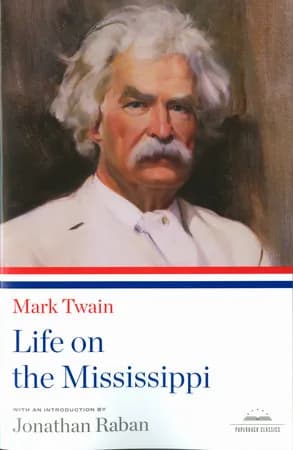
Your true pilot cares nothing about anything on earth but the river, and his pride in his occupation surpasses the pride of kings.
No, the romance and beauty were all gone from the river. All the value any feature of it had for me now was the amount of usefulness it could furnish toward compassing the safe piloting of a steamboat. Since those days, I have pitied doctors from my heart. What does the lovely flush in a beauty's cheek mean to a doctor but a "break" that ripples above some deadly disease? Are not all her visible charms sown thick with what are to him the signs and symbols of hidden decay? Does he ever see her beauty at all, or doesn't he simply view her professionally, and comment upon her unwholesome condition all to himself? And doesn't he sometimes wonder whether he has gained most or lost most by learning his trade?