Quotes
Then, as you well know, Eugenides looked me in the eye as if I were a complete stranger and said, "The simplest way to end a war is to admit you have lost it."
The silence after that was not polite.
I had the honor to serve at the siege of Arras. Where I received a thrust through the throat, the second of the serious wounds that convinced me, along with all else I had seen of wars miseries and horrors, that Mars was the stupidest of the gods.
p. 371
Muddle, confusion, stupidity, insane waste, pointless pain, misery and mass death—all the usual stuff of war, affecting him as it might affect anybody else, without any necessary moral reason, without any justice and even without any vindictiveness, just through the ghastly, banal working out of physics, chemistry, biochemistry, orbital mechanics and the shared nature of sentient beings existing and contending.
p. 230
Naturally, also, both sides were convinced they had right on their side, not that either was remotely naive enough to think that that had any possible bearing on the outcome whatsoever.
p. 134
“There are no guarantees in war,” Green said.
“Oh, there are,” blue said quietly, looking away into the darkness. “It’s just that they guarantee death, destruction, suffering, heartache and remorse.”
p. 140
More than anything else now, though, he wanted to save Darckense. He had seen too many dead, dry eyes, too much air-blackened blood, too much fly-blown flesh, to be able to relate such ghastly truths to the nebulous ideas of honor and tradition that people claimed they were fighting for. Only the well-being of one loved person seemed really worth fighting for now; it was all that seemed real, all that could save his sanity.
p. 444
In all the human societies we have ever reviewed, in every age and every state, there has seldom if ever been a shortage of eager young males prepared to kill and die to preserve the security, comfort and prejudices of their elders, and what you call heroism is just an expression of this fact; there is never a scarcity of idiots.
p. 434
That was how divorced from the human scale modern warfare had become. You could smash and destroy from unthinkable distances, obliterate planets from beyond their own system and provoke stars into novae from light-years off...and still have no good idea why you were really fighting.
p. 32
I’ve been thinking about the war a lot recently, and I think I’ve decided it’s wrong. We are defeating ourselves in waging it, will destroy ourselves by winning it.
p. 46
Pity they didn’t devote a little more ingenuity to staying alive rather than conducting mass slaughter as efficiently as possible.
p. 96
I wrote because I wanted to know what everything was about. My father, before I was born, had been gassed in the first World War, and I wanted to know why there were wars, why people hurt each other, why we couldn't get along together, and what made people tick. That's why I started to write stories.
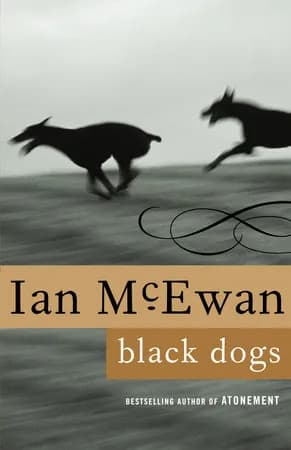
Nearby, where the main road forked, stood an iron cross on a stone base. As the English couple watched, a mason was cutting in half a dozen fresh names. On the far side of the street, in the deep shadow of a doorway, a youngish woman in black was also watching. She was so pale they assumed at first she had some sort of wasting disease. She remained perfectly still, with one hand holding an edge of her headscarf so that it obscured her mouth. The mason seemed embarrassed and kept his back to her while he worked. After a quarter of an hour an old man in blue workman's clothes came shuffling along in carpet slippers and took her hand without a word and led her away. When the propriétaire came out he nodded at the other side of the street, at the empty space and murmured, 'Trois. Mari et deux frères,' as he set down their salads.This sombre incident remained with them as they struggled up the hill in the heat, heavy with lunch, towards the Bergerie de Tédenat. They stopped half way up in the shade of a stand of pines before a long stretch of open ground. Bernard was to remember this moment for the rest of his life. As they drank from their water bottles he was struck by the recently concluded war not as a historical, geopolitical fact but as a multiplicity, a near-infinity of private sorrows, as a boundless grief minutely subdivided without diminishment among individuals who covered the continent like dust, like spores whose separate identities would remain unknown, and whose totality showed more sadness than anyone could ever begin to comprehend; a weight borne in silence by hundreds of thousands, millions, like the woman in black for a husband and two brothers, each grief a particular, intricate, keening love story that might have been otherwise. It seemed as though he had never thought about the war before, not about its cost. He had been so busy with the details of his work, of doing it well, and his widest view had been of war aims, of winning, of statistical deaths, statistical destruction, and of post-war reconstruction. For the first time he sensed the scale of the catastrophe in terms of feeling; all those unique and solitary deaths, all that consequent sorrow, unique and solitary too, which had no place in conferences, headlines, history, and which had quietly retired to houses, kitchens, unshared beds, and anguished memories. This came upon Bernard by a pine tree in the Languedoc in 1946 not as an observation he could share with June but as a deep apprehension, a recognition of a truth that dismayed him into silence and, later, a question: what possible good could come of a Europe covered in this dust, these spores, when forgetting would be inhuman and dangerous, and remembering a constant torture?
p. 164