Quotes
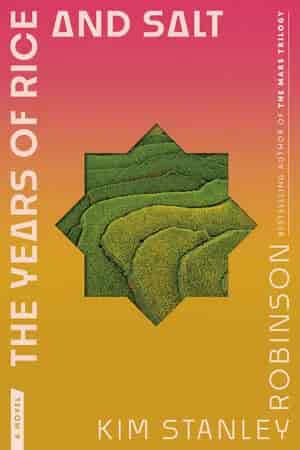
If we wish to stop the atrocities, we will need to understand and change the social and economic conditions that cause them.
On the contrary, violence is often caused by a surfeit of morality and justice, at least as they are conceived in the minds of the perpetrators.
p. 139
[I]n the past two decades anthropologists have gathered data on life and death in pre-state societies rather than accepting the warm and fuzzy stereotypes. What did they find? In a nutshell: Hobbes was right, Rousseau was wrong.
p. 95
We live in a universe ruled by very few laws, but the redoubling of violence by violence is one of the main ones.
Revolution has to be rethought. Look, even when revolutions have been successful, they have caused so much destruction and hatred that there is always some kind of horrible backlash. It’s inherent in the method. If you choose violence, then you create enemies who will resist you forever. And ruthless men become your revolutionary leaders, so when the war is over they’re in power, and likely to be as bad as what they replaced.
p. 359
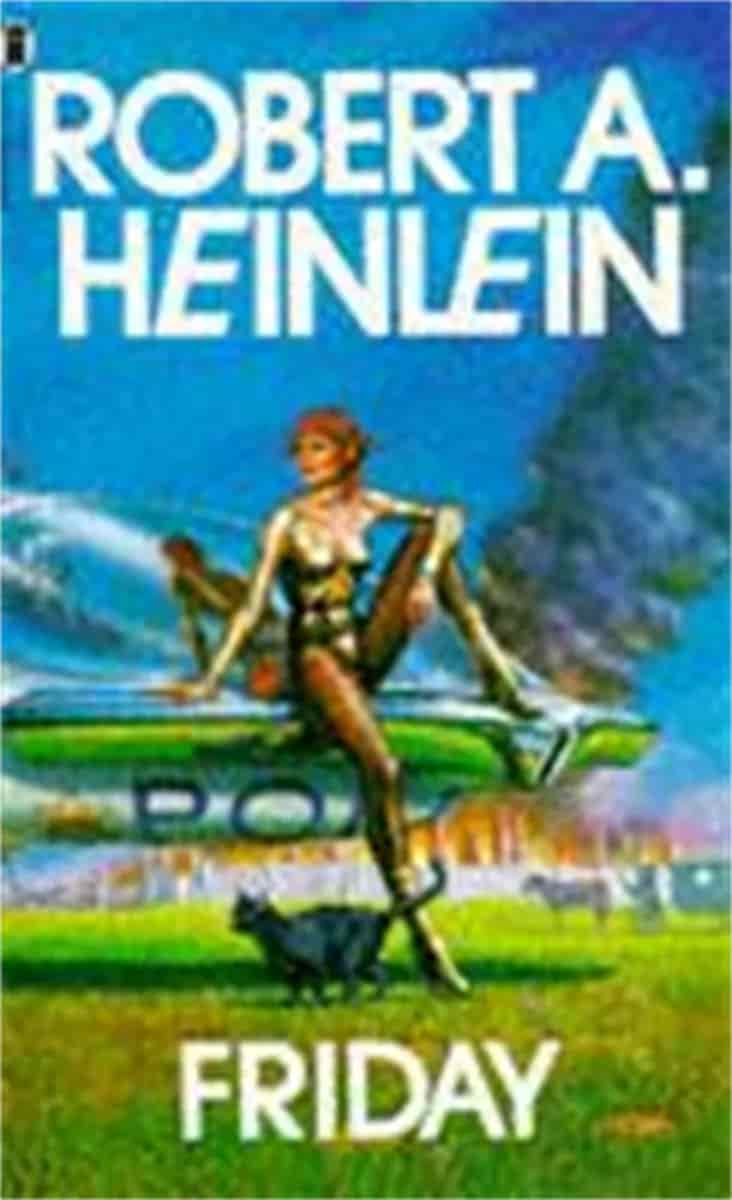
Friday, don’t despise assassins indiscriminately. As with any tool, merit or demerit lies in how it is used.
p. 37
A brute kills for pleasure. A fool kills from hate.
" … I was not making fun of you personally; I was heaping scorn on an inexcusably silly idea — a practice I shall always follow. Anyone who clings to the historically untrue and thoroughly immoral doctrine that violence never settles anything I would advise to conjure up the ghosts of Napoleon Bonaparte and the Duke of Wellington and let them debate it. The ghost of Hitler could referee and the jury might well be the Dodo, the Great Auk, and the Passenger Pigeon. Violence, naked force, has settled more issues in history than has any other factor, and the contrary opinion is wishful thinking at its worst. Breeds that forget this basic truth have always paid for it with their lives and their freedoms."
He sighed. "Another year, another class — and for me another failure. One can lead a child to knowledge but one cannot make him think." Suddenly he pointed his stump at me. "You. What is the moral difference, if any, between the citizen and the civilian?"
"The difference, I said carefully, "lies in the field of civic virtue. A citizen accepts personal responsibility for the safety of the body politic of which he is a member, defending it, if need be, with his life. The civilian does not."
"The exact words of the book," he said scornfully. "But do you understand it? Do you believe it?"
p. 26
"My mother said violence never solves anything." "So?" Mr. Dubois looked at her bleakly. "I'm sure the city fathers of Carthage would be glad to know that."
p. 25
The element of truth behind all this, which people are so ready to disavow, is that men are not gentle creatures who want to be loved, and who at the most can defend themselves if they are attacked; they are, on the contrary, creatures among whose instinctual endowments is to be reckoned a powerful share of aggressiveness. As a result, their neighbor is for them not only a potential helper or sexual object, but also someone who tempts them to satisfy their aggressiveness on him, to exploit his capacity for work without compensation, to use him sexually without his consent, to seize his possessions, to humiliate him, to cause him pain, to torture and to kill him. Homo homini lupus. Who, in the face of all his experience of life and of history, will have the courage to dispute this assertion?
p. 68
I cannot inquire into whether the abolition of private property is expedient or advantageous. But I am able to recognize that the psychological premisses on which the [system]] is based are an untenable illusion. In abolishing private property we deprive the human love of aggression of one of its instruments, certainly a strong one, though certainly not the strongest, but we have not altered the differences in power and influence which are misused by aggressiveness, nor have we altered anything in its nature. Aggressiveness was not created by property. It reigned almost without limit in primitive times, when property was still very scanty, and it already shows itself in the nursery almost before property has given up its primal, anal form; it forms the basis of every relation of affection and love among people (with the single exception, perhaps, of the mother's relations to her male child).
The dictatorship is necessary because it is a case, not of partial changes, but of the very existence of the bourgeoisie. No agreement is possible on this ground. Only force can be the deciding factor.