Quotes about totalitarianism
48 quotes · 23 authors
Quotes
“They can’t say anything against the government, not in public they can’t.”
“Is it a country or a jail?” Carsten asked.
“Near as I can tell, sir,” the second yeoman said, “it’s a jail.”
p. 209
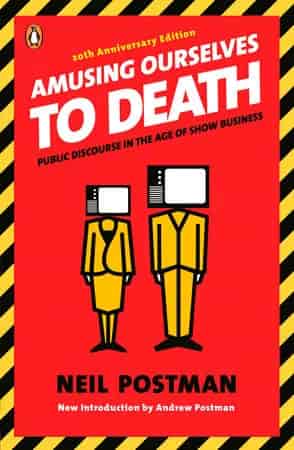
With the rise of Technopoly, one of those thought-worlds disappears. Technopoly eliminates alternatives to itself in precisely the way Aldous Huxley outlined in Brave New World. It does not make them illegal. It does not make them immoral. It does not even make them unpopular. It makes them invisible and therefore irrelevant. And it does so by redefining what we mean by religion, by art, by family, by politics, by history, by truth, by privacy, by intelligence, so that our definitions fit its new requirements. Technopoly, in other words, is totalitarian technocracy.
What Orwell feared were those who would ban books. What Huxley feared was that there would be no reason to ban a book, for there would be no one who wanted to read one. Orwell feared those who would deprive us of information. Huxley feared those who would give us so much that we would be reduced to passivity and egoism. Orwell feared that the truth would be concealed from us. Huxley feared the truth would be drowned in a sea of irrelevance. Orwell feared we would become a captive culture. Huxley feared we would become a trivial culture, preoccupied with some equivalent of the feelies, the orgy porgy, and the centrifugal bumblepuppy. As Huxley remarked in Brave New World Revisited, the civil libertarians and rationalists who are ever on the alert to oppose tyranny "failed to take into account man's almost infinite appetite for distractions". In 1984, Huxley added, people are controlled by inflicting pain. In Brave New World, they are controlled by inflicting pleasure. In short, Orwell feared that what we hate will ruin us. Huxley feared that what we love will ruin us.
If you have reservations about the system and want to change it, the democratic argument goes, do so within the system: put yourself forward as a candidate for political office, subject yourself to the scrutiny and the vote of fellow citizens. Democracy does not allow for politics outside the democratic system. In this sense, democracy is totalitarian.
p. 15
Derbeck is a theocracy based on religious and political orthodoxy. Arbitrary executions and torture are integral to such systems.
p. 166
The essence of totalitarian government, and perhaps the nature of every bureaucracy, is to make functionaries and mere cogs in the administrative machinery out of men, and thus to dehumanise them.
The ideal subject of totalitarian rule is not the convinced Nazi or the convinced Communist, but people for whom the distinction between fact and fiction (i.e., the reality of experience) and the distinction between true and false (i.e., the standards of thought) no longer exist.
Totalitarianism in power invariably replaces all first-rate talents, regardless of their sympathies, with those crackpots and fools whose lack of intelligence and creativity is still the best guarantee of their loyalty.
The concentration camps, by making death itself anonymous (making it impossible to find out whether a prisoner is dead or alive), robbed death of its meaning as the end of a fulfilled life. In a sense they took away the individual’s own death, proving that henceforth nothing belonged to him and he belonged to no one. His death merely set a seal on the fact that he had never existed.
The totalitarian attempt at global conquest and total domination has been the destructive way out of all impasses. Its victory may coincide with the destruction of humanity; wherever it has ruled, it has begun to destroy the essence of man. Yet to turn our backs on the destructive forces of the century is of little avail.
The trouble is that our period has so strangely intertwined the good with the bad that without the imperialists' "expansion for expansion's sake," the world might never have become one; without the bourgeoisie's political device of "power for power's sake," the extent of human strength might never have been discovered; without the fictitious world of totalitarian movements, in which with unparalleled clarity the essential uncertainties of our time have been spelled out, we might have been driven to our doom without ever becoming aware of what has been happening.
And if it is true that in the final stages of totalitarianism an absolute evil appears (absolute because it can no longer be deduced from humanly comprehensible motives), it is also true that without it we might never have known the truly radical nature of Evil.
The totalitarian movements aim at and succeed in organizing masses—not classes, like the old interest parties of the Continental nation-states; not citizens with opinions about, interests in, the handling of public affairs, like the parties of Anglo-Saxon countries.
'Nobody can rule innocently,' as Saint-Just puts it. And in totalitarianism, the Party becomes again the very subject who, being the immediate embodiment of the People can rule innocently. It is not by accident that the real-socialist countries call themselves 'people's democracies.'