Quotes about totalitarianism
48 quotes · 23 authors
Quotes
What is really disturbing about The Name of the Rose, however, is the underlying belief in the liberating, anti-totalitarian force of laughter, of ironic distance. Our thesis here is almost the exact opposite of the underlying premise of Eco's novel: in contemporary socities, democratic or totalitarian, that cynical distance, laughter, irony, are so to speak, part of the game. The ruling ideology is not meant to be taken seriously or literally. Perhaps the greatest danger for totalitarianism is people who take ideology seriously.
p. 27
EVERYTHING NOT FORBIDDEN IS COMPULSORY
I think perhaps of all the things a police state can do to its citizens, distorting history is possibly the most pernicious.
p. 401
Repression for the attainment of economic ends is a necessary weapon of the socialist dictatorship.
p. 153
The dictatorship is necessary because it is a case, not of partial changes, but of the very existence of the bourgeoisie. No agreement is possible on this ground. Only force can be the deciding factor.
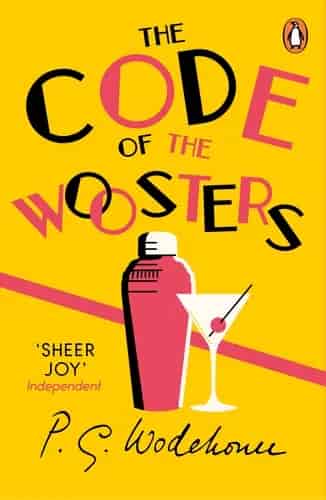
The trouble with you, Spode, is that just because you have succeeded in inducing a handful of half-wits to disfigure the London scene by going about in black shorts, you think you're someone. You hear them shouting ‘Heil, Spode!’ and you imagine it is the Voice of the People. That is where you make your bloomer. What the Voice of the People is saying is: ‘Look at that frightful ass Spode swanking about in footer bags! Did you ever in your puff see such a perfect perisher?
It is usual to speak of the Fascist objective as the "beehive state", which does grave injustice to bees. A world of rabbits ruled by stoats would be nearer the mark.
"That was the strength of the Nazis," she said. "They understood God better than anyone. They knew how to make him stay away."
Ask yourself why totalitarian dictatorships find it necessary to pour money and effort into propaganda for their own helpless, chained, gagged slaves, who have no means of protest or defense. The answer is that even the humblest peasant or the lowest savage would rise in blind rebellion, were he to realize that he is being immolated, not to some incomprehensible noble purpose, but to plain, naked human evil.
This is just one example of the trimming of the self that — along with the language itself, where verbs and nouns changed places as freely as one dare to have them do so — bred in us such an overpowering sense of ambivalence that in ten years we ended up with a willpower in no way superior to a seaweed’s.
p. 14
You are under the impression that hatred is more exhausting than love. Why should it be? And if it were, what difference would that make? Suppose that we choose to wear ourselves out faster. Suppose that we quicken the tempo of human life till men are senile at thirty. Still what difference would it make? Can you not understand that the death of the individual is not death? The party is immortal.
There will be no curiosity, no enjoyment of the process of life. All competing pleasures will be destroyed. But always — do not forget this, Winston — always there will be the intoxication of power, constantly increasing and constantly growing subtler. Always, at every moment, there will be the thrill of victory, the sensation of trampling on an enemy who is helpless. If you want a picture of the future, imagine a boot stamping on a human face — forever.