Quotes
"Space," it says, "is big. Really big. You just won't believe how vastly, hugely, mindbogglingly big it is. I mean, you may think it's a long way down the road to the chemist, but that's just peanuts to space. Listen..." and so on.
Perhaps you saw what place our universe plays in the scheme of things—as no more than an atom in a blade of grass. Could it be that everything we can perceive, from the microscopic virus to the distant Horsehead Nebula, is contained in one blade of grass that may have existed for only a single season in an alien time-flow? What if that blade should be cut off by a scythe? When it begins to die, would the rot seep into our universe and our own lives, turning everything yellow and brown and desiccated? Perhaps it's already begun to happen. We say the world has moved on; maybe we really mean that it has begun to dry up."Think how small such a concept of things make us, gunslinger! If a God watches over it all, does He actually mete out justice for such a race of gnats? Does His eye see the sparrow fall when the sparrow is less than a speck of hydrogen floating disconnected in the depth of space? And if He does see... what must the nature of such a God be? Where does He live? How is it possible to live beyond infinity?
That the universe, as was once thought, expands and contracts indefinitely, one Big Bang collapsing into another one, seemed reasonable enough. But in both models of the universe, what caused the first Big Bang? Or was there a first Big Bang, any more than a last number? If there was a first cause, was there a first causer? Did Big Bangs just happen to happen? Can we name the first causer “God”? We can name it anything we want. I can name it after myself. It is utterly insignificant what it is called, because we would be giving a name to something that falls outside all categories of thought and must be unknowable and irrelevant to knowledge. So naming it is a futile enterprise. The word “God” is unhelpful because it implies it has a knowable definition.
“The beauty of Mars exists in the human mind,” he said in that dry factual tone, and everyone stared at him amazed. “Without the human presence it is just a collection of atoms, no different than any other random speck of matter in the universe. It’s we who understand it, and we who give it meaning. All our centuries of looking up at the night sky and watching it wander through the stars. All those nights of watching it through the telescopes, looking at a tiny disk trying to see canals in the albedo changes. All those dumb sci-fi novels with their monsters and maidens and dying civilizations. And all the scientists who studied the data, or got us here. That’s what makes Mars beautiful. Not the basalt and the oxides.”
p. 177
People ask where writers get ideas.
Take my advice. Some cool, clear night, drive to a country place where city lights don’t block your view. Turn off the car lights. Get out and look up. And see our real neighborhood.
p. 3
I quite fixedly believe the Wardens of Earth sometimes unbar strange windows, that face on other worlds than ours. And some of us, I think, once in a while get a peep through these windows. But we are not permitted to get a long peep, or an unobstructed peep, nor very certainly, are we permitted to see all there is — out yonder. The fatal fault, sir, of your theorizing is that it is too complete. It aims to throw light upon the universe, and therefore is self-evidently moonshine. The Wardens of Earth do not desire that we should understand the universe, Mr. Kennaston; it is part of Their appointed task to insure that we never do; and because of Their efficiency every notion that any man, dead, living, or unborn, might form as to the universe will necessarily prove wrong.
For more than three decades the Americans had been gradually sliding into isolationism and industrial decline. Space, he thought ruefully, they should have gone into space. He'd never understood the strange paralysis of will that had seemed to grip their brilliant early efforts. Or perhaps it was simply a failure of imagination, of vision.
Even if all life on our planet is destroyed, there must be other life somewhere which we know nothing of. It is impossible that ours is the only world; there must be world after world unseen by us, in some region or dimension that we simply do not perceive. Even though I can't prove that, even though it isn't logical — I believe it.
It is a great adventure to contemplate the universe, beyond man, to contemplate what it would be like without man, as it was in a great part of its long history and as it is in a great majority of places. When this objective view is finally attained, and the mystery and majesty of matter are fully appreciated, to then turn the objective eye back on man viewed as matter, to view life as part of this universal mystery of greatest depth, is to sense an experience which is very rare, and very exciting. It usually ends in laughter and a delight in the futility of trying to understand what this atom in the universe is, this thing — atoms with curiosity — that looks at itself and wonders why it wonders. Well, these scientific views end in awe and mystery, lost at the edge in uncertainty, but they appear to be so deep and so impressive that the theory that it is all arranged as a stage for God to watch man's struggle for good and evil seems inadequate.
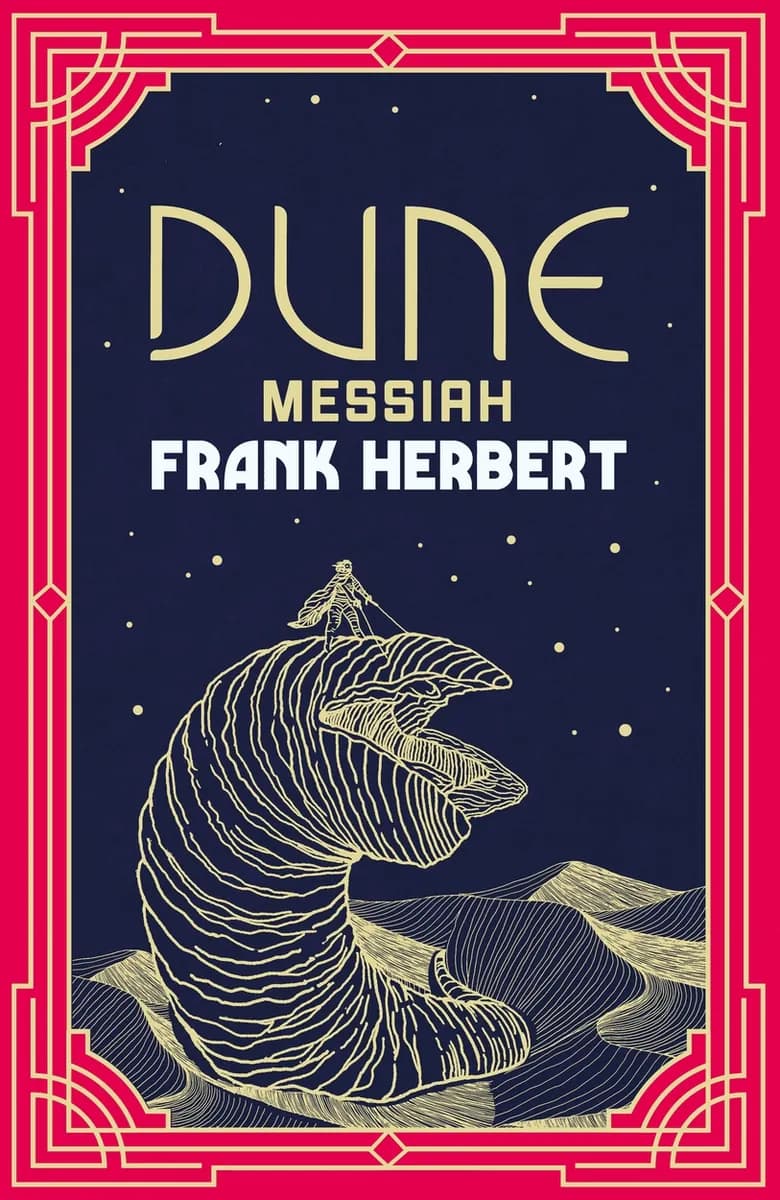
The Universe is God's. It is one thing, a wholeness against which all separations may be identified. Transient life, even the self-aware and reasoning life which we call sentient, holds only fragile trusteeship on any portion of the wholeness.
Church and State, scientific reason and faith, the individual and his community, even progress and tradition — all of these can be reconciled in the teachings of Muad'Dib. He taught us that there exists no intransigent opposites except in the beliefs of men. Anyone can rip aside the veil of Time. You can discover the future in the past or in your own imagination. Doing this, you win back your consciousness in your inner being. You know then that the universe is a coherent whole and you are indivisible from it.
You do not take from this universe. It grants you what it will.