


Quotes
The Cosmos is all that is or ever was or ever will be. Our feeblest contemplations of the Cosmos stir us — there is a tingling in the spine, a catch in the voice, a faint sensation as if a distant memory, of falling from a height. We know we are approaching the greatest of mysteries.
p. 4
We embarked on our journey to the stars with a question first framed in the childhood of our species and in each generation asked anew with undiminished wonder: What are the stars? Exploration is in our nature. We began as wanderers, and we are wanderers still. We have lingered long enough on the shores of the cosmic ocean. We are ready at last to set sail for the stars.
p. 193
Astronomically, the U. S. S. R. and the United States are the same place.
p. 196
Whether in some sense the universe is ultimately knowable depends not only on how many natural laws there are that encompass widely divergent phenomena, but also on whether we have the openness and the intellectual capacity to understand such laws. Our formulations of the regularities of nature are surely dependent on how the brain is built, but also, and to a significant degree, on how the universe is built.
For myself, I like a universe that includes much that is unknown and, at the same time, much that is knowable. A universe in which everything is known would be static and dull, as boring as the heaven of some weak-minded theologians. A universe that is unknowable is no fit place for a thinking being. The ideal universe for us is one very much like the universe we inhabit. And I would guess that this is not really much of a coincidence.
p. 21
Some ancient Asian cosmological views are close to the idea of an infinite regression of causes, as exemplified in the following apocryphal story: A Western traveler encountering an Oriental philosopher asks him to describe the nature of the world:
“It is a great ball resting on the flat back of the world turtle.”
“Ah yes, but what does the world turtle stand on?”
“On the back of a still larger turtle.”
“Yes, but what does he stand on?”
“A very perceptive question. But it’s no use, mister; it’s turtles all the way down.”
p. 343
The way to find out about our place in the universe is by examining the universe and by examining ourselves—without preconceptions, with as unbiased a mind as we can muster. We cannot begin with an entirely clean slate, since we arrive at this problem with predispositions of hereditary and environmental origin; but, after understanding such built-in biases, is it not possible to pry insights from nature?
p. 339
Our island is this earth; and the most striking object we behold is the sun. As soon as we pass beyond our immediate surroundings, one or both of these must meet our eye. Thus the philosophy of most savage races is mainly directed to imaginary divisions of the earth or to the divinity of the sun.
In the vast all of the Universe, must there be this unique anomaly — a consciousness that knows itself, loves itself and feels itself, joined to an organism which can only live within such and such degrees of heat, a merely transitory phenomenon? No, it is not mere curiosity that inspires the wish to know whether or not the stars are inhabited by living organisms, by consciousness akin to our own, and a profound longing enters into that dream that our souls shall pass from star to star through the vast spaces of the heavens, in an infinite series of transmigrations. The feeling of the divine makes us wish and believe that everything is animated, that consciousness, in a greater or less degree, extends through everything. We wish not only to save ourselves, but to save the world from nothingness. And therefore God. Such is his finality as we feel it.
Tell them the universe is too complicated a toy for a sensibly cautious being to play with.
p. 314
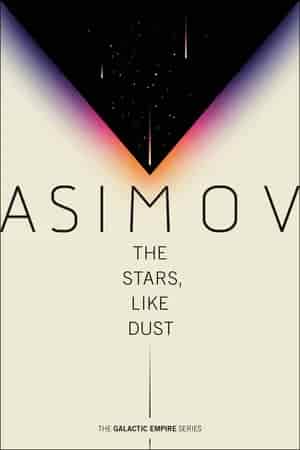
The stars, like dust, encircle me
In living mists of light;
And all of space I seem to see
In one vast burst of sight.
p. 30







That’s all the quotes.
10 quotes in the collection · come back when we add more