Quotes
Could any technology, no matter how advanced, bridge the awful gulf what lay between the Solar System and the nearest alien sun? Many scientists flatly denied the possibility.
A vocal minority refused to agree. Even if it took centuries to travel from star to star, they contended, this might be no obstacle to sufficiently determined explorers…In any event, why should one assume that all intelligent species were as short-lived as Man? There might be creatures in the universe to whom a thousand-year voyage would present nothing worse than slight boredom.
Those who had begun that experiment, so long ago, had not been men — or even remotely human. But they were flesh and blood, and when they looked out across the deeps of space, they had felt awe, and wonder, and loneliness. As soon as they possessed the power, they set forth for the stars. In their explorations, they encountered life in many forms, and watched the workings of evolution on a thousand worlds. They saw how often the first faint sparks of intelligence flickered and died in the cosmic night. And because, in all the galaxy, they had found nothing more precious than Mind, they encouraged its dawning everywhere. They became farmers in the fields of stars.
Behind every man now alive stand thirty ghosts, for that is the ratio by which the dead outnumber the living. Since the dawn of time, roughly a hundred billion human beings have walked the planet Earth. Now this is an interesting number, for by a curious coincidence there are approximately a hundred billion stars in our local universe, the Milky Way. So for every man who has ever lived, in this Universe there shines a star.
'And, after all, what is a planet but an island in space?'
p. 205
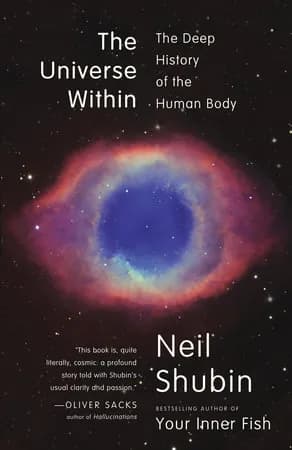
For thousands of years, mankind considered itself the pinnacle of life’s creation on a planet sitting in the center of the universe. Science changed that perception. Leavitt, Hubble, and others helped us see that we live near the margin of a vast galaxy, in a universe of galaxies, with our planet one of many worlds. Darwin and the biologists had their say too. Our entire species is but one little twig on an enormous tree of life filled with all life on earth. But each discovery that moves us from the center of creation to some obscure corner brings an entirely new relation between us, other species, and the entire universe.
p. 24
The first ten-thousandth of a second after the Big Bang is far more interesting that the entire rest of the history of the universe.
p. 157
The human mind is a pattern, nothing more. The first dim flicker of awareness in the evolving forebrain of Australopithecus carried that pattern in embryo; and down through all the ages, as the human neural engine increased in power and complexity, gained control of its environment in geometrically expanding increments, the pattern never varied.
Man clings to his self-orientation as the psychological center of the Universe. He can face any challenge within that framework, suffer any loss, endure any hardship—so long as the structure remains intact.
Without it he’s a mind adrift in a trackless infinity—lacking any scale against which to measure his aspirations, his losses, his victories.
Even when the light of his intellect shows him that the structure is itself a product of his brain; that infinity knows no scale, and eternity no duration—still he clings to his self-non-self concept, as a philosopher clings to a life he knows must end, to ideals he knows are ephemeral, to causes he knows will be forgotten.
p. 192
I wish that I could believe not in mortality but in reincarnation or individual immortality; I wish that I could be living again in another body or, God help me, even watching from the edge of a fleecy cloud in Heaven or out through the dirty windowpane of a haunted house or through the dull eyes of a dung beetle or on any terms. On any terms I want to be watching, I want to be there, I want to be around, when we reach the stars, when we take over the universe and the universes, when we become the God in whom I do not believe as yet because I do not believe he exists as yet nor will exist until we become Him.
p. 242
Escape, God how we all need escape from this tiny here. The need for it has motivated just about everything man has ever done in any direction other than that of the satisfaction of his physical appetites; it has led him along weird and wonderful pathways; it has led him into art and religion, ascetism and astrology, dancing and drinking, poetry and insanity. All of these have been escapes because he has known only recently the true direction of escape—outward, into infinity and eternity, away from this little flat if rounded surface we’re born on and die on. This mote in the solar system, this atom in the galaxy.
p. 243
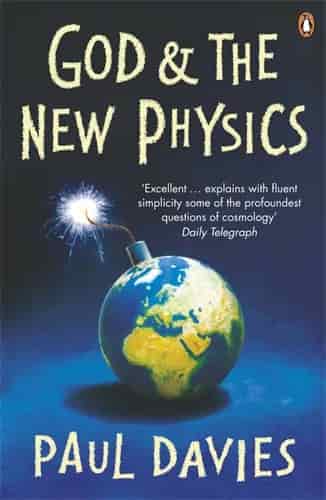
I cannot believe that our existence in this universe is a mere quirk of fate, an accident of history, an incidental blip in the great cosmic drama. Our involvement is too intimate.
p. 232
The brain is the medium of expression of the human mind. Similarly the entire physical universe would be the medium of expression of the mind of a natural God.
p. 223
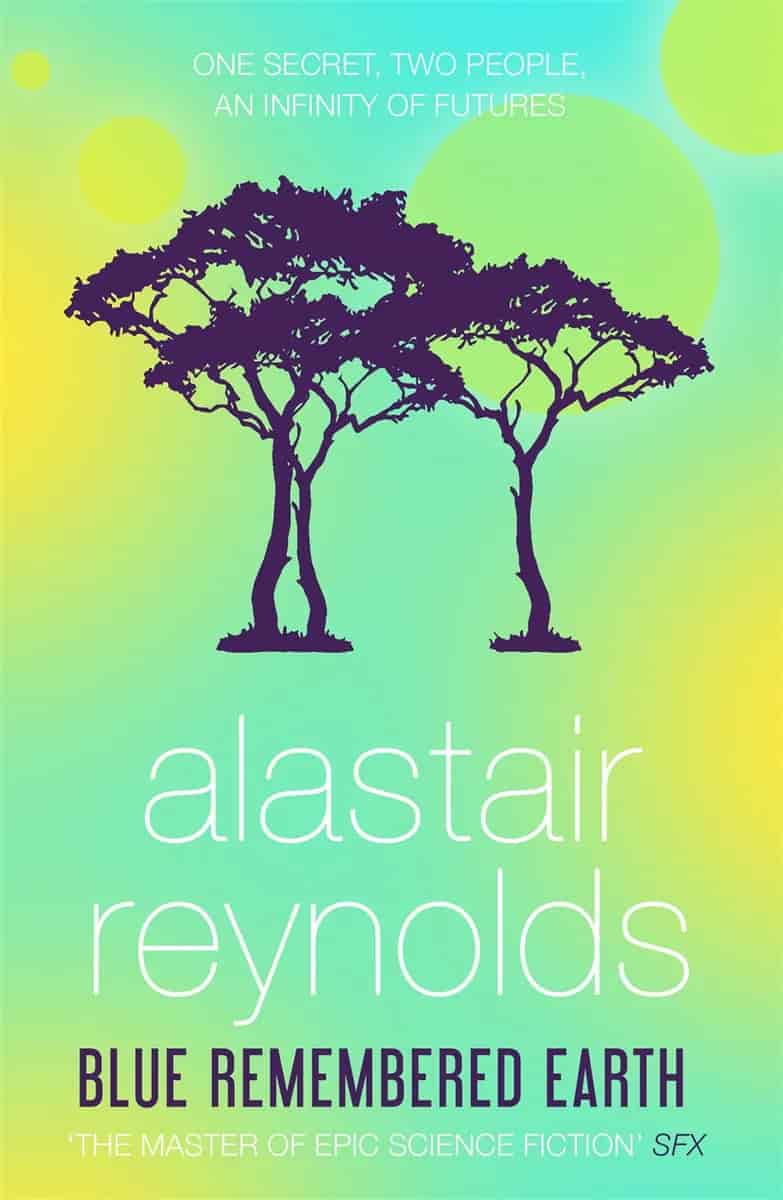
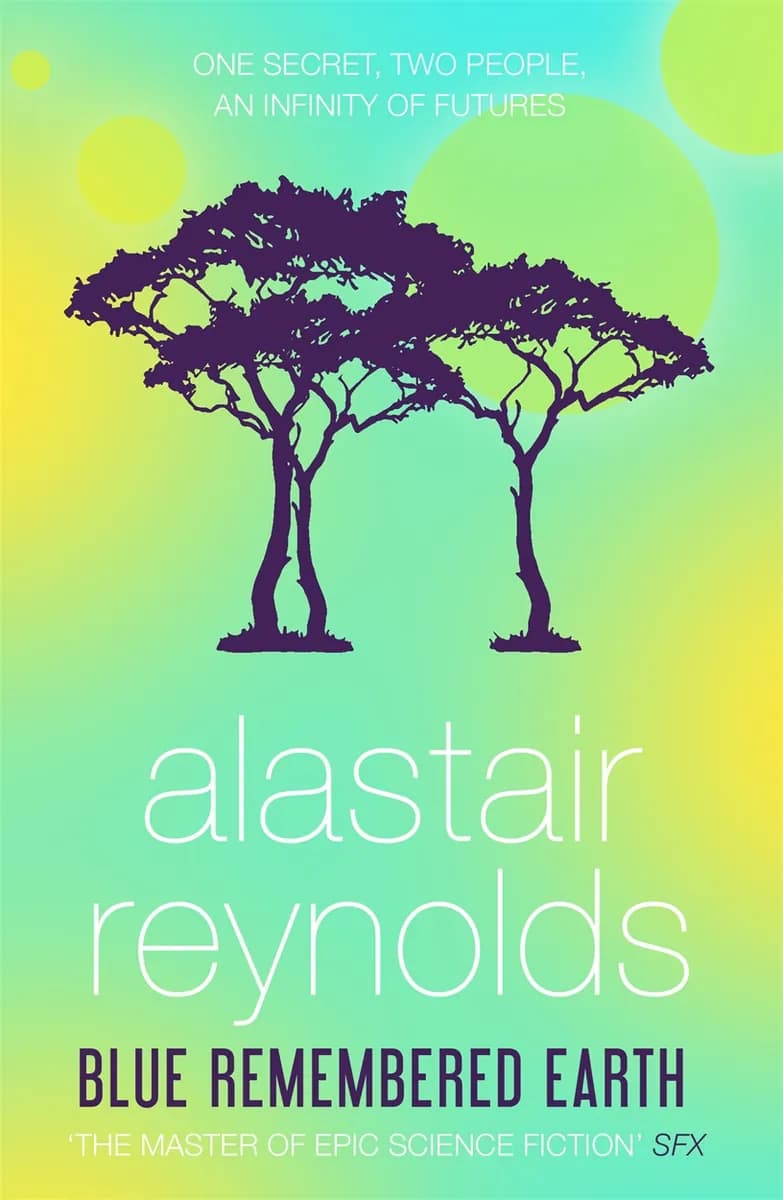
In a flash she understood herself for what she was: an exceedingly smart monkey. She was a smart monkey who had travelled across interplanetary space in a thing made by other smart monkeys. And the fact of this was enough to make her laugh out loud, as if she had suddenly, belatedly, grasped the punchline to a very involved joke.
I’m the punchline, Sunday thought. I’m the period, the full stop at the end of an immensely long and convoluted chain of happenstance and contingency stretching from the discovery of fire down in the Olduvai Gorge, through the inventions of language and paper and the wheel, through all the unremembered centuries to…this. This condition. Being brought out of hibernation aboard a spaceship orbiting another planet. Being alive in the twenty-second century. Being a thing with a central nervous system complex enough to understand the concept of being a thing with a central nervous system. Simply being.
Consider all the inanimate matter in the universe, all the dumb atoms, all the mindless molecules, all the oblivious dust grains and pebbles and rocks and iceballs and worlds and stars, all the unthinking galaxies and superclusters, wheeling through the oblivious time-haunted megaparsecs of the cosmic supervoid. In all that immensity, she had somehow contrived to be a human being, a microscopically tiny, cosmically insignificant bundle of information-processing systems, wired to a mind more structurally complex than the Milky Way itself, maybe even more complex than the rest of the whole damned universe.
She had threaded the needle of creation and stabbed the cosmic bullseye.
p. 215