Quotes
Should he ever write an autobiography, he'd call it The Life and Death of a Male Body.
I’ve alway known that the quality of love was the mind, even though the body sometimes refuses this knowledge. The body lives for itself. It lives only to feed and wait for the night. It’s essentially nocturnal. But what of the mind which is born of the sun, William, and must spend thousands of hours of a lifetime awake and aware? Can you balance off the body, that pitiful, selfish thing of night against a whole lifetime of sun and intellect? I don’t know.
p. 151
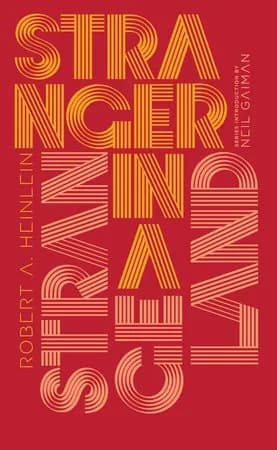
"I can't help it," I said. "My soul knows my meat is doing bad things, and is embarrassed. But my meat just keeps right on doing bad, dumb things."
"You and your what?" he said.
"My soul and my meat," I said.
"They're separate?" he said.
"I sure hope they are," I said. I laughed. "I would hate to be responsible for what my meat does."
p. 246
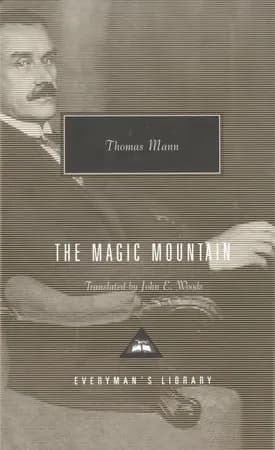
Disease makes men more physical, it leaves them nothing but body.
This thing up here, this consciousness, thinks it's running the shop. It's a secondary organ. It's a secondary organ of a total human being, and it must not put itself in control. It must submit and serve the humanity of the body.
When stripped, I looked less like "Il David" than a plucked chicken that died of myxomatosis.
The size of mammary glands is only a concern for infants. (and, I could add, for men or women who are temporarily or inappropriately thinking or acting like infants.)
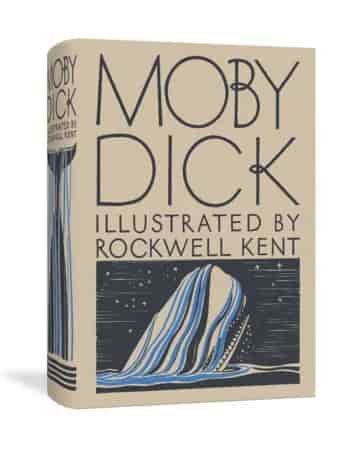
Methinks my body is but the lees of my better being.
p. 40
Anatomy is not destiny, but it is not irrelevant either.
p. 199
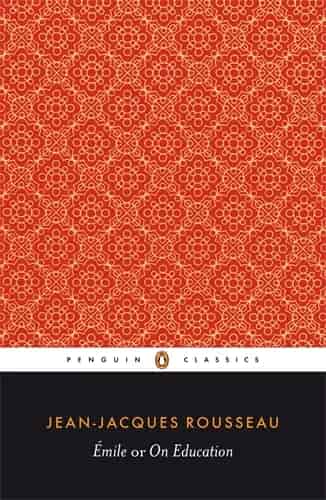
Moreover, I maintain that the charm which these corsets are supposed to produce is in the worst possible taste; it is not a pleasant thing to see a woman cut in two like a wasp—it offends both the eye and the imagination. A slender waist has its limits, like everything else, in proportion and suitability, and beyond these limits it becomes a defect. This defect would be a glaring one in the nude; why should it be beautiful under the costume?
"What becomes of man when all we know of him through our senses has vanished?" This question no longer presents any difficulty to me when I admit the two substances. It is easy to understand that what is imperceptible to those senses escapes me, during my bodily life, when I perceive through my senses only. When the union of soul and body is destroyed, I think one may be dissolved and the other may be preserved. Why should the destruction of the one imply the destruction of the other? On the contrary, so unlike in their nature, they were during their union in a highly unstable condition, and when this union comes to an end they both return to their natural state; the active vital substance regains all the force which it expended to set in motion the passive dead substance. Alas! my vices make me only too well aware that man is but half alive during this life; the life of the soul only begins with the death of the body.
As the sentient being becomes active his discernment develops along with his strength. Not till his strength is in excess of what is needed for self-preservation, is the speculative faculty developed, the faculty adapted for using this superfluous strength for other purposes. Would you cultivate your pupil's intelligence, cultivate the strength it is meant to control. Give his body constant exercise, make it strong and healthy, in order to make him good and wise; let him work, let him do things, let him run and shout, let him be always on the go; make a man of him in strength, and he will soon be a man in reason.
Speaking generally, there is nothing duller than a peasant or sharper than a savage. What is the cause of this difference? The peasant has always done as he was told, what his father did before him, what he himself has always done; he is the creature of habit, he spends his life almost like an automaton on the same tasks; habit and obedience have taken the place of reason. The case of the savage is very different; he is tied to no one place, he has no prescribed task, no superior to obey, he knows no law but his own will; he is therefore forced to reason at every step he takes. He can neither move nor walk without considering the consequences. Thus the more his body is exercised, the more alert is his mind; his strength and his reason increase together, and each helps to develop the other.