


Quotes
We've arranged a global civilization in which the most crucial elements — transportation, communications, and all other industries; agriculture, medicine, education, entertainment, protecting the environment; and even the key democratic institution of voting — profoundly depend on science and technology. We have also arranged things so that almost no one understands science and technology. This is a prescription for disaster. We might get away with it for a while, but sooner or later this combustible mixture of ignorance and power is going to blow up in our faces.
p. 26
I have a foreboding of an America in my children's or grandchildren's time -- when the United States is a service and information economy; when nearly all the manufacturing industries have slipped away to other countries; when awesome technological powers are in the hands of a very few, and no one representing the public interest can even grasp the issues; when the people have lost the ability to set their own agendas or knowledgeably question those in authority; when, clutching our crystals and nervously consulting our horoscopes, our critical faculties in decline, unable to distinguish between what feels good and what's true, we slide, almost without noticing, back into superstition and darkness.
p. 25
Once intelligent beings achieve technology and the capacity for self-destruction of their species, the selective advantage of intelligence becomes more uncertain.
p. 240
Would you believe that all the gods that people have ever imagined are still with us today? … And that there are new gods out there, gods of computers and telephones and whatever, and that they all seem to think there isn't room for them both in the world. And that some kind of war is kind of likely.
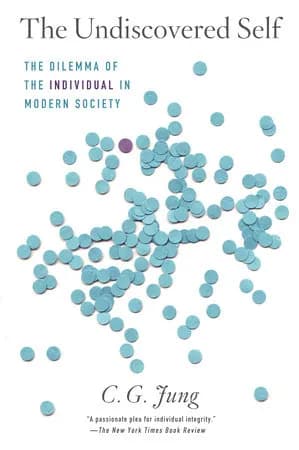
We are living in what the Greeks called the right time for a "metamorphosis of the gods," i.e. of the fundamental principles and symbols. This peculiarity of our time, which is certainly not of our conscious choosing, is the expression of the unconscious man within us who is changing. Coming generations will have to take account of this momentous transformation if humanity is not to destroy itself through the might of its own technology and science.
p. 110
It is astounding that man, the instigator, inventor and vehicle of all these developments, the originator of all judgements and decisions and the planner of the future, must make himself such a quantité negligeable.
p. 45
Walking is still the best form of short-distance transportation. It’s the most convenient, the cheapest, and the most healthful, Countless years of technological advance have not changed that.
p. 43
Our inventions are wont to be pretty toys, which distract our attention from serious things. They are but improved means to an unimproved end, an end which it was already but too easy to arrive at.
p. 60
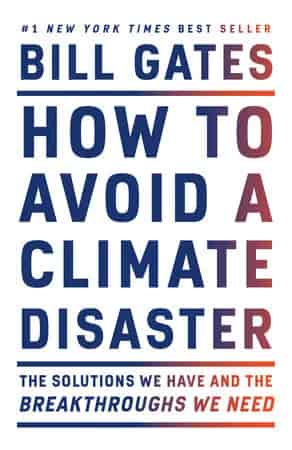
Deploying today’s renewables and improving transmission couldn’t be more important. . . . Unless we use large amounts of nuclear energy . . . every path to zero in the United States will require us to install as much wind and solar power as we can build and find room for. . . . [M]ost countries aren’t as lucky as the United States when it comes to solar and wind resources. . . . That’s why, even as we deploy, deploy, deploy solar and wind, the world is going to need some new clean electricity inventions too.
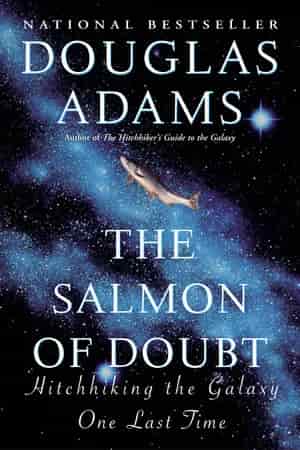
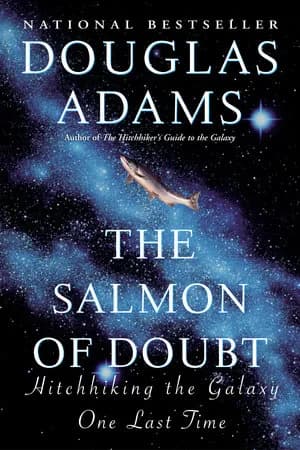
There is no problem so complicated that you can't find a very simple answer to it if you look at it right … Or put it another way, "The future of computer power is pure simplicity."
We are stuck with technology when what we really want is just stuff that works.









That’s all the quotes.
11 quotes in the collection · come back when we add more