Quotes
People are afraid to find themselves alone, and don’t find themselves at all.
p. 104
He marvelled again at the effect of projection: how hostile Henry had seemed to him when Patrick was hostile towards everyone; how considerate he seemed now that Patrick had no argument with him. What would it be like to stop projecting? Was it possible at all?
He had never really found his self, because he had wanted to trap it in the net of thoughts. The body was certainly not the self, nor the play of senses, nor thought, nor understanding, nor acquired wisdom or art with which to draw conclusions and from already existing thoughts to spin new thoughts. No, this world of thought was still on the side, and it led to no goal when one destroyed the senses of the incidental self but fed it with thoughts and erudition. Both thought and the senses were fine things; behind both of them lay hidden the last meaning; it was worth while listening to them both, to play with both, neither to despise nor overrate either of them, but to listen intently to both voices.
p. 47
Who would dare invite such a smoke? To some it might be healing, but to others, bane. Breathed in at the nostrils, it seemed to fill the eyes and ears and brain. To a man who knew many things, it would reveal many more, to a man who knew little it would reveal too much. Its name was self-knowledge.
p. 163
In the tales of many lands, the prophet goes forth into the wilderness, the waste of sand or snow, or aloft on the barren black mountain, and when he returns to the people his eyes are great and luminous, his face is altered; he tells them he has seen God. I will suppose that God, if He is anywhere, is to be found in men, the nugget of gold buried inside the mud. I will suppose, too, that the wilderness washes off for a moment, or forever, the mud and the clay. Perhaps, then, the returning prophet should not say, “I have seen God”; but rather, “I have seen myself.”
p. 260
“Don’t judge yourself,” he said. “None of us are ever good at it.”
p. 402
If we become aware of its limitations and compulsions, we can transcend them.
p. 12
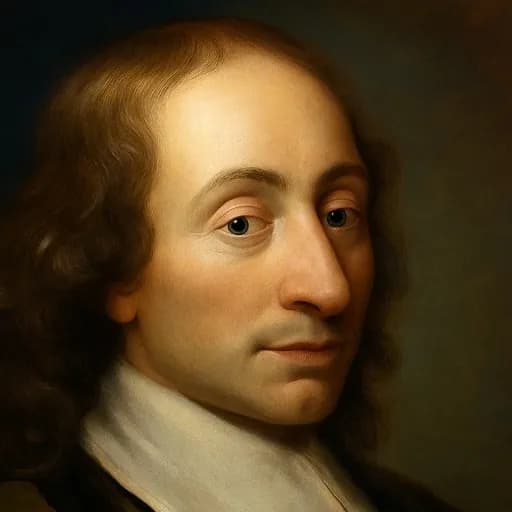
When I commenced the study of man... I thought at least to find many companions in the study of man, and that it was the true study which is suited to him. I have been deceived; still fewer study it than geometry. It is only from the want of knowing how to study this that we seek the other studies. But is it not that even here is not the knowledge which man should have, and that for the purpose of happiness it is better for him not to know himself?
We know ourselves so little, that many think they are about to die when they are well, and many think they are well when they are near death...
Thus, when they [others] discover only the imperfections and vices which we really have, it is plain they do us no wrong, since it is not they who cause them; they rather do us good, since they help us to free ourselves from an evil, namely, the ignorance of these imperfections. We ought not to be angry at their knowing our faults and despising us; it is but right that they should know us for what we are, and should despise us, if we are contemptible.
One must know oneself. If this does not serve to discover truth, it at least serves as a rule of life, and there is nothing better.
Man is to himself the most wonderful object in nature; for he cannot conceive what the body is, still less what the mind is, and least of all how a body should be united to a mind. This is the consummation of his difficulties, and yet it is his very being.