Quotes about science
645 quotes · 219 authors
Quotes
In these frequent talks about the books I read, he used, as opportunity offered, to give me explanations and ideas respecting civilization, government, morality, mental cultivation, which he required me afterwards to restate to him in my own words. He also made me read, and give him a verbal account of, many books which would not have interested me sufficiently to induce me to read them of myself: among others, Millar's Historical View of the English Government, a book of great merit for its time, and which he highly valued; Mosheim's Ecclesiastical History, McCrie's Life of John Knox, and even Sewel's and Rutty's Histories of the Quakers. He was fond of putting into my hands books which exhibited men of energy and resource in unusual circumstances, struggling against difficulties and overcoming them: of such works I remember Beaver's African Memoranda, and Collins's account of the first settlement of New South Wales.
p. 8
It is also a study peculiarly adapted to an early stage in the education of philosophical students, since it does not presuppose the slow process of acquiring, by experience and reflection, valuable thoughts of their own.
p. 19
If I had been by nature extremely quick of apprehension, or had possessed a very accurate and retentive memory or were of a remarkably active and energetic character, the trial would not be conclusive; but in all these natural gifts I am rather below than above par; what I could do, could assuredly be done by any boy or girl of average capacity and healthy physical constitution: and if I have accomplished anything, I owe it, among other fortunate circumstances, to the fact that through the early training bestowed on me by my father, I started, I may fairly say, with an advantage of a quarter of a century over my contemporaries.
p. 30
There is no author to whom my father thought himself more indebted for his own mental culture, than Plato, or whom he more frequently recommended to young student. I can bear similar testimony in regard to myself. The Socratic method, of which the Platonic dialogues are the chief example, is unsurpassed as a discipline for correcting the errors, and clearing up the confusions incident to the intellectus sibi permissus...
p. 21
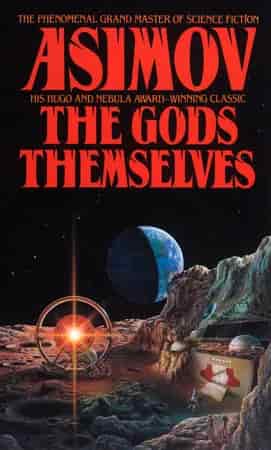
It does not destroy matter, which is reassuring. Rewriting one law of physics is worse than trying to eat one peanut.
p. 40
"They're both magic. If you can't learn to ride an elephant, you can at least learn to ride a horse."
I refused to make any changes.
I said to them, haughtily, “It isn’t written in the stars that I must make a million dollars, but it is written in the stars that I must be true to my principles.”
So they fired me. They had someone else do the changes, and on June 26, 1978, I made them remove my name from the book. The project was a fiasco from beginning to end.
What does one do in a case like this? One is helpless in the face of cowardly publishers, pliant school boards, and fanatical ignoramuses. All I can do is write essays denouncing creationism with its believe in Adam, Eve, a talking serpent, and a worldwide Flood, all in a six- to ten-thousand-year-old universe, and in a supernatural creation of all the species of life so that they were different from the start.
Some of my essays appeared in as august an organ as The New York Times Magazine and that roused the anger of many Fundamentalists—an anger I am happy and proud to inspire.
p. 307
If an interaction is too weak to be detectable or to exert influence in any way, then by any operational definition, it doesn't exist.
p. 257
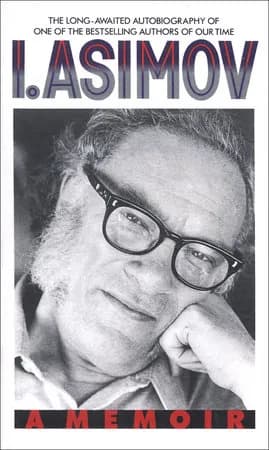
By the time I was reading the Bible, however, science fiction and science books had taught me their version of the universe and I was not ready to accept the creation tale of Genesis or the various miracles described throughout the book. My experience with the Greek myths (and, later, the grimmer Norse myths) made it quite obvious to me that I was reading Hebrew myths.
p. 13
Does said, “You’re not a…a believer?”
“I’m a scholar,” said Mycelium with obvious pride.
p. 272
For it is the chief characteristic of the religion of science, that it works, and that such curses as that of Aporat's are really deadly.
"First, you refused to admit that there was a menace at all! Then you reposed an absolutely blind faith in the Emperor! Now you've shifted it to Hari Seldon. Throughout you have invariably relied on authority or on the past – never on yourselves. It amounts to a diseased attitude – a conditioned reflex that shunts aside the independence of your minds whenever it is a question of opposing authority. There seems no doubt ever in your minds that the Emperor is more powerful than you are, or Hari Seldon wiser. And that's wrong, don't you see? It isn't just you. It's the whole Galaxy. Pirenne heard Lord Dorwin's idea of scientific research. Lord Dorwin thought the way to be a good archaeologist was to read all the books on the subject – written by men who were dead for centuries. He thought that the way to solve archaeological puzzles was to weigh the opposing authorities. And Pirenne listened and made no objections. Don't you see that there's something wrong with that? And you men and half of Terminus as well are just as bad. We sit here,considering the Encyclopedia the all-in-all. We consider the greatest end of science is the classification of past data. It is important, but is there no further work to be done? We're receding and forgetting, don't you see? Here in the Periphery they've lost nuclear power. In Gamma Andromeda, a power plant has undergone meltdown because of poor repairs, and the Chancellor of the Empire complains that nuclear technicians are scarce. And the solution? To train new ones? Never! Instead they're to restrict nuclear power. Don't you see? It's Galaxy wide. It's a worship of the past. It's a deterioration – a stagnation!"