Quotes about science
645 quotes · 219 authors
Quotes
It is with Isaac Newton that the modern dream of a final theory really begins.
p. 11
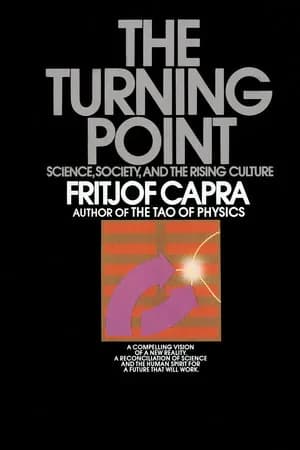
Mystics understand the roots of the Tao but not its branches; scientists understand its branches but not its roots. Science does not need mysticism and mysticism does not need science; but man needs both.
p. 306
Both the physicist and the mystic want to communicate their knowledge, and when they do so with words their statements are paradoxical and full of logical contradictions.
p. 46
The influence of modern physics goes beyond technology. It extends to the realm of thought and culture where it has led to a deep revision in man's conception of the universe and his relation to it.
p. 17
A page from a journal of modern experimental physics will be as mysterious to the uninitiated as a Tibetan mandala. Both are records of enquiries into the nature of the universe.
p. 36
While the new physics was developing in the 20th century, the mechanistic Cartesian world view and the principles of Newtonian physics maintained their strong influence on Western scientific thinking, and even today many scientists still hold to the mechanistic paradigm, although physicists themselves have gone beyond it.
However, the new conception of the universe that has emerged from modern physics does not mean that Newtonian physics is wrong, or that quantum theory, or relativity theory, is right. Modern science has come to realize that all scientific theories are approximations to the true nature of reality; and that each theory is valid for a certain range of phenomena.
p. 93
If physics leads us today to a world view which is essentially mystical, it returns, in a way, to its beginning, 2,500 years ago. [...] This time, however, it is not only based on intuition, but also on experiments of great precision and sophistication, and on a rigorous and consistent mathematical formalism.
p. 19
One of the reasons that basic research is advanced most by not resorting to intellectual property is that while doing so would have questionable benefits, the costs are apparent. [...] Interestingly, even in software, this system of open collaboration has worked. Today we have the Linux computer operating system, which is also based on the principle of open architecture.
p. 112
Warlocks and witches debate to determine how to make their broomsticks fly again. But how shall they ever come together in strength? Even if your ideas had any truth, they’re so frequently, by their very character, at odds. Each claims to hold the key to the only wisdom. That’s where natural philosophers, who do not impose what they need to believe (or at least not so readily!) upon the world, but analyze what they see, have the strong advantage.
p. 310
“You have no proof of this,” I said.
“No. But a theory must be tested to be disproved, Mr Bastable.”
p. 233
“How will the doctor fare?” Corum called. “The one who took me in.”
“He will die unless he is clever and denounces you,” Jhary told him.
“But he was a man of great intelligence and humanity. A man of science, too—of learning.”
“All the more reason for killing him, if their priesthood has its way. Superstition, not learning, is respected here.”
p. 335
All good science is art. And all good art is science.