Quotes about science
74 quotes · 18 authors
Quotes
All laws are... deduced from experiment; but to enunciate them, a special language is needful... ordinary language is too poor...
This... is one reason why the physicist can not do without mathematics; it furnishes him the only language he can speak. And a well-made language is no indifferent thing;
...the analyst, who pursues a purely esthetic aim, helps create, just by that, a language more fit to satisfy the physicist.
...law springs from experiment, but not immediately. Experiment is individual, the law deduced from it is general; experiment is only approximate, the law is precise...
In a word, to get the law from experiment, it is necessary to generalize... But how generalize? ...in this choice what shall guide us?
It can only be analogy. ...What has taught us to know the true profound analogies, those the eyes do not see but reason divines?
It is the mathematical spirit, which disdains matter to cling only to pure form.
Mathematics have a triple aim. They must furnish an instrument for the study of nature. But that is not all: they have a philosophic aim and, I dare maintain, an esthetic aim. They must aid the philosopher to fathom the notions of number, of space, of time. And above all, their adepts find therein delights analogous to those given by painting and music. They admire the delicate harmony of numbers and forms; they marvel when a new discovery opens to them an unexpected perspective; and has not the joy they thus feel the esthetic character, even though the senses take no part therein? Only a privileged few are called to enjoy it fully, it is true, but is not this the case for all the noblest arts?
This is why I do not hesitate to say that mathematics deserve to be cultivated for their own sake, and the theories inapplicable to physics as well as the others. Even if the physical aim and the esthetic aim were not united, we ought not to sacrifice either.
[A]stronomers... define duration in the following way: time... so defined that Newton's law and that of vis viva [or of the ] may be verified. Newton's law is an experimental truth... only approximate... [W]e still have only a definition by approximation.
[W]hat postulate do we implicitly admit? It is that the duration of two identical phenomena is the same; or... that the same causes take the same time to produce the same effects. ...Is it impossible that experiment may some day contradict our postulate?
I had been to school most all the time and could spell and read and write just a little, and could say the multiplication table up to six times seven is thirty-five, and I don’t reckon I could ever get any further than that if I was to live forever. I don’t take no stock in mathematics, anyway.
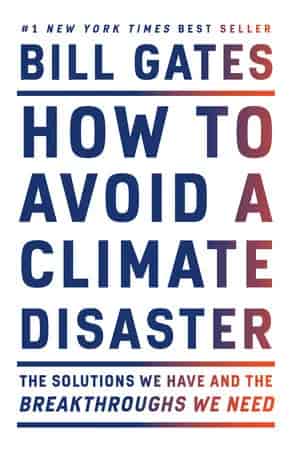
To get [the breakthroughs on the "Technologies needed" list] ready soon enough to make a difference, governments need to . . . [q]uintuple clean energy and climate-related R&D over the next decade. . . .
p. 200
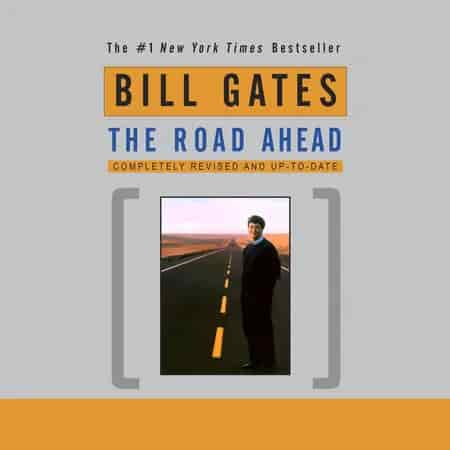
The obvious mathematical breakthrough would be development of an easy way to factor large prime numbers.
p. 265
I took an estimated two thousand years of high school French, and when I finally got to France, I discovered that I didn't know one single phrase that was actually useful in a real-life French situation.
For the inquisition of Final Causes is barren, and like a virgin consecrated to God produces nothing.
As we divided natural philosophy in general into the inquiry of causes, and productions of effects: so that part which concerneth the inquiry of causes we do subdivide according to the received and sound division of causes. The one part, which is physic, inquireth and handleth the material and efficient causes; and the other, which is metaphysic, handleth the formal and final causes.
I could not be true and constant to the argument I handle, if I were not willing to go beyond others; but yet not more willing than to have others go beyond me again: which may the better appear by this, that I have propounded my opinions naked and unarmed, not seeking to preoccupate the liberty of men's judgments by confutations.
The natural philosophy of Democritus and some others, who did not suppose a mind or reason in the frame of things, but attributed the form thereof able to maintain itself to infinite essays or proofs of nature, which they term fortune, seemeth to me... in particularities of physical causes more real and better inquired than that of Aristotle and Plato; whereof both intermingled final causes, the one as a part of theology, and the other as a part of logic, which were the favourite studies respectively of both those persons. Not because those final causes are not true, and worthy to be inquired, being kept within their own province; but because their excursions into the limits of physical causes hath bred a vastness and solitude in that tract.