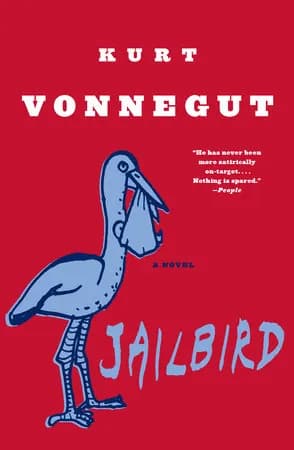
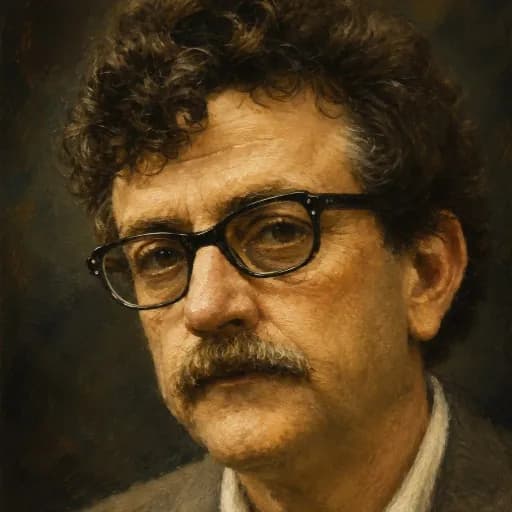
Quotes
Congressman Nixon had asked me why, as the son of immigrants who had been treated so well by Americans, as a man who had been treated like a son and been sent to Harvard by an American capitalist, I had been so ungrateful to the American economic system.
The answer I gave him was not original. Nothing about me has ever been original. I repeated what my one-time hero, Kenneth Whistler, had said in reply to the same general sort of question long, long ago. Whistler had been a witness at a trial of strikers accused of violence. The judge had become curious about him, had asked him why such a well-educated man from such a good family would so immerse himself in the working class.
My stolen answer to Nixon was this: "Why? The Sermon on the Mount, sir."
“Well, when it became evident that no governmental or economic reform was going to make the people much less miserable, the religion became the one real instrument of hope. Truth was the enemy of the people, because the truth was so terrible, so Bokonon made it his business to provide the people with better and better lies.
I agree with one Bokononist idea. I agree that all religions, including Bokononism, are nothing but lies.
Anyone unable to understand how a useful religion can be founded on lies will not understand this book either.So be it.
"Any man who would change the World in a significant way must have showmanship, a genial willingness to shed other people's blood, and a plausible new religion to introduce during the brief period of repentance and horror that usually follows bloodshed.
"Every failure of Earthling leadership has been traceable to a lack on the part of the leader," says Rumfoord, "of at least one of these three things."
p. 174
"The name of the new religion," said Rumfoord, "is The Church of God the Utterly Indifferent.
"The flag of that church will be blue and gold," said Rumfoord. "These words will be written on that flag in gold letters on a blue field: Take Care of the People, and God Almighty Will Take Care of Himself.
"The two chief teachings of this religion are these," said Rumfoord: "Puny man can do nothing at all to help or please God Almighty, and Luck is not the hand of God."
p. 180
These displaced people need something, and the clergy can't give it to them—or it's impossible for them to take what the clergy offers. The clergy says it's enough, and so does the Bible. The people say it isn't enough, and I suspect they're right.
p. 92
Restaurants get you in with food to sell you liquor; religions get you in with belief to sell you rules.
p. 21
Surely just about everybody has faced a moral dilemma and secretly wished, "If only somebody — somebody I trusted — could just tell me what to do!" Wouldn't this be morally inauthentic? Aren't we responsible for making our own moral decisions? Yes, but the virtues of "do it yourself" moral reasoning have their limits, and if you decide, after conscientious consideration, that your moral decision is to delegate further moral decisions in your life to a trusted expert, then you have made your own moral decision. You have decided to take advantage of the division of labor that civilization makes possible and get the help of expert specialists.We applaud the wisdom of this course in all other important areas of decision-making (don't try to be your own doctor, the lawyer who represents himself has a fool for a client, and so forth). Even in the case of political decisions, like which way to vote, the policy of delegation can be defended. … Is the a dereliction of [one's] dut[y] as a citizen? I don't think so, but it does depend on my having good grounds for trusting [the delegate's] judgment. … That why those who have an unquestioning faith in the correctness of the moral teachings of their religion are a problem: if they themselves haven't conscientiously considered, on their own, whether their pastors or priests or rabbis or imams are worthy of this delegated authority over their own lives, then they are in fact taking a personally immoral stand.This is perhaps the most shocking implication of my inquiry, and I do not shrink from it, even though it may offend many who think of themselves as deeply moral. It is commonly supposed that it is entirely exemplary to adopt the moral teachings of one's own religion without question, because -- to put it simply — it is the word of God (as interpreted, always, by the specialists to whom one has delegated authority). I am urging, on the contrary, that anybody who professes that a particular point of moral conviction is not discussable, not debatable, not negotiable, simply because it is the word of God, or because the Bible says so, or because "that is what all Muslims [Hindus, Sikhs ...] [sic] believe, and I am a Muslim [Hindu, Sikh ...]" [sic], should be seen to be making it impossible for the rest of us to take their views seriously, excusing themselves from the moral conversation, inadvertently acknowledging that their own views are not conscientiously maintained and deserve no further hearing.
What [is] the prevailing attitude today among those who call themselves religious but vigorously advocate tolerance? There are three main options, ranging from the disingenuous Machiavellian--1. As a matter of political strategy, the time is not ripe for candid declarations of religious superiority, so we should temporize and let sleeping dogs lie in hopes that those of other faiths can gently be brought around over the centuries.--through truly tolerant Eisenhowerian "Our government makes no sense unless it is founded on a deeply religious belief — and I don't care what it is" --2. It really doesn't matter which religion you swear allegiance to, as long as you have some religion.--to the even milder Moynihanian benign neglect--3. Religion is just too dear to too many to think of discarding, even though it really doesn't do any good and is simply an empty historical legacy we can afford to maintain until it quietly extinguishes itself sometime in the distant and unforeseeable future.It it no use asking people which they choose, since both extremes are so undiplomatic we can predict in advance that most people will go for some version of ecumenical tolerance whether they believe it or not. ...We've got ourselves caught in a hypocrisy trap, and there is no clear path out. Are we like families in which the adults go through all the motions of believing in Santa Claus for the sake of the kids, and the kids all pretend still to believe in Santa Claus so as not to spoil the adults' fun? If only our current predicament were as innocuous and even comical as that! In the adult world of religion, people are dying and killing, with the moderates cowed into silence by the intransigence of the radicals in their own faiths, and many afraid to acknowledge what they actually believe for fear of breaking Granny's heart, or offending their neighbors to the point of getting run out of town, or worse.If this is the precious meaning our lives are vouchsafed thanks to our allegiance to one religion or another, it is not such a bargain, in my opinion. Is this the best we can do? Is it not tragic that so many people around the world find themselves enlisted against their will in a conspiracy of silence, either because they secretly believe that most of the world's population is wasting their lives in delusion (but they are too tenderhearted — or devious — to say so), or because they secretly believe that their own tradition is just such a delusion (but they fear for their own safety if they admit it)?
The daily actions of religious people have accomplished uncounted good deeds throughout history, alleviating suffering, feeding the hungry, caring for the sick. Religions have brought the comfort of belonging and companionship to many who would otherwise have passed through this life all alone, without glory or adventure. They have not just provided first aid, in effect, for people in difficulties; they have provided the means for changing the world in ways that remove those difficulties. As Alan Wolfe says, "Religion can lead people out of cycles of poverty and dependency just as it led Moses out of Egypt". There is much for religion lovers to be proud of in their traditions, and much for all of us to be grateful for.The fact that so many people love their religions as much as, or more than, anything else in their lives is a weighty fact indeed. I am inclined to think that nothing could matter more than what people love. At any rate, I can think of no value that I would place higher. I would not want to live in a world without love. Would a world with peace, but without love, be a better world? Not if the peace was achieved by drugging the love (and hate) out of us, or by suppression. Would a world with justice and freedom, but without love, be a better world? Not if it was achieved by somehow turning us all into loveless law-abiders with none of the yearnings or envies or hatreds that are wellsprings of injustice and subjugation.It is hard to consider such hypotheticals, and I doubt if we should trust our first intuitions about them, but, for what it is worth, I surmise that we almost all want a world in which love, justice, freedom, and peace are all present, as much as possible, but if we had to give up one of these, it wouldn't — and shouldn't — be love. But, sad to say, even if it is true that nothing could matter more than love, it wouldn't follow from this that we don't have reason to question the things that we, and others, love. Love is blind, as they say, and because love is blind, it often leads to tragedy: to conflicts in which one love is pitted against another love, and something has to give, with suffering guaranteed in any resolution.
If I were designing a phony religion, I'd surely include a version of this little gem — but I'd have a hard time saying it with a straight face:If anybody ever raises questions of objections about our religion that you cannot answer, that person is almost certainly Satan. In fact, the more reasonable the person is, the more eager to engage you in open-minded and congenial discussion, the more sure you can be that you're talking to Satan in disguise! Turn away! Do not listen! It's a trap!What is particularly cute about this trick is that it is a perfect "wild card," so lacking in content that any sect or creed or conspiracy can use it effectively. Communist cells can be warned that any criticism they encounter is almost sure to be the work of FBI infiltrators in disguise, and radical feminist discussion groups can squelch any unanswerable criticism by declaring it to be phallocentric propaganda being unwittingly spread by a brainwashed dupe of the evil patriarchy, and so forth. This all-purpose loyalty-enforcer is paranoia in a pill, sure to keep the critics muted if not silent.Did anyone invent this brilliant adaptation, or is it a wild meme that domesticated itself by attaching itself to whatever memes were competing for hosts in its neighborhood? Nobody knows, but now it is available for anybody to use — although, if this book has any success, its virulence should diminish as people begin to recognize it for what it is.