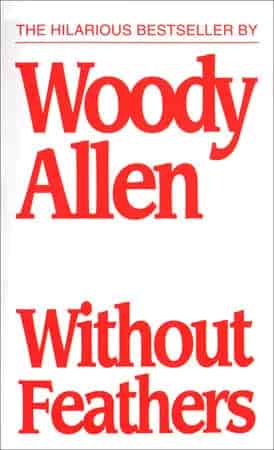
Quotes
For eighteen hundred years, though perchance I have no right to say it, the New Testament has been written; yet where is the legislator who has wisdom and practical talent enough to avail himself of the light which it sheds on the science of legislation?
Civil DisobedienceI was truly sorry for Mr. Bryan. But I consoled myself by thinking of the years through which he had busied himself tormenting intelligent professors with impudent questions about their faith, and seeking to arouse the ignoramuses and bigots to drive them out of their positions.
p. 267
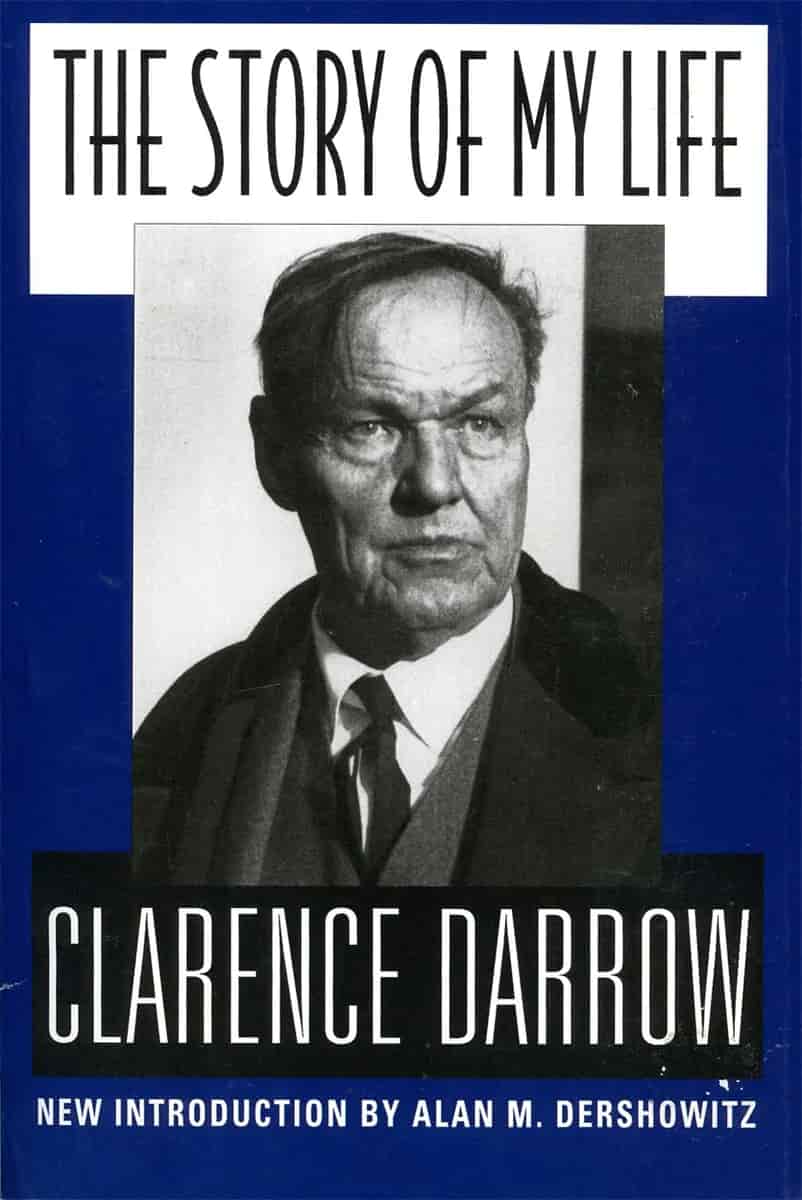
 The Story Of My Life
Let us consider the actual, worldly Jew – not the Sabbath Jew, as Bauer does, but the everyday Jew. Let us not look for the secret of the Jew in his religion, but let us look for the secret of his religion in the real Jew. What is the secular basis of Judaism? Practical need, self-interest. What is the worldly religion of the Jew? Huckstering. What is his worldly God? Money. Very well then! Emancipation from huckstering and money, consequently from practical, real Judaism, would be the self-emancipation of our time. An organization of society which would abolish the preconditions for huckstering, and therefore the possibility of huckstering, would make the Jew impossible. His religious consciousness would be dissipated like a thin haze in the real, vital air of society. On the other hand, if the Jew recognizes that this practical nature of his is futile and works to abolish it, he extricates himself from his previous development and works for human emancipation as such and turns against the supreme practical expression of human self-estrangement.
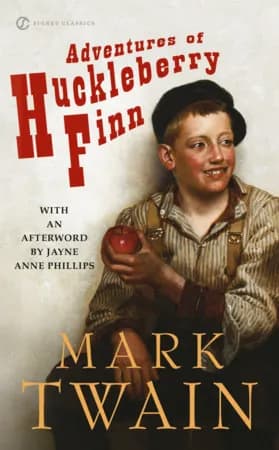
There warn't anybody at the church, except maybe a hog or two, for there warn't any lock on the door, and hogs likes a puncheon floor in summer-time because it's cool. If you notice, most folks don't go to church only when they've got to; but a hog is different.
After supper she got out her book and learned me about Moses and the Bulrushers.
The minister gave out his text and droned along monotonously through an argument that was so prosy that many a head by and by began to nod — and yet it was an argument that dealt in limitless fire and brimstone and thinned the predestined elect down to a company so small as to be hardly worth the saving.
Touching the secrets of the heart and the successions of time, doth make a just and sound difference between the manner of the exposition of the Scriptures and all other books. For it is an excellent observation which hath been made upon the answers of our Saviour Christ to many of the questions which were propounded to Him, how that they are impertinent to the state of the question demanded: the reason whereof is, because not being like man, which knows man's thoughts by his words, but knowing man's thoughts immediately, He never answered their words, but their thoughts. Much in the like manner it is with the Scriptures, which being written to the thoughts of men, and to the succession of all ages, with a foresight of all heresies, contradictions, differing estates of the Church, yea, and particularly of the elect, are not to be interpreted only according to the latitude of the proper sense of the place, and respectively towards that present occasion whereupon the words were uttered, or in precise congruity or contexture with the words before or after, or in contemplation of the principal scope of the place; but have in themselves, not only totally or collectively, but distributively in clauses and words, infinite springs and streams of doctrine to water the Church in every part. And therefore as the literal sense is, as it were, the main stream or river, so the moral sense chiefly, and sometimes the allegorical or typical, are they whereof the Church hath most use; not that I wish men to be bold in allegories, or indulgent or light in allusions: but that I do much condemn that interpretation of the Scripture which is only after the manner as men use to interpret a profane book.
Neither did the dispensation of God vary in the times after our Saviour came into the world; for our Saviour himself did first show His power to subdue ignorance, by His conference with the priests and doctors of the law, before He showed His power to subdue nature by His miracles. And the coming of this Holy Spirit was chiefly figured and expressed in the similitude and gift of tongues, which are but vehicula scientiæ.
The obliteration of the evil hath been practised by two means, some kind of redemption or expiation of that which is past, and an inception or account de novo for the time to come. But this part seemeth sacred and religious, and justly; for all good moral philosophy (as was said) is but a handmaid to religion.
Sacred and inspired divinity, the sabaoth and port of all men's labours and peregrinations.
I am fascinated by religion. (That's a completely different thing from believing in it!) It has had such an incalculably huge effect on human affairs. What is it? What does it represent? Why have we invented it? How does it keep going? What will become of it? I love to keep poking and prodding at it. I've thought about it so much over the years that that fascination is bound to spill over into my writing.
And so he took Isaac to a certain place and prepared to sacrifice him but at the last minute the Lord stayed Abraham's hand and said,
"How could thou doest such a thing?"
And Abraham said, "But thou said-"
"Never mind what I said," the Lord spake. "Doth thou listen to every crazy idea that comes thy way?"
And Abraham grew ashamed. "Er-not really... no."
"I jokingly suggest thou sacrifice Isaac and thou immediately runs out to do it."
And Abraham fell to his knees, "See, I never know when you're kidding."
And the Lord thundered, "No sense of humor. I can't believe it."