Quotes
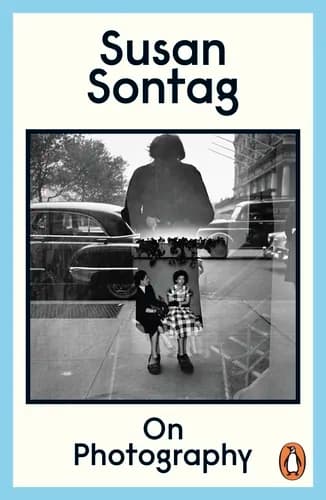
The destiny of photography has taken it far beyond the role to which it was originally thought to be limited: to give more accurate reports on reality (including works of art). Photography is the reality; the real object is often experienced as a letdown.
p. 147
Reality has come to seem more and more like what we are shown by cameras. It is common now for people to insist upon their experience of a violent event in which they were caught up — a plane crash, a shoot-out, a terrorist bombing — that "it seemed like a movie." This is said, other descriptions seeming insufficient, in order to explain how real it was. While many people in non-industrialized countries still feel apprehensive when being photographed, divining it to be some kind of trespass, an act of disrespect, a sublimated looting of the personality or the culture, people in industrialized countries seek to have their photographs taken — feel that they are images, and are made real by photographs.
p. 161
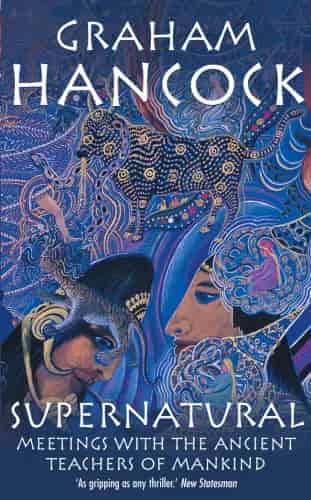
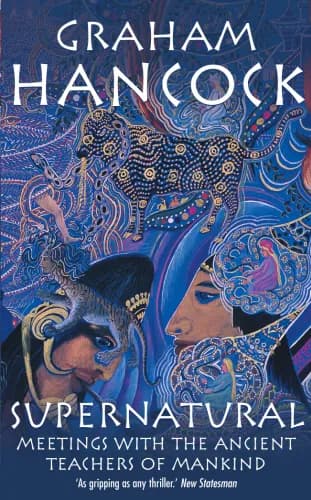
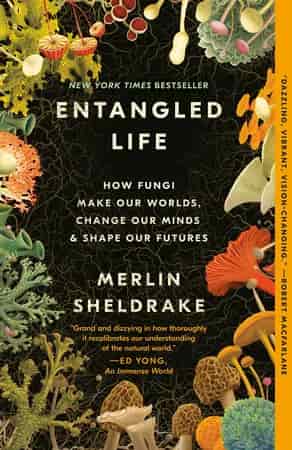
We might feel very sure that there is no more to reality that the material world in which we live, but we cannot prove that this is the case. Theoretically there could be other realms, other dimensions, as all religious traditions and quantum physics alike maintain. Theoretically, the brain could be as much a receiver as a generator of consciousness and thus might be fine-tuned in altered states to pick up wavelengths that are normally not accessible to us.
Tricked out of our expectations, we fall back on our senses. What’s astonishing is the gulf between what we expect to find and what we find when we actually look.
p. 14
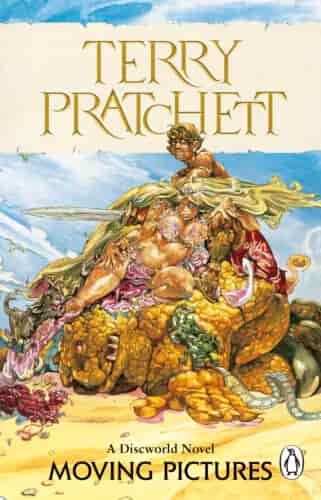
Supposing there was somewhere reality was a little thinner than usual? And supposing you did something there that weakened reality even more. Books wouldn't do it. Even ordinary theater wouldn't do it, because in your heart you knew it was just people in funny clothes on a stage. But Holy Wood went straight from the eye into the brain. In your heart you thought it was real. The clicks would do it. (p. 286)
Being trampled almost to death by a preoccupied troll is almost the ideal cure for a person confused about what is real and what isn't. Reality is something walking heavily up your spine. (p. 319)
His mind raced. What was it they said about the gods? They wouldn't exist if there weren't people to believe in them? And that applied to everything. Reality was what went on inside people's heads. And in front of him were hundreds of people really believing what they were seeing... (p. 286)
"We have no instrument by which to record the absolute nature of reality, because whatever instrument we use is filtered through consciousness."
When you stop inventing reality then you see things as they really are.
The real world. As good a name for it as any other. Carter was a mystic never and a Freudian only when the occasion suited him. His credo was simple: anything that is, is real.
p. 62
"Sometimes it's a mighty struggle to know what's real and what's just . . . a mirage. You understand?"
"Yeah," I said.
p. 132
This was probably rooted in a belief that had been inculcated to him from the get-go: that there was an objective reality, which all people worth talking to could observe and understand, and that there was no point in arguing about anything that could be so observed and so understood.
When a thunderstorm was headed your way across the prairie, you took the washing down from the line and closed the windows.
It wasn’t necessary to have a meeting about it.
The sales force didn’t need to get involved.