Quotes about reading
268 quotes · 149 authors
Quotes
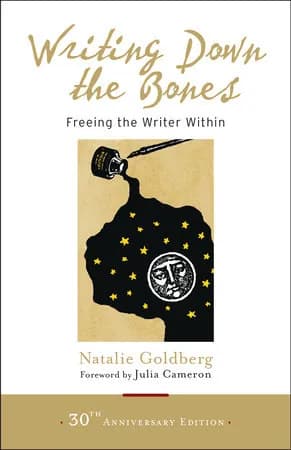
Read a lot, listen well and deeply, and write a lot. […]
If you read good books, when you write, good books will come out of you.
p. 59
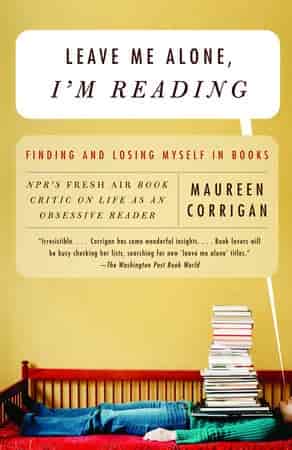
Such is the power of words, of writing, of books. Words you loved and will always yearn for. They can inspire you with possibilities you otherwise would have never imagined; they can fill your head with misleading fantasies. They can give you back your seemingly seamless past and place it right alongside your chaotic present.
“But that only happens in books,” my mother, pretty much immune to the power of the written word, would say.
Exactly. That’s why I can’t stop reading them.
p. 184
I think, consciously or not, what we readers do each time we open a book is to set off on a search for authenticity. We want to get closer to the heart of things, and sometimes even a few good sentences contained in an otherwise unexceptional book can crystallize vague feelings, fleeting physical sensations, or, sometimes, profound epiphanies.
Books just don’t register with this crowd. They think I lack common sense; I think they lack a part of their souls.
p. 57
In our daily lives, where we’re bombarded by the fake and the trivial, reading serves as a way to stop, shut out the noise of the world, and try to grab hold of something real, no matter how small.
I don’t believe in identity politics in literature—or in life much, either. Indeed the current scholarly enchantment with identity politics strikes me as a more intellectual version of the warning oft heard around Sunnyside when I was growing up: “Stick with your own kind.” Family and cultural origins are crucial to self-definition, but they’re not the end of the story. I certainly don’t think that we readers only or even chiefly enjoy or understand books whose main characters mirror us. In fact, the opportunity to become who we are decidedly not—whether it’s Amis’s Dixon or Philip Roth’s Portnoy or Ellison’s Invisible Man or Kafka’s beetle—is one of the greatest gifts reading offers. Women readers get to serve on that floating boy’s club, the Pequod; male readers get to step into Elizabeth Bennet’s shoes and teach Mr. Darcy the dance of humility; readers of either gender who are not African American get to crawl toward freedom alongside Toni Morrison’s Sethe. One of the most magical and liberating things about literature is that it can transport us readers into worlds totally unlike our own.
p. 70
I feel free and strong. If I were not a reader of books I could not feel this way. Whatever may happen to me, thank God that I can read, that I have truly touched the minds of other men.
p. 248
When literacy died, so had history.
p. 161
Bob seems to know almost everything; but he doesn’t know when or why people stopped reading. “Most people are too lazy,” he said. “They only want distractions.”
p. 114
“What is it exactly that you do with a book?”
“You read it.”
“Oh,” she said. And then, “What does read mean?”
I nodded. Then I began turning the pages of the book I was holding and said, “Some of these markings here represent sounds. And the sounds make words. You look at the marks and sounds come into your mind and, after you practice long enough, they begin to sound like hearing a person talking. Talking—but silently.”
p. 56
It is the greatest achievement of my life. Yes, I have used that word: a great achievement. My learning to read was an achievement. Nobody knows that but me.
p. 43
But most of all, it seems to me now, has been the courage to know and to sense my feelings that has come, slowly, from the emotionally charged silent films at the old library at first and then later from the poems and novels and histories and biographies and how-to-do-it books that I have read. All of those books—even the dull and nearly incomprehensible ones—have made me understand more clearly what it means to be a human being. And I have learned from the sense of awe I at times develop when I feel in touch with the mind of another, long-dead person and know that I am not alone on this earth. There have been others who have felt as I feel and who have, at times, been able to say the unsayable.
p. 256