Quotes
Evil comes from unchecked power.
p. 224
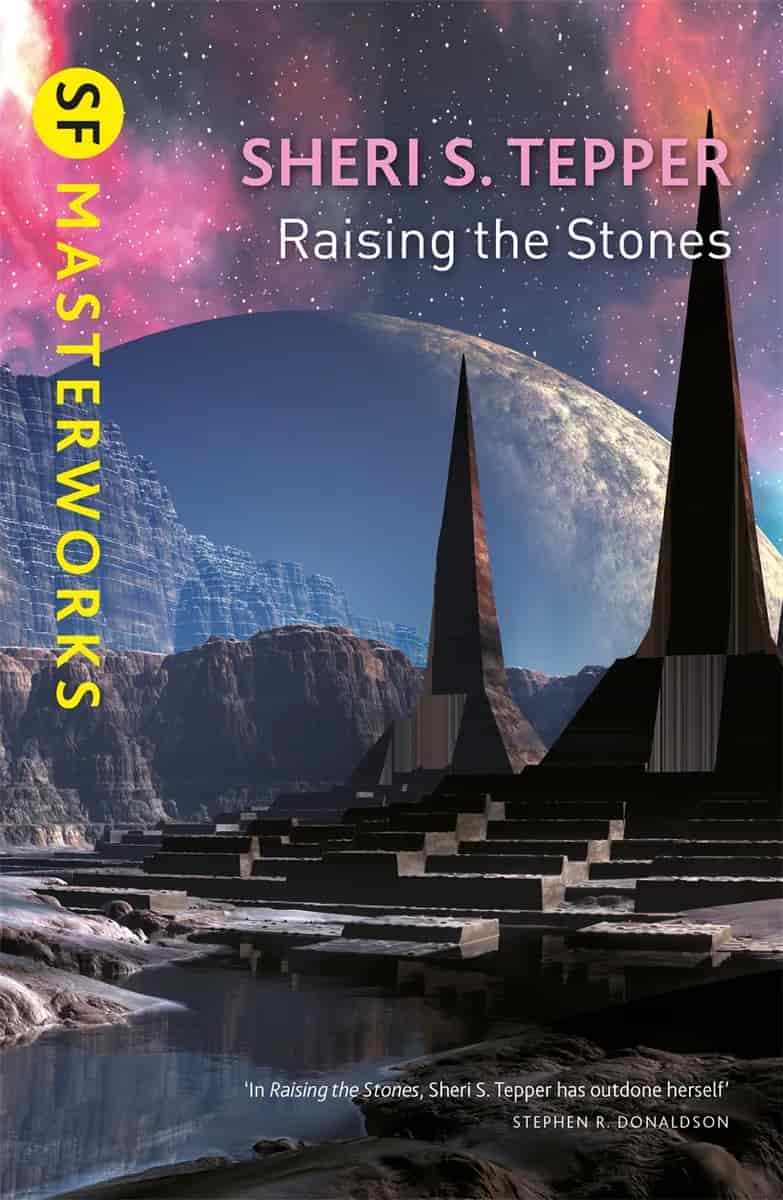
Orimar Breaze also considered his godhood. His followers would be called Breazians. He would demand behaviors and customs peculiar to himself. He would make rules, complicated rules, and many of them, that would take a lot of time and trouble and pain to keep. The only way he could know that his people truly loved him would be if they obeyed many onerous rules. There should be many rituals, also, rituals for everything. Much crawling. He liked the idea of crawling. Slithering, even. Also, abstentions from…from anything pleasurable.
He tried to remember what things were pleasurable. What were they? It had been such a long…so many…so… Was it sex? He seemed to remember it was sex. And food. Food had been pleasurable. So, he would make many rules about sex, many rules about food. If the rules were difficult enough, they would because for much backsliding, and that, and its turn, would be cause for much reproval! He would force…He would make people…He would punish them until they…
Though he could not remember the taste of food or wine, the feel of love, the joys of human movement, he felt a surge of pure pleasure at the idea of power. He would conduct himself properly as a god, using sweet and seductive words at first; then, if that failed, using power and pain to teach his people to adore him.
p. 401
Ire and Iron and Voorstod, the three peoples who had followed Voorstod the prophet away from Manhome. Voorstod with its pastors, Ire with its priests, and Iron with its prophets: the first to rule the slaves, the second to rule the women, the last to rule the men—to rule the men, or to be used by the men, to rule. That had always been the way of men’s Gods, old men’s Gods. To use the Gods to rule.
p. 504
His understanding is not great, but his sense of power and treachery is unfailing.
p. 122
Some great men owe most of their greatness to the ability of detecting in those they destine for their tools the exact quality of strength that matters for their work.
The common run of moralists complain that man is moved by his private self-interest: would to heaven it were so! Private interest is a self-centered principle of action, but at the same time restricted, reasonable and incapable of giving rise to unlimited evils. Whereas, on the other hand, the law of all activities governing social life, except in the case of primitive communities, is that here one sacrifices human life — in himself and in others — to things which are only means to a better way of living. This sacrifice takes on various forms, but it all comes back to the question of power. Power, by definition, is only a means; or to put it better, to possess a power is simply to possess means of action which exceed the very limited force that a single individual has at his disposal. But power-seeking, owing to its essential incapacity to seize hold of its object, rules out all consideration of an end, and finally comes, through an inevitable reversal, to take the place of all ends. It is this reversal of the relationship between means and end, it is this fundamental folly that accounts for all that is senseless and bloody right through history. Human history is simply the history of the servitude which makes men — oppressed and oppressors alike — the plaything of the instruments of domination they themselves have manufactured, and thus reduces living humanity to being the chattel of inanimate chattels.
p. 141
Those who keep the masses of men in subjection by exercising force and cruelty deprive them at once of two vital foods, liberty and obedience; for it is no longer within the power of such masses to accord their inner consent to the authority to which they are subjected. Those who encourage a state of things in which the hope of gain is the principal motive take away from men their obedience, for consent which is its essence is not something which can be sold.
p. 97
He was obeyed, yet he inspired neither love nor fear, nor even respect. He inspired uneasiness. That was it! Uneasiness. Not a definite mistrust — just uneasiness — nothing more. You have no idea how effective such a... a... faculty can be. He had no genius for organizing, for initiative, or for order even. That was evident in such things as the deplorable state of the station. He had no learning, and no intelligence. His position had come to him — why? Perhaps because he was never ill . . . He had served three terms of three years out there . . . Because triumphant health in the general rout of constitutions is a kind of power in itself.
It’s better to teach people than to scare them, Lauren. If you scare them and nothing happens, they lose their fear, and you lose some of your authority with them.
p. 65
All struggles
Are essentially
Power struggles.
Who will rule,
Who will lead,
Who will define,
refine,
confine,
design,
Who will dominate.
All struggles
Are essentially
Power struggles,
And most
are no more intellectual
than two rams
knocking their heads together.
p. 94
The only way to prove to yourself that you have power is to use it
p. 143
Sometimes, one must become a master to avoid becoming a slave.
p. 11