Quotes about power
121 quotes · 18 authors
Quotes
"Why, Stephen, if I am right, it means that the Machine is conducting our future for us not only simply in direct answer to our direct questions, but in general answer to the world situation and to human psychology as a whole. And to know that may make us unhappy and may hurt our pride. The Machine cannot, must not, make us unhappy.
"Stephen, how do we know what the ultimate good of Humanity will entail? We haven't at our disposal the infinite factors that the Machine has at its! Perhaps, to give you a not unfamiliar example, our entire technical civilization has created more unhappiness and misery than it has removed. Perhaps an agrarian or pastoral civilization, with less culture and less people would be better. If so, the Machines must move in that direction, preferably without telling us, since in our ignorant prejudices we only know that what we are used to, is good—and we would then fight change. Or perhaps a complete urbanization, or a completely caste-ridden society, or complete anarchy, is the answer. We don't know. Only the Machines know, and they are going there and taking us with them."
"But you are telling me, Susan, that the 'Society for Humanity' is right; and that Mankind has lost its own say in its future."
"It never had any, really. It was always at the mercy of economic and sociological forces it did not understand—at the whims of climate, and the fortunes of war. Now the Machines understand them; and no one can stop them, since the Machines will deal with them as they are dealing with the Society,—having, as they do, the greatest of weapons at their disposal, the absolute control of our economy."
"How horrible!"
"Perhaps how wonderful! Think, that for all time, all conflicts are finally evitable. Only the Machines, from now on, are inevitable!"
p. 192
Whenever a government feels the need of promising peace and prosperity to its citizens by means of a proclamation, it is time to be on guard and expect the opposite.
p. 332
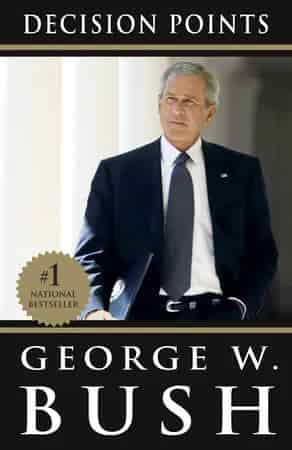
Barack and Michelle Obama arrived on the North Portico just before 10:00 a.m. Laura and I had invited them for a cup of coffee in the Blue Room, just as Bill and Hillary Clinton had done for us eight years earlier. The Obamas were in good spirits and excited about the journey ahead. Meanwhile, in the Situation Room, homeland security aides from both our teams monitored intelligence on a terrorist threat to Washington. It was a stark reminder that evil men still want to harm our country, no matter who is serving as president. After our visit, we climbed into the motorcade for the trip up Pennsylvania Avenue. I thought back to the drive I'd made with Bill Clinton eight years earlier. That day in January 2001, I could never have imagined what would unfold over my time in office. I knew some of the decisions I had made were not popular with many of my fellow citizens. But I felt satisfied that I had been willing to make the hard decisions, and I had always done what I believed was right. At the Capitol, Laura and I took our seats for the Inauguration. I marveled at the peaceful transition of power, one of the defining features of our democracy. The audience was riveted with anticipation for he swearing-in. Barack Obama had campaigned on hope, and that was what he had given many Americans. For our new president, the Inauguration was a thrilling beginning. For Laura and me, it was an end. It was another president's turn, and I was ready to go home.
p. 474
Government, like any other organism, refuses to acquiesce in its own extinction. This refusal, of course, involves the resistance to any effort to diminish its powers and prerogatives. There has been no organized effort to keep government down since Jefferson's day. Ever since then the American people have been bolstering up its powers and giving it more and more jurisdiction over their affairs. They pay for that folly in increased taxes and diminished liberties. No government as such is ever in favor of the freedom of the individual. It invariably seeks to limit that freedom, if not by overt denial, then by seeking constantly to widen its own functions.
The main thing that every political campaign in the United States demonstrates is that the politicians of all parties, despite their superficial enmities, are really members of one great brotherhood. Their principal, and indeed their sole, object is to collar public office, with all the privileges and profits that go therewith. They achieve this collaring by buying votes with other people's money. No professional politician is ever actually in favor of public economy. It is his implacable enemy, and he knows it. All professional politicians are dedicated wholeheartedly to waste and corruption. They are the enemies of every decent man.
The State is not force alone. It depends upon the credulity of man quite as much as upon his docility. Its aim is not merely to make him obey, but also to make him want to obey.
p. 217
The urge to save humanity is almost always only a false-face for the urge to rule it. Power is what all messiahs really seek: not the chance to serve. This is true even of the pious brethren who carry the gospel to foreign parts.
Government is actually the worst failure of civilized man. There has never been a really good one, and even those that are most tolerable are arbitrary, cruel, grasping and unintelligent. Indeed, it would not be far wrong to describe the best as the common enemy of all decent citizens. But there will be small hope of gaining adherents to this idea so long as government is thought of as an independent and somehow super-human organism, with powers, rights, and privileges transcending those of any other human aggregation.
No government is ever really in favor of so-called civil rights. It always tries to whittle them down. They are preserved under all governments, insofar as they survive at all, by special classes of fanatics, often highly dubious.
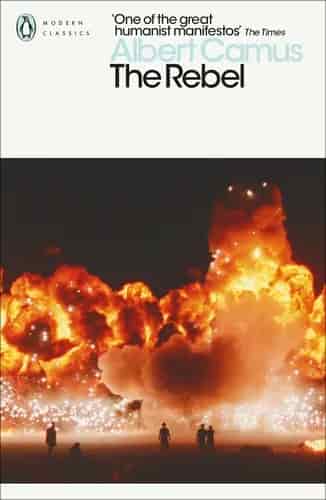
The welfare of the people in particular has always been the alibi of tyrants, and it provides the further advantage of giving the servants of tyranny a good conscience. It would be easy, however, to destroy that good conscience by shouting to them: if you want the happiness of the people, let them speak out and tell what kind of happiness they want and what kind they don't want! But, in truth, the very ones who make use of such alibis know they are lies; they leave to their intellectuals on duty the chore of believing in them and of proving that religion, patriotism, and justice need for their survival the sacrifice of freedom.
Alyosha can, in fact, treat Ivan with compassion as a "real simpleton." The latter only made an attempt at self-control and failed. Others will appear, with more serious intentions, who, on the basis of the same despairing nihilism, will insist on ruling the world. These are the Grand Inquisitors who imprison Christ and come to tell Him that His method is not correct, that universal happiness cannot be achieved by the immediate freedom of choosing between good and evil, but by the domination and unification of the world. The first step is to conquer and rule. The kingdom of heaven will, in fact, appear on earth, but it will be ruled over by men — a mere handful to begin with, who will be the Caesars, because they were the first to understand — and later, with time, by all men. The unity of all creation will be achieved by every possible means, since everything is permitted. The Grand Inquisitor is old and tired, for the knowledge he possesses is bitter. He knows that men are lazy rather than cowardly and that they prefer peace and death to the liberty of discerning between good and evil. He has pity, a cold pity, for the silent prisoner whom history endlessly deceives. He urges him to speak, to recognize his misdeeds, and, in one sense, to approve the actions of the Inquisitors and of the Caesars. But the prisoner does not speak.
Every revolutionary ends as an oppressor or a heretic.