Quotes
The only purpose for which power can be rightfully exercised over any member of a civilized community, against his will, is to prevent harm to others. His own good, either physical or moral, is not a sufficient warrant.
Whatever crushes individuality is despotism, by whatever name it may be called, and whether it professes to be enforcing the will of God or the injunctions of men.
When they're standing right in front of you, kings are a kind of speech impediment.
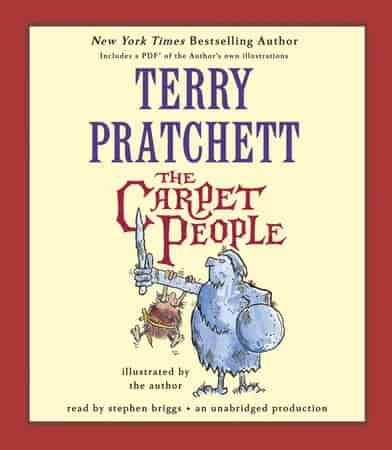
Keep 'em busy. That was one of the three rules of being chief that old Grimm had passed on to him. Act confidently, never say 'I don't know,' and when all else fails, keep 'em busy.
'What would Deftmenes be if we went around obeying orders all the time?'
'They might be ruling the Carpet,' said Pismire.
'Ha!' said Brocando, 'but the trouble about obeying orders is, it becomes a habit. And then everything depends on who's giving the orders.'
It is a mistake to think that because a group has suffered extreme persecution that is a sign that they are virtuous and innocent. They might be, of course, but the persecution process is no proof of that. The persecution merely shows that the persecuted group is weak. Had they been strong, then, for all we know, they might have been the persecutors.
p. 22
For ten years the Galactic Empire had been without an Emperor, but there was no indication of that fact in the way the Imperial Palace grounds were operated. Millennia of custom made the absence of an Emperor meaningless.
Asceticism among a ruling class—except for public show—is very rare.
p. 295
“It strikes me that no one could possibly want to be Emperor.”
“No sane person would, I agree, but the ‘Imperial wish,’ as it is frequently called, is like a disease that, when caught, drives out sanity. And the closer you get to high office, the more likely you are to catch the disease.”
p. 404
The spell of power never quite releases its hold.
It is well-known that the friend of a conqueror is but the last victim.
Korell is that frequent phenomenon in history: the republic whose ruler has every attribute of the absolute monarch but the name. It therefore enjoyed the usual despotism unrestrained even by those two moderating influences in the legitimate monarchies: regal “honor” and court etiquette.