Quotes
It is for no particular item in the tax-bill that I refuse to pay it. I simply wish to refuse allegiance to the State, to withdraw and stand aloof from it effectually. I do not care to trace the course of my dollar, if I could, till it buys a man or a musket to shoot one with — the dollar is innocent — but I am concerned to trace the effects of my allegiance. In fact, I quietly declare war with the State, after my fashion, though I will still make what use and get what advantage of her I can, as is usual in such cases.
If a thousand [citizens] were not to pay their tax-bills this year, that would not be a violent and bloody measure, as it would be to pay them, and enable the State to commit violence and shed innocent blood. This is, in fact, the definition of a peaceable revolution, if any such is possible.
The broadest and most prevalent error requires the most disinterested virtue to sustain it. The slight reproach to which the virtue of patriotism is commonly liable, the noble are most likely to incur. Those who, while they disapprove of the character and measures of a government, yield to it their allegiance and support are undoubtedly its most conscientious supporters, and so frequently the most serious obstacles to reform. Some are petitioning the State to dissolve the Union,(1) to disregard the requisitions of the President. Why do they not dissolve it themselves — the union between themselves and the State — and refuse to pay their quota into its treasury? Do not they stand in the same relation to the State, that the State does to the Union? And have not the same reasons prevented the State from resisting the Union, which have prevented them from resisting the State?
For each new class which puts itself in the place of one ruling before it, is compelled, merely in order to carry through its aim, to represent its interests the common interest of all the members of society, that is, sality, and represent them as the only rational, universally valid ones. The class making a revolution appears from the very start, if only because it is opposed to a class, not as a class but as the representative of the whole of society; it appears as the whole mass of society confronting the one ruling class.
My kind of loyalty was loyalty to one's country, not to its institutions or its officeholders. The country is the real thing, the substantial thing, the eternal thing; it is the thing to watch over, and care for, and be loyal to; institutions are extraneous, they are its mere clothing, and clothing can wear out, become ragged, cease to be comfortable, cease to protect the body from winter, disease, and death. To be loyal to rags, to shout for rags, to worship rags, to die for rags—that is a loyalty of unreason, it is pure animal; it belongs to monarchy, was invented by monarchy; let monarchy keep it. I was from Connecticut, whose Constitution declares "that all political power is inherent in the people, and all free governments are founded on their authority and instituted for their benefit; and that they have at all times an undeniable and indefeasible right to alter their form of government in such a manner as they may think expedient."
Under that gospel, the citizen who thinks he sees that the commonwealth's political clothes are worn out, and yet holds his peace and does not agitate for a new suit, is disloyal; he is a traitor. That he may be the only one who thinks he sees this decay, does not excuse him; it is his duty to agitate anyway, and it is the duty of the others to vote him down if they do not see the matter as he does.
And now here I was, in a country where a right to say how the country should be governed was restricted to six persons in each thousand of its population. For the nine hundred and ninety-four to express dissatisfaction with the regnant system and propose to change it, would have made the whole six shudder as one man, it would have been so disloyal, so dishonorable, such putrid black treason. So to speak, I was become a stockholder in a corporation where nine hundred and ninety-four of the members furnished all the money and did all the work, and the other six elected themselves a permanent board of direction and took all the dividends. It seemed to me that what the nine hundred and ninety-four dupes needed was a new deal.
All kings is mostly rapscallions, as fur as I can make out.
Kings is kings, and you got to make allowances. Take them all around, they’re a mighty ornery lot. It’s the way they’re raised.
You cannot have power for good without having power for evil too. Even mother's milk nourishes murderers as well as heroes.
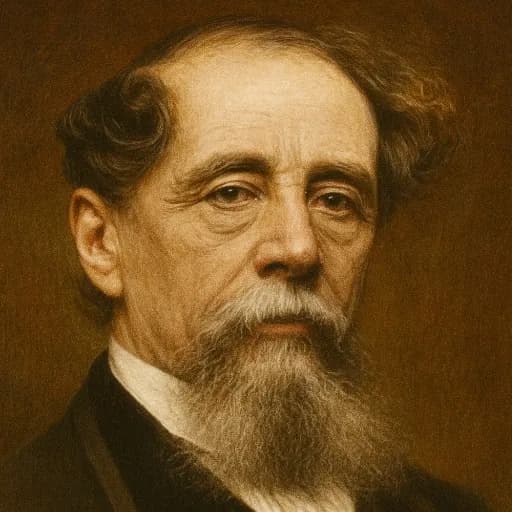
Expressive signs of what made them poor, were not wanting; the tax for the state, the tax for the church, the tax for the lord, tax local and tax general, were to be paid here and to be paid there, according to solemn inscription in the little village, until the wonder was, that there was any village left unswallowed.
"Repression is the only lasting philosophy. The dark deference of fear and slavery, my friend," observed the Marquis, "will keep the dogs obedient to the whip, as long as this roof," looking up to it, "shuts out the sky."
"'We were so robbed by that man who stands there, as all we common dogs are by those superior Beings — taxed by him without mercy, obliged to work for him without pay, obliged to grind our corn at his mill, obliged to feed scores of his tame birds on our wretched crops, and forbidden for our lives to keep a single tame bird of our own, pillaged and plundered to that degree that when we chanced to have a bit of meat, we ate it in fear, with the doors barred and the shutters closed, that his people should not see it and take it from us — I say, we were so robbed, and hunted, and were made so poor, that our father told us it was a dreadful thing to bring a child into the world, and that what we should most pray for, was, that our women might be barren and our miserable race die out!'"
He had only one criticism, he said, to make of Mr. Pilkington's excellent and neighbourly speech. Mr. Pilkington had referred throughout to "Animal Farm." He could not of course know—for he, Napoleon, was only now for the first time announcing it—that the name "Animal Farm" had been abolished. Henceforward the farm was to be known as "The Manor Farm"—which, he believed, was its correct and original name.