Quotes about politics
593 quotes · 194 authors
Quotes
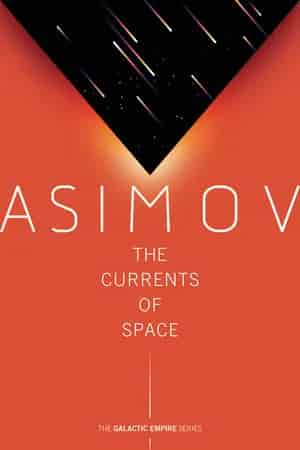
Korell is that frequent phenomenon in history: the republic whose ruler has every attribute of the absolute monarch but the name. It therefore enjoyed the usual despotism unrestrained even by those two moderating influences in the legitimate monarchies: regal “honor” and court etiquette.
Inertia! Our ruling class knows one law; no change. Despotism! They know one rule; force. Maldistribution! They know one desire; to hold what is theirs.
“You make interstellar politics sound a very dirty game.”
“It is, but disapproving of dirt doesn’t remove it.”
p. 141
Democracy is our most important possession. If we throw it away when the going gets tough, we might never get it back.
p. 182
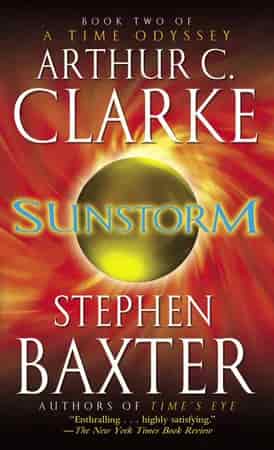
What we find incredible is the way that people - right up to the early 2000s! - calmly accepted behaviour we would consider atrocious. And believed in the most mindboggled... Nonsense, which surely any rational person would dismiss out of hand.'...
'Examples, please.' 'Well... every year in some countries thousands of little girls were hideously mutilated to preserve their virginity? Many of them died - but the authorities turned a blind eye.' 'I agree that was terrible - but what could my government do about it?' 'A great deal - if it wished. But that would have offended the people who supplied it with oil and bought its weapons, like the landmines that killed and maimed civilians by the thousand.' p.32
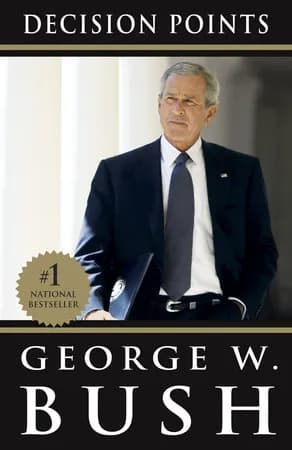
The stem cell debate was an introduction to a phenomenon I witnessed throughout my presidency: highly personal criticism. Partisan opponents and commentators questioned my legitimacy, my intelligence, and my sincerity. They mocked my appearance, my accent, and my religious beliefs. I was labeled a Nazi, a war criminal, and Satan himself. That last one came from a foreign leader, Venezuelan President Hugo Chavez. One lawmaker called me both a loser and a liar. He became majority leader of the U.S. Senate. In some ways, I wasn't surprised. I had endured plenty of rough politics in Texas. I had seen Dad and Bill Clinton derided by their opponents and the media. Abraham Lincoln was compared to a baboon. Even George Washington became so unpopular that political cartoons showed the hero of the American revolution being marched to the guillotine. Yet the death spiral of decency during my time in office, exacerbated by the advent of twenty-four-hour cable news and hyper-partisan political blogs, was deeply disappointing. The toxic atmosphere in American politics discourages good people from running for office.
p. 121
Kanye West told a prime-time T.V. audience, "George Bush doesn't care about black people." Jesse Jackson later compared the New Orleans Convention Center to the "hull of a slave ship". A member of the Congressional Black Caucus claimed that if the storm victims had been "white, middle-class Americans" they would have received more help. Five years later, I can barely write those words without feeling disgusted. I am deeply insulted by the suggestion that we allowed American citizens to suffer because they were black. As I told the press at the time, "The storm didn't discriminate, and neither will we. When those coast guard choppers, many of whom were first on the scene, were pulling people off roofs, they didn't check the color of a person's skin." The more I thought about it, the angrier I felt. I was raised to believe that racism was one of the greatest evils in society. I admired dad's courage when he defied near-universal opposition from his constituents to vote for the Open Housing Bill of 1968. I was proud to have earned more black votes than any Republican governor in Texas history. I had appointed African Americans to top government positions, including the first black woman national security adviser and the first two black secretaries of state. It broke my heart to see minority children shuffled through the school system, so I had based my signature domestic policy initiative, the No Child Left Behind Act, on ending the soft bigotry of low expectations. I had launched a $15 billion program to combat HIV/AIDS in Africa. As part of the response to Katrina, my administration worked with Congress to provided historically black colleges and universities in the Gulf Coast with more than $400 million in loans to restore their campuses and renew their recruiting efforts.
p. 325
It's too early to say how most of my decisions will turn out. As president, I had the honor of eulogizing Gerald Ford and Ronald Reagan. President Ford's pardon of Richard Nixon, once regarded as one of the worst mistakes in presidential history, is now viewed as a selfless act of leadership. And it was quite something to hear the commentators who had once denounced President Reagan as a dunce and a warmonger talk about how the Great Communicator had won the Cold War. Decades from now, I hope people will view me as a president who recognized the central challenge of our time and kept my vow to keep the country safe; who pursued my convictions without wavering but changed course when necessary; who trusted individuals to make choices in their lives; and who used America's influence to advance freedom. And I hope they will conclude that I upheld the honor and dignity of the office I was so privileged to hold. Whatever the verdict on my presidency, I'm comfortable with the fact that I won't be around to hear it. That's a decision point only history will reach.
p. 476
Whenever a government feels the need of promising peace and prosperity to its citizens by means of a proclamation, it is time to be on guard and expect the opposite.
p. 332
I faced a lot of criticism as president. I didn't like hearing people claim I had lied about Iraq's weapons of mass destruction or cut taxes to benefit the rich. But the suggestion that I was a racist because of the response to Katrina represented an all-time low. I told Laura at the time that it was the worst moment of my presidency. I feel the same way today.
p. 325
Barack and Michelle Obama arrived on the North Portico just before 10:00 a.m. Laura and I had invited them for a cup of coffee in the Blue Room, just as Bill and Hillary Clinton had done for us eight years earlier. The Obamas were in good spirits and excited about the journey ahead. Meanwhile, in the Situation Room, homeland security aides from both our teams monitored intelligence on a terrorist threat to Washington. It was a stark reminder that evil men still want to harm our country, no matter who is serving as president. After our visit, we climbed into the motorcade for the trip up Pennsylvania Avenue. I thought back to the drive I'd made with Bill Clinton eight years earlier. That day in January 2001, I could never have imagined what would unfold over my time in office. I knew some of the decisions I had made were not popular with many of my fellow citizens. But I felt satisfied that I had been willing to make the hard decisions, and I had always done what I believed was right. At the Capitol, Laura and I took our seats for the Inauguration. I marveled at the peaceful transition of power, one of the defining features of our democracy. The audience was riveted with anticipation for he swearing-in. Barack Obama had campaigned on hope, and that was what he had given many Americans. For our new president, the Inauguration was a thrilling beginning. For Laura and me, it was an end. It was another president's turn, and I was ready to go home.
p. 474
From the beginning, I knew the public reaction to my decisions would be colored by whether there was another attack. If none happened, whatever I did would probably look like an overreaction. If we were attacked again, people would demand to know why I hadn't done more. That is the nature of the presidency. Perceptions are shaped by the clarity of hindsight. In the moment of decision, you don't have that advantage. On 9/11, I vowed that I would do what it took to protect America, within the Constitution and laws of our nation. History can debate the decisions I made, the policies I chose, and the tools I left behind. But there can be no debate about one fact: After the nightmare of September 11, America went seven and a half years without another successful terrorist attack on our soil. If I had to summarize my most meaningful accomplishment as president in one sentence, that would be it.
p. 181