Quotes about politics
184 quotes · 30 authors
Quotes
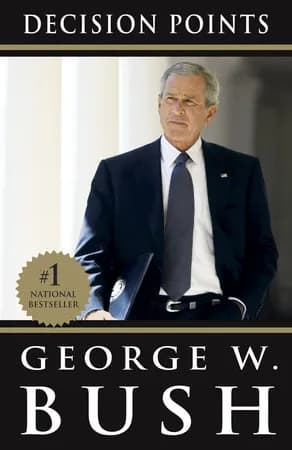
I faced a lot of criticism as president. I didn't like hearing people claim I had lied about Iraq's weapons of mass destruction or cut taxes to benefit the rich. But the suggestion that I was a racist because of the response to Katrina represented an all-time low. I told Laura at the time that it was the worst moment of my presidency. I feel the same way today.
p. 325
Barack and Michelle Obama arrived on the North Portico just before 10:00 a.m. Laura and I had invited them for a cup of coffee in the Blue Room, just as Bill and Hillary Clinton had done for us eight years earlier. The Obamas were in good spirits and excited about the journey ahead. Meanwhile, in the Situation Room, homeland security aides from both our teams monitored intelligence on a terrorist threat to Washington. It was a stark reminder that evil men still want to harm our country, no matter who is serving as president. After our visit, we climbed into the motorcade for the trip up Pennsylvania Avenue. I thought back to the drive I'd made with Bill Clinton eight years earlier. That day in January 2001, I could never have imagined what would unfold over my time in office. I knew some of the decisions I had made were not popular with many of my fellow citizens. But I felt satisfied that I had been willing to make the hard decisions, and I had always done what I believed was right. At the Capitol, Laura and I took our seats for the Inauguration. I marveled at the peaceful transition of power, one of the defining features of our democracy. The audience was riveted with anticipation for he swearing-in. Barack Obama had campaigned on hope, and that was what he had given many Americans. For our new president, the Inauguration was a thrilling beginning. For Laura and me, it was an end. It was another president's turn, and I was ready to go home.
p. 474
From the beginning, I knew the public reaction to my decisions would be colored by whether there was another attack. If none happened, whatever I did would probably look like an overreaction. If we were attacked again, people would demand to know why I hadn't done more. That is the nature of the presidency. Perceptions are shaped by the clarity of hindsight. In the moment of decision, you don't have that advantage. On 9/11, I vowed that I would do what it took to protect America, within the Constitution and laws of our nation. History can debate the decisions I made, the policies I chose, and the tools I left behind. But there can be no debate about one fact: After the nightmare of September 11, America went seven and a half years without another successful terrorist attack on our soil. If I had to summarize my most meaningful accomplishment as president in one sentence, that would be it.
p. 181
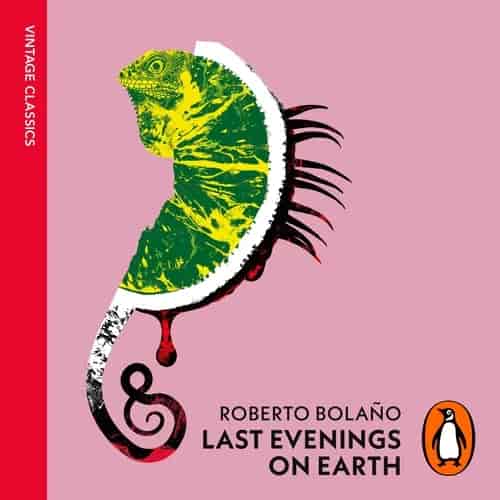
It's strange how things happen, Mauricio Silva, known as the Eye, always tried to escape from violence even at the risk of being considered a coward, but the violence, the real violence, can't be escaped, at least not by us, born in Latin America in the 1950s, those of us who were around twenty years old when Salvador Allende died.
 Last Evenings On Earth
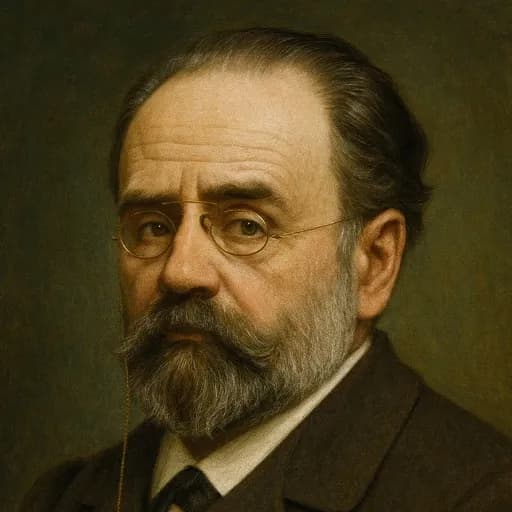
There's only one thing that warms my heart, and that is the thought that we are going to sweep away these bourgeois.
Antagonism breeds extremism, and it was turning one into the zealous revolutionary and the other into an excessive advocate of caution, taking them beyond what they really thought and forcing them to adopt positions of which they then became prisoners.
They spoke one after the other in a despairing voice, giving expression to their complaints. The workers could not hold out; the Revolution had only aggravated their wretchedness; only the bourgeois had grown fat since '89, so greedily that they had not even left the bottom of the plates to lick. Who could say that the workers had had their reasonable share in the extraordinary increase of wealth and comfort during the last hundred years? They had made fun of them by declaring them free. Yes, free to starve, a freedom of which they fully availed themselves. It put no bread into your cupboard to go and vote for fine fellows who went away and enjoyed themselves, thinking no more of the wretched voters than of their old boots. No! one way or another it would have to come to an end, either quietly by laws, by an understanding in good fellowship, or like savages by burning everything and devouring one another. Even if they never saw it, their children would certainly see it, for the century could not come to an end without another revolution, that of the workers this time, a general hustling which would cleanse society from top to bottom, and rebuild it with more cleanliness and justice.
It was the red vision of the revolution, which would one day inevitably carry them all away, on some bloody evening at the end of the century. Yes, some evening the people, unbridled at last, would thus gallop along the roads, making the blood of the middle class flow, parading severed heads and sprinkling gold from disembowelled coffers. The women would yell, the men would have those wolf-like jaws open to bite. Yes, the same rags, the same thunder of great sabots, the same terrible troop, with dirty skins and tainted breath, sweeping away the old world beneath an overflowing flood of barbarians.
My old suggestion that public offices be filled by drawing lots, as a jury box is filled, was probably more intelligent than I suspected. It has been criticized on the ground that selecting a man at random would probably produce some extremely bad State governors. [...] But I incline to believe that it would be best to choose members of the Legislature quite at random. No matter how stupid they were, they could not be more stupid than the average legislator under the present system. Certainly, they'd be measurably more honest, taking one with another. Finally, there would be the great advantage that all of them had got their jobs unwillingly, and were eager, not to spin out their sessions endlessly, but to get home as soon as possible.
Government, like any other organism, refuses to acquiesce in its own extinction. This refusal, of course, involves the resistance to any effort to diminish its powers and prerogatives. There has been no organized effort to keep government down since Jefferson's day. Ever since then the American people have been bolstering up its powers and giving it more and more jurisdiction over their affairs. They pay for that folly in increased taxes and diminished liberties. No government as such is ever in favor of the freedom of the individual. It invariably seeks to limit that freedom, if not by overt denial, then by seeking constantly to widen its own functions.
The kind of man who wants the government to adopt and enforce his ideas is always the kind of man whose ideas are idiotic.
The main thing that every political campaign in the United States demonstrates is that the politicians of all parties, despite their superficial enmities, are really members of one great brotherhood. Their principal, and indeed their sole, object is to collar public office, with all the privileges and profits that go therewith. They achieve this collaring by buying votes with other people's money. No professional politician is ever actually in favor of public economy. It is his implacable enemy, and he knows it. All professional politicians are dedicated wholeheartedly to waste and corruption. They are the enemies of every decent man.