Quotes
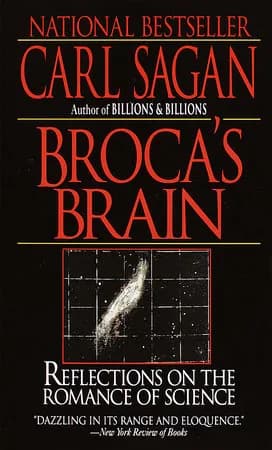
St. Anselm argued that since we can imagine a perfect being, he must exist—because he would not be perfect without the added perfection of existence. This so-called ontological argument was more or less promptly attacked on two grounds: (1) Can we imagine a completely perfect being? (2) Is it obvious that perfection is augmented by existence? To the modern ear such pious arguments seem to be about words and definitions rather than about external reality.
p. 152
In such a chain, too, or succession of objects, each part is caused by that which preceded it, and causes that which succeeds it. Where then is the difficulty? But the WHOLE, you say, wants a cause. I answer, that the uniting of these parts into a whole, like the uniting of several distinct countries into one kingdom, or several distinct members into one body, is performed merely by an arbitrary act of the mind, and has no influence on the nature of things. Did I show you the particular causes of each individual in a collection of twenty particles of matter, I should think it very unreasonable, should you afterwards ask me, what was the cause of the whole twenty. This is sufficiently explained in explaining the cause of the parts.
p. 166
If reason (I mean abstract reason, derived from inquiries a priori) be not alike mute with regard to all questions concerning cause and effect, this sentence at least it will venture to pronounce, That a mental world, or universe of ideas, requires a cause as much, as does a material world, or universe of objects; and, if similar in its arrangement, must require a similar cause. For what is there in this subject, which should occasion a different conclusion or inference? In an abstract view, they are entirely alike; and no difficulty attends the one supposition, which is not common to both of them.
p. 91
If the material world rests upon a similar ideal world, this ideal world must rest upon some other; and so on, without end. It were better, therefore, never to look beyond the present material world. By supposing it to contain the principle of its order within itself, we really assert it to be God; and the sooner we arrive at that Divine Being, so much the better. When you go one step beyond the mundane system, you only excite an inquisitive humour which it is impossible ever to satisfy.
p. 94
Any question of philosophy ... which is so obscure and uncertain, that human reason can reach no fixed determination with regard to it; if it should be treated at all; seems to lead us naturally into the style of dialogue and conversation.
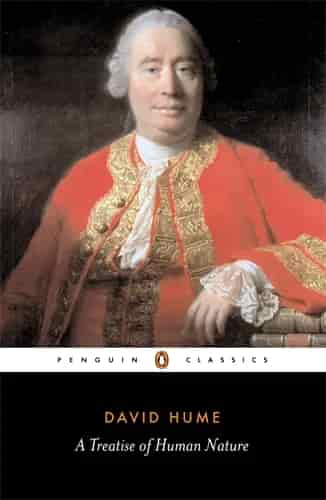
I cannot forbear adding to these reasonings an observation, which may, perhaps, be found of some importance. In every system of morality, which I have hitherto met with, I have always remarked, that the author proceeds for some time in the ordinary way of reasoning, and establishes the being of a God, or makes observations concerning human affairs; when of a sudden I am surprized to find, that instead of the usual copulations of propositions, is, and is not, I meet with no proposition that is not connected with an ought, or an ought not. This change is imperceptible; but is, however, of the last consequence. For as this ought, or ought not, expresses some new relation or affirmation, it is necessary that it should be observed and explained; and at the same time that a reason should be given, for what seems altogether inconceivable, how this new relation can be a deduction from others, which are entirely different from it. But as authors do not commonly use this precaution, I shall presume to recommend it to the readers; and am persuaded, that this small attention would subvert all the vulgar systems of morality, and let us see, that the distinction of vice and virtue is not founded merely on the relations of objects, nor is perceived by reason.
The most perfect philosophy of the natural kind only staves off our ignorance a little longer: as perhaps the most perfect philosophy of the moral or metaphysical kind serves only to discover larger portions of it. Thus the observation of human blindness and weakness is the result of all philosophy, and meets us at every turn, in spite of our endeavours to elude or avoid it.
There is an inconvenience which attends all abstruse reasoning. That it may silence, without convincing an antagonist, and requires the same intense study to make us sensible of its force, that was at first requisite for its invention. When we leave our closet, and engage in the common affairs of life, its conclusions seem to vanish, like the phantoms of the night on the appearance of the morning; and 'tis difficult for us to retain even that conviction, which we had attain'd with difficulty.
Nature has pointed out a mixed kind of life as most suitable to the human race, and secretly admonished them to allow none of these biases to draw too much, so as to incapacitate them for other occupations and entertainments. Indulge your passion for science, says she, but let your science be human, and such as may have a direct reference to action and society. Abstruse thought and profound researches I prohibit, and will severely punish, by the pensive melancholy which they introduce, by the endless uncertainty in which they involve you, and by the cold reception which your pretended discoveries shall meet with, when communicated. Be a philosopher; but, amidst all your philosophy, be still a man.
There is no method of reasoning more common, and yet none more blameable, than in philosophical debates to endeavour to refute any hypothesis by a pretext of its dangerous consequences to religion and morality. When any opinion leads us into absurdities, 'tis certainly false; but 'tis not certain an opinion is false, because 'tis of dangerous consequence.
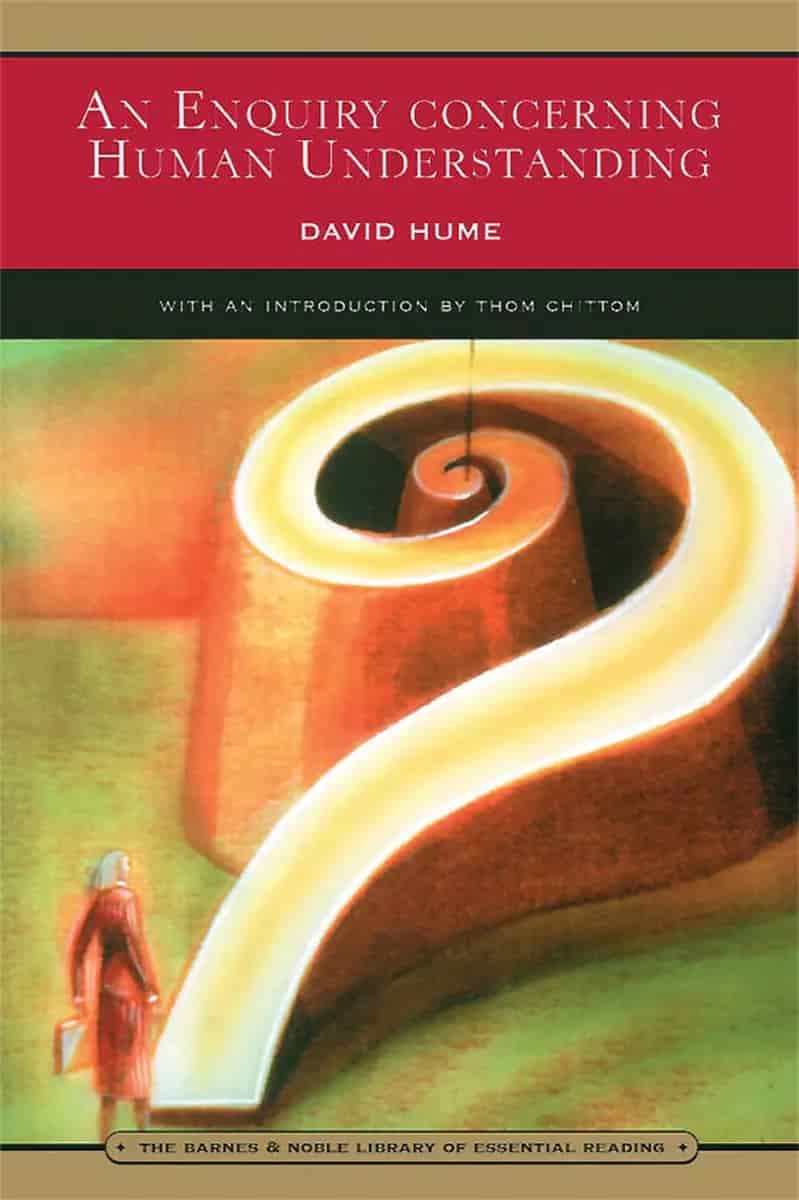
That the sun will not rise to-morrow is no less intelligible a proposition, and implies no contradiction, than the affirmation, that it will rise.
Necessity may be defined in two ways, conformably to the two definitions of cause, of which it makes an essential part. It consists either in the constant conjunction of like objects, or in the inference of the understating from one object to another.