Quotes
For nature gives to every time and season some beauties of its own; and from morning to night, as from the cradle to the grave, is but a succession of changes so gentle and easy, that we can scarcely mark their progress.
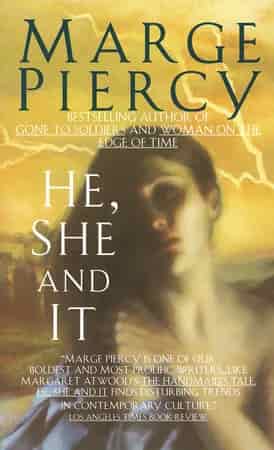
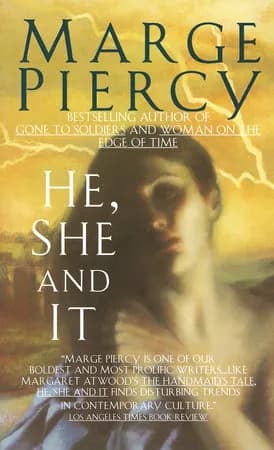
Even if it means oblivion, friends, I'll welcome it, because it won’t be nothing. We’ll be alive again in a thousand blades of grass, and a million leaves; we’ll be falling in the raindrops and blowing in the fresh breeze; we’ll be glittering in the dew under the stars and the moon out there in the physical world, which is our true home and always was.
There are a lot more roses and tulips around today, in a lot more places, then there were before people took an interest in them. For a flower the path to world domination passes through humanity’s ever-shifting ideals of beauty.
p. 79
Monoculture is the single most powerful simplification of modern agriculture, the key move in reconfiguring nature as a machine, yet nothing else in agriculture is so poorly fitted to the way nature seems to work. Very simply, a vast field of identical plants will always be exquisitely vulnerable to insects, weeds, and disease—to all the vicissitudes of nature. Monoculture is at the root of virtually every problem that bedevils the modern farmer, and from which virtually every agricultural product is designed to deliver him.
p. 225
Design in nature is but a concatenation of accidents, culled by natural selection until the result is so beautiful or effective as to seem a miracle of purpose.
For look into a flower, and what do you see? Into the very heart of nature’s double nature—that is, the contending energies of creation and dissolution, the spiring toward complex form and the tidal pull away from it. Apollo and Dionysus were names the Greeks gave to these two faces of nature, and nowhere in nature is their contest as plain or as poignant as it is in the beauty of a flower and its rapid passing. There, the achievement of order against all odds and its blithe abandonment. There, the perfection of art and the blind flux of nature. There, somehow, both transcendence and necessity. Could that be it—right there, in a flower—the meaning of life?
p. 109
These are stories, then, about Man and Nature. We’ve been telling ourselves such stories forever, as a way of making sense of what we call our “relationship to nature”—to borrow that curious, revealing phrase. (What other species can even be said to have a “relationship” to nature?) For a long time now, the Man in these stories has gazed at Nature across a gulf of awe or mystery or shame. Even when the tenor of these narratives changes, as it has over time, the gulf remains. There’s the old heroic story, where Man is at war with Nature; the romantic version, where Man merges spiritually with Nature (usually with some help from the pathetic fallacy); and, more recently, the environmental morality tale, in which Nature pays Man back for his transgressions, usually in the coin of disaster—three different narratives (at least), yet all of them share a premise we know to be false, but can’t seem to shake: that we somehow stand outside, or apart from, nature.
Since industrialization, we have moved rapidly out of synchronicity with nature and our own nature.
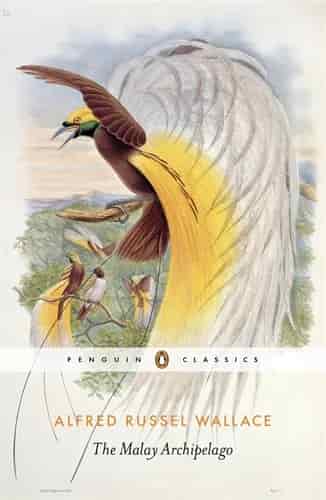
I thought of the long ages of the past, during which the successive generations of this little creature had run their course — year by year being born, and living and dying amid these dark and gloomy woods, with no intelligent eye to gaze upon their loveliness; to all appearance such a wanton waste of beauty. Such ideas excite a feeling of melancholy. It seems sad that on the one hand such exquisite creatures should live out their lives and exhibit their charms only in these wild inhospitable regions, doomed for ages yet to come to hopeless barbarism; while, on the other hand, should civilized man ever reach these distant lands, and bring moral, intellectual, and physical light into the recesses of these virgin forests, we may be sure that he will so disturb the nicely-balanced relations of organic and inorganic nature as to cause the disappearance, and finally the extinction, of these very beings whose wonderful structure and beauty he alone is fitted to appreciate and enjoy. This consideration must surely tell us that all living things were not made for man. Many of them have no relation to him. The cycle of their existence has gone on independently of his, and is disturbed or broken by every advance in man’s intellectual development; and their happiness and enjoyments, their loves and hates, their struggles for existence, their vigorous life and early death, would seem to be immediately related to their own well-being and perpetuation alone, limited only by the equal well-being and perpetuation of the numberless other organisms with which each is more or less intimately connected.
Man wants to see nature and evolution as separate from human activities. There is a natural world, and there is man. But man also belongs to the natural world. If he is a ferocious predator, that too is part of evolution. If cod and haddock and other species cannot survive because man kills them, something more adaptable will take their place. Nature, the ultimate pragmatist, doggedly searches for something that works. But as the cockroach demonstrates, what works best in nature does not always appeal to us.
p. 204
"Only in us do the dead live. Water flows downhill through us. The sun cools in our bones. We are joined with all living in one singing web of energy. In us live the dead who made us. In us live the children unborn. Breathing each other’s air, drinking each other’s water, eating each other’s flesh, we grow like a tree from the earth." (p322)
No one before the twenty-first century had ever loved flowers and fruiting trees and little birds and the simple beauty of green leaves as did those who lived after the Famine, for whom they were precious and rare and always endangered. (four: THROUGH THE BURNING LABYRINTH)