Quotes
Human beings—any one of us, and our species as a whole—are not all-important, not at the center of the world. That is the one essential piece of information, the one great secret, offered by any encounter with the woods or the mountains or the ocean or any wilderness or chunk of nature or patch of night sky.
p. 228
An idea, a relationship, can go extinct, just like an animal or a plant. The idea in this case is 'nature,' the separate and wild province, the world apart from man to which he adapted, under whose rules he was born and died. In the past, we spoiled and polluted parts of that nature, inflicted environmental 'damage.' But that was like stabbing a man with toothpicks: though it hurt, annoyed, degraded, it did not touch vital organs, block the path of lymph or blood. We never thought that we had wrecked nature. Deep down, we never really thought we could: it was too big and too old; its forces—the wind, the rain, the sun—were too strong, too elemental. But, quite by accident, it turned out that the carbon dioxide and other gases we were producing in our pursuit of a better life... could alter the power of the sun, could increase its heat. And that increase could change the patterns of moisture and dryness, breed storms in new places, breed deserts...We have produced the carbon dioxide—we are ending nature.
p. 41
“We need a reserve of life, every kind of life,” he explained. “Today for the spirit—a glimpse of space and green. Tomorrow for survival, flat-out survival.”
p. 53
You can have more adventure in an hour’s walk through a forest than in a year on a spaceship.
p. 103
All life worked in concert, he’d been taught in his youth. Everything but men, who refused their place. Who destroyed instead of added.
p. 985
Are we not natural creatures? Are we not evolved, too? Surely all the lessons we’ve learned in the past century come to a single point: we have to stop thinking of ourselves as somehow apart from nature, and recognise that we’re inseparable from it.
p. 132
“The whole of modern so-called civilised existence is an attempt to deny reality insofar as it exists. When did Don last look at the stars, when did Norman last get soaked in a rainstorm? The stars as far as these people are concerned are the Manhattan-pattern!” He jerked his thumb at a window beyond which the city’s treasure-house of coloured light glimmered gaudily.
We’ve reached a point where we can begin to adjust our minds. The question is, when is it appropriate for us to do so? We shouldn’t automatically accept that natural is better, nor should we automatically presume that we can improve on nature. It’s up to us to decide which qualities we value, and what’s the best way to achieve those.
Mankind may wring her secrets from nature, and use their knowledge to destroy themselves.
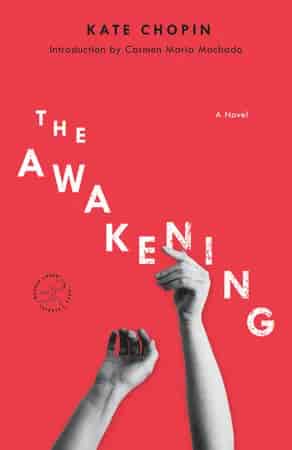
"And Nature takes no account of moral consequences, of arbitrary conditions which we create, and which we feel obliged to maintain at any cost."
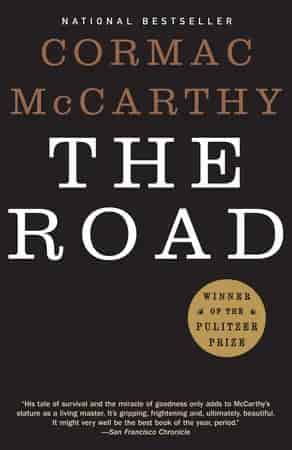
Once there were brook trout in the streams in the mountains. You could see them standing in the amber current where the white edges of their fins wimpled softly in the flow. They smelled of moss in your hand. Polished and muscular and torsional. On their backs were vermiculate patterns that were maps of the world in its becoming. Maps and mazes. Of a thing which could not be put back. Not be made right again. In the deep glens where they lived all things were older than man and they hummed of mystery.
It is when one is alone that one begins to observe Nature and to love her.
p. 189