Quotes
This vast pile of natural beauty, those crags and fir trees and hovering hawks, those echoing ravines and vast tumblings of snow and earth, brought me swiftly to the understanding of my own insignificance and, indeed, the insignificance of all human struggle.
p. 194
Mortals and gods come and go, but nature remains.
p. 67
All the boasted human panoply of pillars and arches is no more than an imitation in sterile stone of the boles and vaulting branches of the forest.
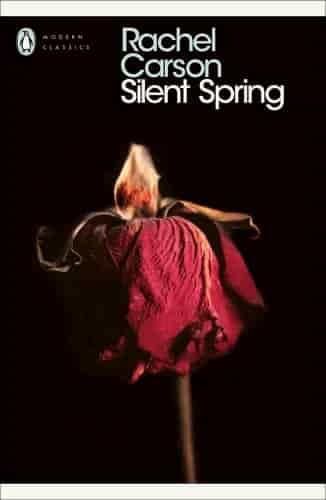
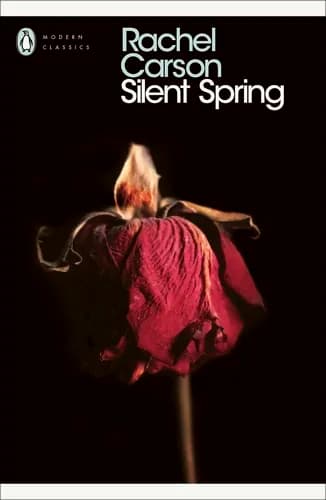
Given time-time not in years but in millennia-life adjusts, and a balance has been reached. For time is the essential ingredient; but in the modern world there is no time.
Fishes and plankton, whales and squids, birds and sea turtles, all are linked by unbreakable ties to certain kinds of water—to warm water or cold water, to clear or turbid water, to water rich in phosphates or in silicates.
p. 27
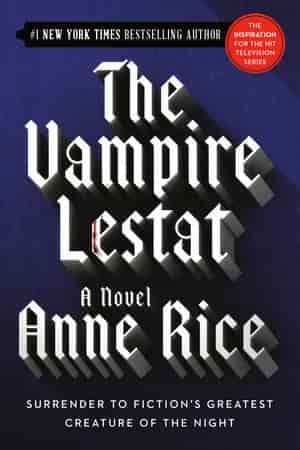
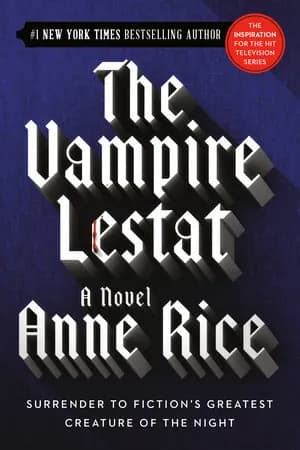
I want to know, for example, why beauty exists," she [Gabrielle] said, "why nature continues to contrive it, and what is the link between the life of a lightning storm with the feelings these things inspire in us? If God does not exist, if these things are not unified into one metaphorical system, then why do they retain for us such symbolic power? Lestat calls it the Savage Garden, but for me that is not enough.
We have to remember that what we observe is not nature herself, but nature exposed to our method of questioning.
[I]n the Copenhagen interpretation of quantum theory we can indeed proceed without mentioning ourselves as individuals, but we cannot disregard the fact that natural science is formed by men. Natural science does not simply describe and explain nature; it is part of the interplay between nature and ourselves; it describes nature as exposed to our nature of questioning. This was a possibility of which Descartes could not have thought, but it makes a sharp separation between the world and the I impossible.
If one follows the great difficulty which even eminent scientists like Einstein had in understanding and accepting the Copenhagen interpretation... one can trace the roots... to the Cartesian partition....it will take a long time for it [this partition] to be replaced by a really different attitude toward the problem of reality.
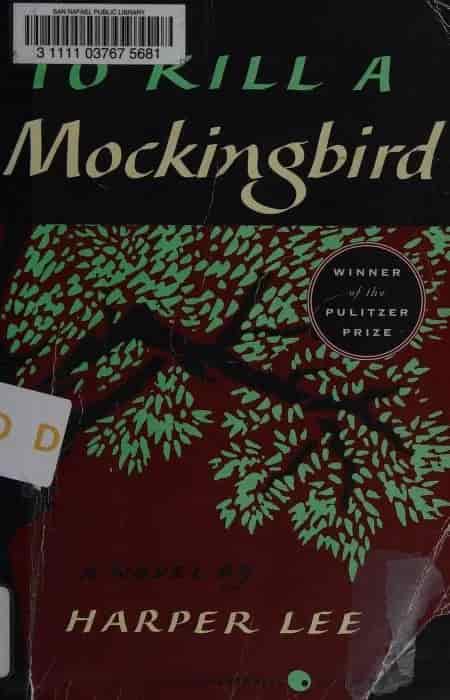
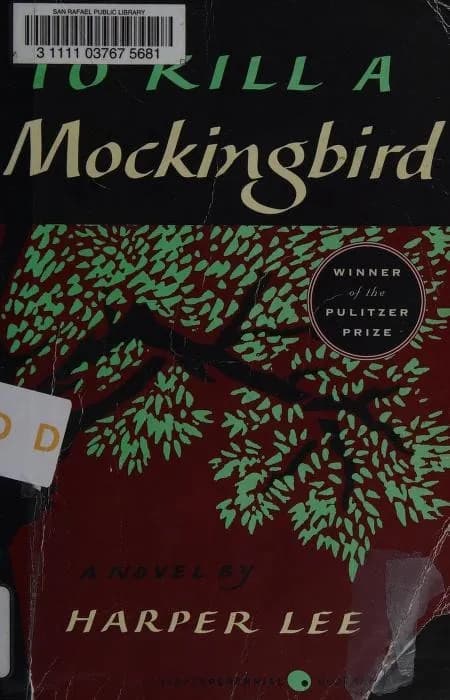
"I'd rather you shot at tin cans in the back yard, but I know you'll go after birds. Shoot all the bluejays you want, if you can hit ‘em, but remember it's a sin to kill a mockingbird." That was the only time I ever heard Atticus say it was a sin to do something, and I asked Miss Maudie about it.
“Your father's right," she said. "Mockingbirds don't do one thing but make music for us to enjoy. They don't eat up people's gardens, don't nest in corncribs, they don't do one thing but sing their hearts out for us. That's why it's a sin to kill a mockingbird."
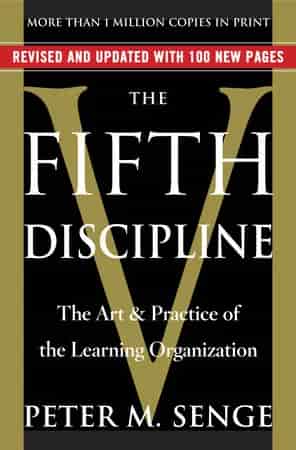
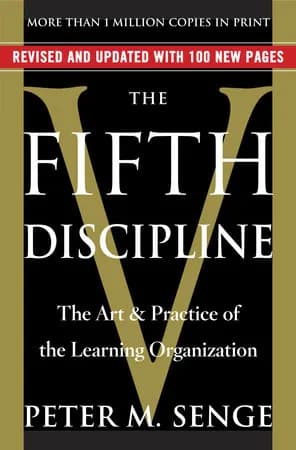
A cloud masses, the sky darkens, leaves twist upward, and we know that it will rain. We also know that after the storm, the runoff will feed into groundwater miles away, and the sky will clear by tomorrow. All these events are distant in time and space, and yet they are all connected within the same pattern. Each has an influence on the rest, an influence that is usually hidden from view. You can only understand the system of a rainstorm by contemplating the whole, not any individual part of the pattern.
Businesses and other human endeavors are also systems. They, too, are bound by invisible fabrics of interrelated actions, which often take years to fully play out their effects on each other. Since we are part of that lacework ourselves, it's doubly hard to see the whole pattern of change. Instead we tend to focus on snapshots of isolated parts of the system, and wonder why our deepest problems never seem to get solved.
p. 7
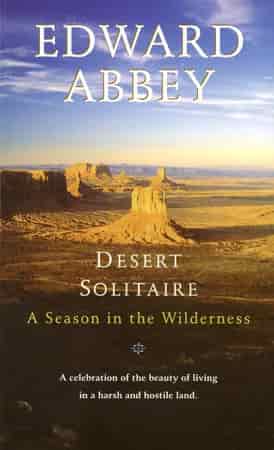
I would give ten years off the beginning of my life to see, only once, Tyrannosaurus rex come rearing up from the elms of Central Park, a Morgan police horse screaming in its jaws. We can never have enough of nature.
But the love of wilderness is more than a hunger for what is always beyond reach; it is also an expression of loyalty to the earth, the earth which bore us and sustains us, the only home we shall ever know, the only paradise we ever need — if only we had the eyes to see. Original sin, the true original sin, is the blind destruction for the sake of greed of this natural paradise which lies all around us — if only we were worthy of it.
p. 147