Quotes about morality
424 quotes · 191 authors
Quotes
"And Nature takes no account of moral consequences, of arbitrary conditions which we create, and which we feel obliged to maintain at any cost."
I like the English. They have the most rigid code of immorality in the world.
Those who cannot find [moral clarity] are likely to settle for the far more dangerous simplicity, or purity, instead.
If now I…say "Stealing money is wrong," I produce a sentence which has no factual meaning — that is, expresses no proposition which can be either true or false. It is as if I had written "Stealing money!!" — where the shape and thickness of the exclamation marks show, by a suitable convention, that a special sort of moral disapproval is the feeling which is being expressed.
p. 107
To us, most human morality is carefully thought-through self-congratulation.
p. 251
If the rule you followed brought you to this, of what use was the rule?
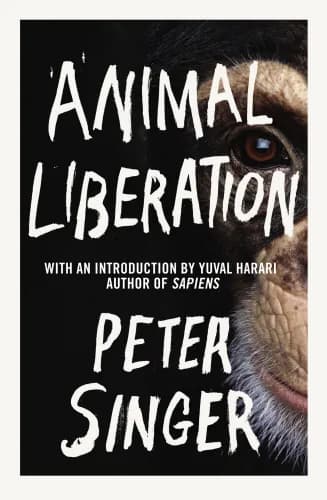
The animals themselves are incapable of demanding their own liberation, or of protesting against their condition with votes, demonstrations, or boycotts. Human beings have the power to continue to oppress other species forever, or until we make this planet unsuitable for living beings. Will our tyranny continue, proving that morality counts for nothing when it clashes with selfinterest, as the most cynical of poets and philosophers have always said? Or will we rise to the challenge and prove our capacity for genuine altruism by ending our ruthless exploitation of the species in our power, not because we are forced to do so by rebels or terrorists, but because we recognize that our position is morally indefensible? The way in which we answer this question depends on the way in which each one of us, individually, answers it.
How far down the evolutionary scale shall we go? Shall we eat fish? What about shrimps? Oysters? To answer these questions we must bear in mind the central principle on which our concern for other beings is based. As I said … the only legitimate boundary to our concern for the interests of other beings is the point at which it is no longer accurate to say that the other being has interests. To have interests, in a strict, nonmetaphorical sense, a being must be capable of suffering or experiencing pleasure. If a being suffers, there can be no moral justification for disregarding that suffering, or for refusing to count it equally with the like suffering of any other being. But the converse of this is also true. If a being is not capable of suffering, or of enjoyment, there is nothing to take into account.
If the Coastal Republic had believed in the existence of virtue, it could at least have aspired to hypocrisy.
He had some measure of the infuriating trait that causes a young man to be a nonconformist for its own sake and found that the surest way to shock most people, in those days, was to believe that some kinds of behavior were bad and others good, and that it was reasonable to live one’s life accordingly.
People care about animals. I believe that. They just don't want to know or to pay. A fourth of all chickens have stress fractures. It's wrong. They're packed body to body, and can't escape their waste, and never see the sun. Their nails grow around the bars of their cages. It's wrong. They feel their slaughters. It's wrong, and people know it's wrong. They don't have to be convinced. They just have to act differently. I'm not better than anyone, and I'm not trying to convince people to live by my standards of what's right. I'm trying to convince them to live by their own.
The man that does not know himself not to be at the mercy of other men, that does not feel that he is invulnerable to all the vicissitudes of fortune, is incapable of a constant and inflexible virtue.