Quotes about morality
424 quotes · 191 authors
Quotes
If you're honest, you sooner or later have to confront your values. Then you're forced to separate what is right from what is merely legal. This puts you metaphysically on the run. America is full of metaphysical outlaws.
Mahavira, the Jain patriarch, surpassed the morality of the Bible with a single sentence: "Do not injure, abuse, oppress, enslave, insult, torment, torture, or kill any creature or living being." Imagine how different our world might be if the Bible contained this as its central precept.
p. 23
The moral truth here is obvious: anyone who feels that the interests of a blastocyst just might supersede the interests of a child with a spinal cord injury has had his moral sense blinded by religious metaphysics.
p. 32
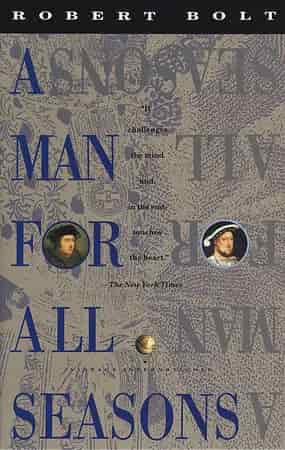
Roper: This was not practical; this was moral!
More: Oh, now I understand you, Will. Morality's not practical. Morality's a gesture. A complicated gesture learned from books.
Do not do an immoral thing for moral reasons!
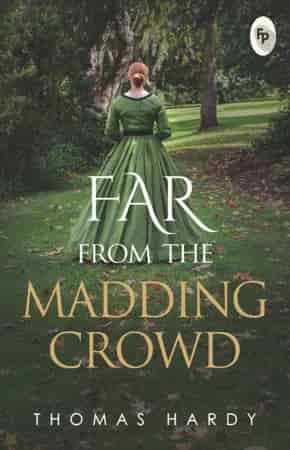
Or, to state his character as it stood in the scale of public opinion, when his friends and critics were in tantrums, he was considered rather a bad man; when they were pleased, he was rather a good man; when they were neither, he was a man whose moral colour was a kind of pepper-and-salt mixture.
The wages of sin is death but so is the salary of virtue, and at least the evil get to go home early on Fridays. (p. 282)
It is above all the impersonal and economically rationalized (but for this very reason ethically irrational) character of purely commercial relationships that evokes the suspicion, never clearly expressed but all the more strongly felt, of ethical religions. For every purely personal relationship of man to man, of whatever sort and even including complete enslavement, may be subjected to ethical requirements and ethically regulated. This is true because the structures of these relationships depend upon the individual wills of the participants, leaving room in such relations for manifestations of the virtue of charity. But this is not the situation in the realm of economically rationalised relationships, where personal control is exercised in inverse ratio to the degree of rational differentiation of the economic structure.
p. 216
But even if it is true, even if we are governed by the legacy of an animal past, then it is up to us to behave as if it were not so.
p. 501
I cannot be convinced that great artists are moralists. Art is first appearances, then meaning.
p. 166
I’ve no objection to morality, except that it’s obsolete.
p. 122
Many writers lay very great stress upon some definite moral purpose, at which they profess to aim their works. Not to be deficient in this particular, the author has provided himself with a moral, — the truth, namely, that the wrong-doing of one generation lives into the successive ones, and, divesting itself of every temporary advantage, becomes a pure and uncontrollable mischief; and he would feel it a singular gratification if this romance might effectually convince mankind — or, indeed, any one man — of the folly of tumbling down an avalanche of ill-gotten gold, or real estate, on the heads of an unfortunate posterity, thereby to maim and crush them, until the accumulated mass shall be scattered abroad in its original atoms. In good faith, however, he is not sufficiently imaginative to flatter himself with the slightest hope of this kind. When romances do really teach anything, or produce any effective operation, it is usually through a far more subtile process than the ostensible one. The author has considered it hardly worth his while, therefore, relentlessly to impale the story with its moral as with an iron rod, — or, rather, as by sticking a pin through a butterfly, — thus at once depriving it of life, and causing it to stiffen in an ungainly and unnatural attitude. A high truth, indeed, fairly, finely, and skilfully wrought out, brightening at every step, and crowning the final development of a work of fiction, may add an artistic glory, but is never any truer, and seldom any more evident, at the last page than at the first.