Quotes
“You were hurt,” Kumiko said, looking at the scar.
Sally looked down. “Yeah.”
“Why don’t you have it removed?”
“Sometimes it’s good to remember.”
“Being hurt?”
“Being stupid.”
The reality that I had known no longer existed. It sufficed that Mme. Swann did not appear, in the same attire and at the same moment, for the whole avenue to be altered. The places that we have known belong now only to the little world of space on which we map them for our own convenience. None of them was ever more than a thin slice, held between the contiguous impressions that composed our life at that time; remembrance of a particular form is but regret for a particular moment; and houses, roads, avenues are as fugitive, alas, as the years.
Wars have no memory, and nobody has the courage to understand them until there are no voices left to tell what happened, until the moment comes when we no longer recognize them and they return, with another face and another name, to devour what they left behind.
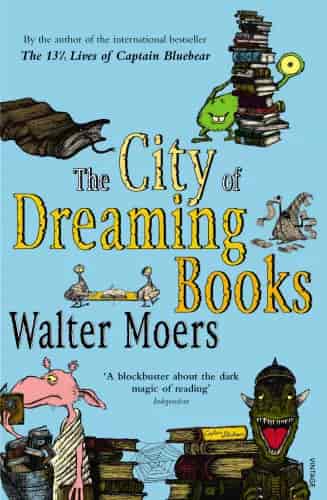
Few things leave a deeper mark on a reader than the first book that finds its way into his heart. Those first images, the echo of words we think we have left behind, accompany us throughout our lives and sculpt a palace in our memory to which, sooner or later--no matter how many books we read, how many worlds we discover or how much we learn or forget--we will return.
There is nothing more dangerous to me than remembering. The moment I have remembered some life-relationship that moment it ceased to exist. People say that separation, tends to revive love. Quite true, but it revives it in a purely poetic manner. The life that is lived wholly in memory is the most perfect conceivable, the satisfactions of memory are richer than any reality, and have a security that in no reality possesses. A remembered life-relations has already passed into eternity, and ha no more temporal interest.
p. 32
"So do we pass the ghosts that haunt us later in our lives; they sit undramatically by the roadside like poor beggars, and we see them only from the corners of our eyes, if we see them at all. The idea that they have been waiting there for us rarely if ever crosses our mind. Yet they do wait, and when we have passed, they gather up their bundles of memory and fall in behind, treading in our footsteps and catching up, little by little."
Even though I felt her presence, I also felt the habitual fruitlessness of thinking about her. Her images, partly memories of her, partly memories of photos I had seen of her, yielded no new answers to old mysteries.
Most of us know accurately only what we constantly relearn; memory is a dipsomaniac, needing to be perpetually refreshed.
p. 24
One’s memory functions like a spider’s web. Unimportant things – the wind, for example – a web lets through, whereas captured flies become lodged in it and are stored there until the spider needs and devours them.
p. 382
Too late we know the good from bad; the knowledge is no pleasure then; being memory's medicine rather than the wine of hope.
All the nations that ever lived have left their footsteps in the sand. The traces fade with every tide, the echoes grow faint, the images are fractured, the human material is atomized and recycled. But if we know where to look, there is always a remnant, a remainder, an irreducible residue.
p. 393
Old houses move in their sleep like the dreaming, remembering limbs of very old people. Boards whisper, steps cry out softly to the whispering remembrance of footfalls long gone to earth. Mantelpieces strain gently in the darkness beneath the ghosts of old Christmas stockings. Joists and beams and rafters hunch lightly like the brittle ribs of old women in their sleep: the heart recalling, the worn carpet slippers whispering down the halls again.
p. 144