Quotes about leadership
100 quotes · 66 authors
Quotes
Some great men owe most of their greatness to the ability of detecting in those they destine for their tools the exact quality of strength that matters for their work.
Overall, the Pox has had the effect of an installment-plan World War III. In fact, there were several small, bloody shooting wars going on around the world during the Pox. These were stupid affairs—wastes of life and treasure. They were fought, ostensibly, to defend against vicious foreign enemies. All too often, they were actually fought because inadequate leaders did not know what else to do. Such leaders knew that they could depend on fear, suspicion, hatred, need, and greed to arouse patriotic support for war.
Amid all this, somehow, the United States of America suffered a major, nonmilitary defeat. It lost no important war, yet it did not survive the Pox. Perhaps it simply lost sight of what it once intended to be, then blundered aimlessly until it exhausted itself.
p. 8
It was that hard; I still feel that way. But I believe that President Bush failed to lead. History will judge him harshly not for the mistakes he made- we all make mistakes- but for the opportunities he squandered.
p. 352
Alas, criticism has always been what human beings, especially leaders, most hate to hear.
"We don't always get the leader that we want," said Graff. "But sometimes we get to choose among the leaders that we have."
In manufacturing, we try to stamp out variance. With people, variance is everything.
Getting every employee's mind into the game is a huge part of what a CEO job is all about. Taking everyone's best ideas and transferring them to others is the secret. There's nothing more important.
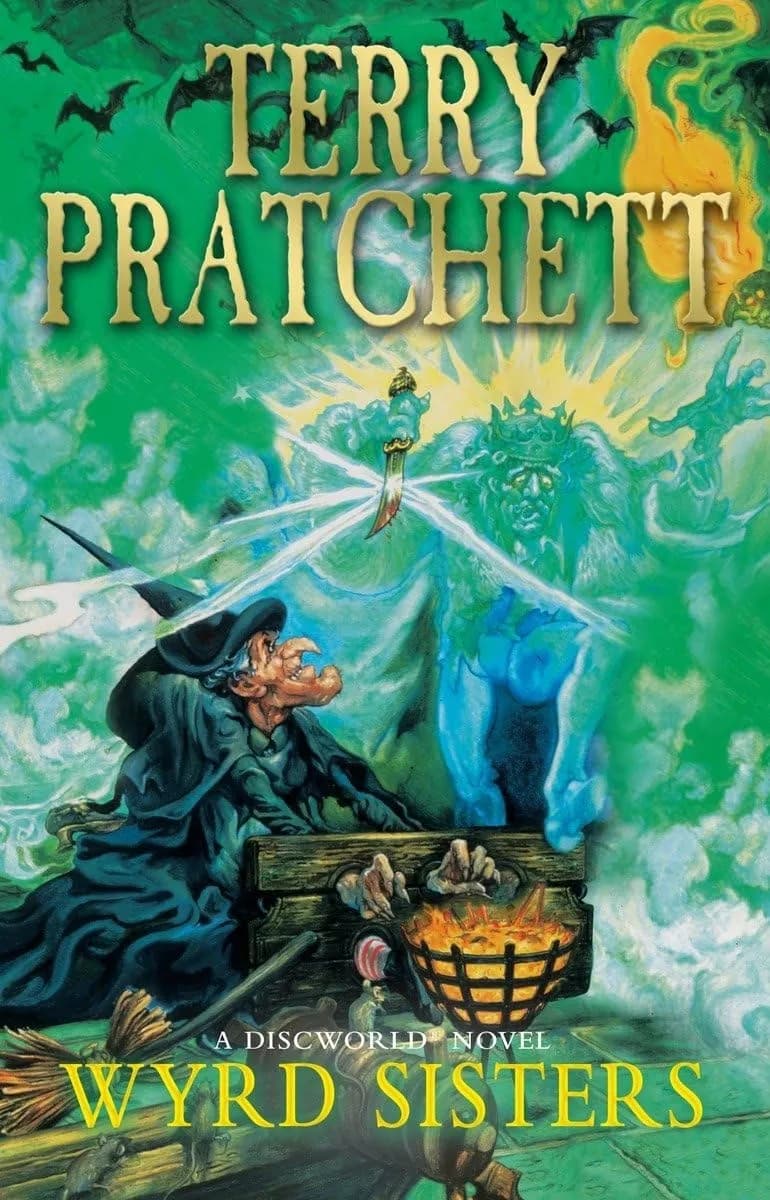
Intellectually, Ridcully maintained his position for two reasons. One was that he never, ever, changed his mind about anything. The other was that it took him several minutes to understand any new idea put to him, and this is a very valuable trait in a leader, because anything anyone is still trying to explain to you after two minutes is probably important and anything they give up after a mere minute or so is almost certainly something they shouldn't have been bothering you with in the first place. (p. 38)
The famous Battle of Morpork, he strongly suspected had consisted of about two thousand men lost in a swamp on a cold, wet day, hacking one another into oblivion with rusty swords. What would the last King of Ankh have said to a pack of ragged men who knew they were outnumbered, outflanked and outgeneralled? Something with bite, something with edge, something like a drink of brandy to a dying man; no logic, no explanation, just words that would reach right down through a tired man's brain and pull him to his feet by his testicles.
As you know, the personal strengths and weakness of a leader are no true indication of the merits of his cause.
p. 120
One wants in a Prime Minister a good many things, but not very great things. He should be clever but need not be a genius; he should be conscientious but by no means strait-laced; he should be cautious but never timid, bold but never venturesome; he should have a good digestion, genial manners, and, above all, a thick skin. These are the gifts we want, but we can't always get them, and have to do without them.
People try so hard to believe in leaders now, pitifully hard. But we no sooner get a popular reformer or politician or soldier or writer or philosopher — a Roosevelt, a Tolstoy, a Wood, a Shaw, a Nietzsche, than the cross-currents of criticism wash him away. My Lord, no man can stand prominence these days. It's the surest path to obscurity. People get sick of hearing the same name over and over.