Quotes
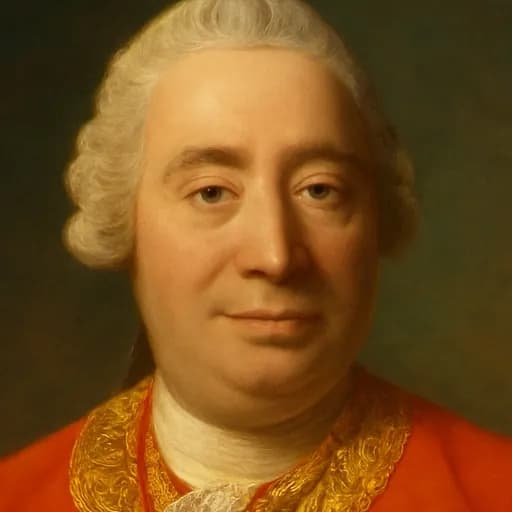
This deficiency in our ideas is not, indeed, perceived in common life, nor are we sensible, that in the most usual conjunctions of cause and effect we are as ignorant of the ultimate principle, which binds them together, as in the most unusual and extraordinary. But this proceeds merely from an illusion of the imagination; and the question is, how far we ought to yield to these illusions. This question is very difficult, and reduces us to a very dangerous dilemma, whichever way we answer it. For if we assent to every trivial suggestion of the fancy; beside that these suggestions are often contrary to each other; they lead us into such errors, absurdities, and obscurities, that we must at last become asham'd of our credulity. Nothing is more dangerous to reason than the flights of the imagination, and nothing has been the occasion of more mistakes among philosophers. Men of bright fancies may in this respect be compar'd to those angels, whom the scripture represents as covering their eyes with their wings. This has already appear'd in so many instances, that we may spare ourselves the trouble of enlarging upon it any farther.
There is something strangely winning to most women in that offer of the firm arm; the help is not wanted physically at that moment, but the sense of help, the presence of strength that is outside them and yet theirs, meets a continual want of the imagination.
Imagination is a licensed trespasser: it has no fear of dogs, but may climb over walls and peep in at windows with impunity.
... so vast, so limitless in capacity is man's imagination to disperse and burn away the rubble-dross of fact and probability, leaving only truth and dream.
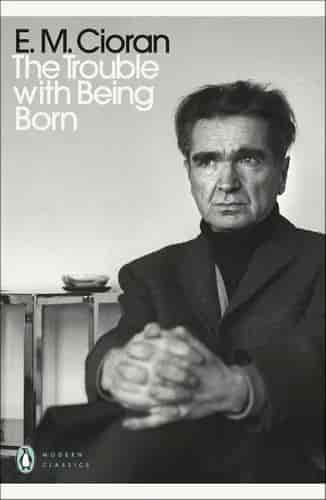
Imaginary pains are by far the most real we suffer, since we feel a constant need for them and invent them because there is no way of doing without them.
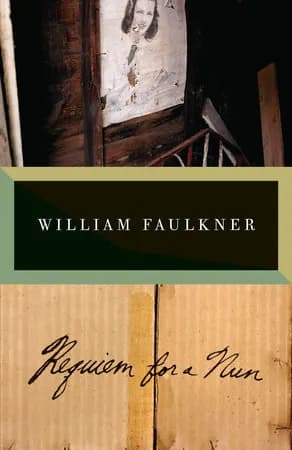
Life is possible only by the deficiencies of our imagination and memory.
Every feeling of hardship is inseparable from the desire to escape from it; every idea of pleasure from the desire to enjoy it. All desire implies a want, and all wants are painful; hence our wretchedness consists in the disproportion between our desires and our powers. A conscious being whose powers were equal to his desires would be perfectly happy. What then is human wisdom? Where is the path of true happiness? The mere limitation of our desires is not enough, for if they were less than our powers, part of our faculties would be idle, and we should not enjoy our whole being; neither is the mere extension of our powers enough, for if our desires were also increased we should only be the more miserable. True happiness consists in decreasing the difference between our desires and our powers, in establishing a perfect equilibrium between the power and the will. Then only, when all its forces are employed, will the soul be at rest and man will find himself in his true position.
It is only in this primitive condition that we find the equilibrium between desire and power, and then alone man is not unhappy. As soon as his potential powers of mind begin to function, imagination, more powerful than all the rest, awakes, and precedes all the rest. It is imagination which enlarges the bounds of possibility for us, whether for good or ill, and therefore stimulates and feeds desires by the hope of satisfying them. But the object which seemed within our grasp flies quicker than we can follow; when we think we have grasped it, it transforms itself and is again far ahead of us. We no longer perceive the country we have traversed, and we think nothing of it; that which lies before us becomes vaster and stretches still before us. Thus we exhaust our strength, yet never reach our goal, and the nearer we are to pleasure, the further we are from happiness.
The world of reality has its bounds, the world of imagination is boundless; as we cannot enlarge the one, let us restrict the other; for all the sufferings which really make us miserable arise from the difference between the real and the imaginary. Health, strength, and a good conscience excepted, all the good things of life are a matter of opinion; except bodily suffering and remorse, all our woes are imaginary. You will tell me this is a commonplace; I admit it, but its practical application is no commonplace, and it is with practice only that we are now concerned.
Imagination grows by exercise, and contrary to common belief, is more powerful in the mature than in the young.
p. 164
Imagination, which is the social sense, animates the inanimate and anthropomorphizes everything; it humanizes everything and even makes everything identical with man. And the work of man is to supernaturalize Nature — that is to say, to make it divine by making it human, to help it to become conscious of itself, in short. The action of reason, on the other hand, is to mechanize or materialize.
Thinking, meditating, imagining are not anomalous acts – they are the normal respiration of the intelligence. To glorify the occasional exercise of that function, to treasure beyond price ancient and foreign thoughts, to recall with incredulous awe what some doctor universalis thought, is to confess our own languor, or our own barbarie. Every man should be capable of all ideas, and I believe that in the future he shall be.
He could not be captured,
He could not be bought,
His running was rhythm,
His standing was thought;
With one eye on sorrow
And one eye on mirth,
He galloped in heaven
And gambolled on earth. And only the poet
With wings to his brain
Can mount him and ride him
Without any rein,
The stallion of heaven,
The steed of the skies,
The horse of the singer
Who sings as he flies.
p. 181
You can't depend on your eyes when your imagination is out of focus.