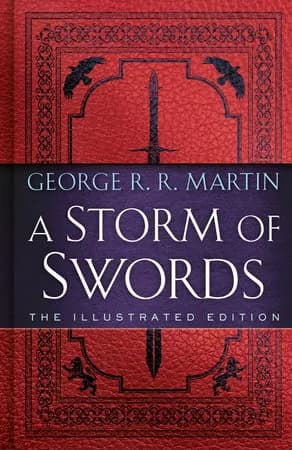
Quotes
Angels can fly because they can take themselves lightly.
Modesty has moved from the organ of ambition. Modesty has settled upon the organ of conviction; where it was never meant to be. A man was meant to be doubtful about himself, but undoubting about the truth; this has been exactly reversed. Nowadays the part of a man that a man does assert is exactly the part he ought not to assert—himself. The part he doubts is exactly the part he ought not to doubt—the Divine Reason.
It is only with one aspect of humility that we are here concerned. Humility was largely meant as a restraint upon the arrogance and infinity of the appetite of man. He was always out-stripping his mercies with his own newly invented needs. His very power of enjoyment destroyed half his joys. By asking for pleasure, he lost the chief pleasure; for the chief pleasure is surprise. Hence it became evident that if a man would make his world large, he must be always making himself small.
The truth is that there is a real humility typical of our time; but it so happens that it is practically a more poisonous humility than the wildest prostrations of the ascetic. The old humility was a spur that prevented a man from stopping; not a nail in his boot that prevented him from going on. For the old humility made a man doubtful about his efforts, which might make him work harder. But the new humility makes a man doubtful about his aims, which will make him stop working altogether.
For if this book is a joke it is a joke against me. I am the man who with the utmost daring discovered what had been discovered before. If there is an element of farce in what follows, the farce is at my own expense; for this book explains how I fancied I was the first to set foot in Brighton and then found I was the last. It recounts my elephantine adventures in pursuit of the obvious. No one can think my case more ludicrous than I think it myself; no reader can accuse me here of trying to make a fool of him: I am the fool of this story, and no rebel shall hurl me from my throne. I freely confess all the idiotic ambitions of the end of the nineteenth century. I did, like all other solemn little boys, try to be in advance of the age. Like them I tried to be some ten minutes in advance of the truth. And I found that I was eighteen hundred years behind it. I did strain my voice with a painfully juvenile exaggeration in uttering my truths. And I was punished in the fittest and funniest way, for I have kept my truths: but I have discovered, not that they were not truths, but simply that they were not mine. When I fancied that I stood alone I was really in the ridiculous position of being backed up by all Christendom. It may be, Heaven forgive me, that I did try to be original; but I only succeeded in inventing all by myself an inferior copy of the existing traditions of civilized religion. The man from the yacht thought he was the first to find England; I thought I was the first to find Europe. I did try to found a heresy of my own; and when I had put the last touches to it, I discovered that it was orthodoxy.
Discourses on humility are a source of pride in the vain, and of humility in the humble. So those on scepticism cause believers to affirm. Few men speak humbly of humility, chastely of chastity, few doubtingly of scepticism. We are only falsehood, duplicity, contradiction; we both conceal and disguise ourselves from ourselves.
Noble deeds are most estimable when hidden.
Bear your command with humility. Lead, do not condescend. Remember, these are great events and men will rise to them. Treat every man as a Soldier. He may surprise you and be one.
p. 210
Your task is the following: After any kind of success, analyze the components. See the element of luck that is inevitably there, as well as the role that other people, including mentors, played in your good fortune. This will neutralize the tendency to inflate your powers. Remind yourself that with success comes complacency, as attention becomes more important than the work and old strategies are repeated.
No man has ever died from bending his knee ... He who kneels may rise again, blade in hand. He who will not kneel stays dead. He who will not kneel stays dead, stiff legs and all.
"What's the use of a candle that casts no light?”
“It is a lesson,” Armen said, the last lesson we must learn before we don our maester’s chains. The glass candle is meant to represent truth and learning, rare and beautiful and fragile things. It is made in the shape of a candle to remind us that a maester must cast light wherever he serves, and it is sharp to remind us that knowledge can be dangerous. Wise men may grow arrogant in their wisdom, but a maester must always remain humble. The glass candle reminds us of that as well. Even after he has said his vow and donned his chain and gone forth to serve, a maester will think back on the darkness of his vigil and remember how nothing that he did could make the candle burn...for even with knowledge, some things are not possible."
How can the night be so beautiful? he asked himself. Why would the stars want to look down on the likes of me?