Quotes
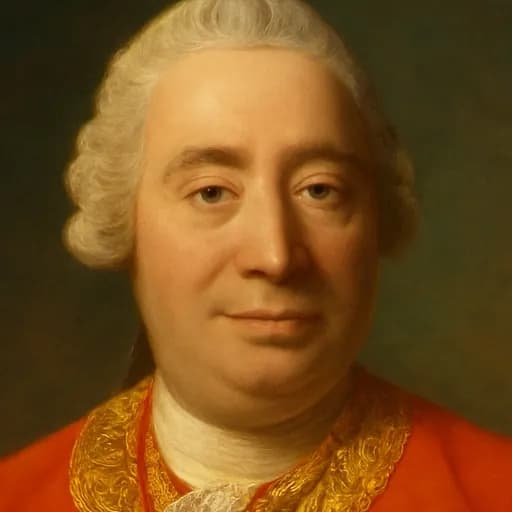
We must therefore glean up our experiments in this science from a cautious observation of human life, and take them as they appear in the common course of the world, by men's behaviour in company, in affairs, and in their pleasures. Where experiments of this kind are judiciously collected and compared, we may hope to establish on them a science, which will not be inferior in certainty, and will be much superior in utility to any other of human comprehension.
A man is the resultant and exponent of all the forces that have been brought to bear upon him, whether before his birth or afterwards. His action at any moment depends solely upon his constitution, and on the intensity and direction of the various agencies to which he is, and has been, subjected. Some of these will counteract each other; but as he is by nature, and as he has been acted on, and is now acted on from without, so will he do, as certainly and regularly as though he were a machine.
We do not generally admit this, because we do not know the whole nature of any one, nor the whole of the forces that act upon him. We see but a part, and being thus unable to generalise human conduct, except very roughly, we deny that it is subject to any fixed laws at all, and ascribe much both of a man's character and actions to chance, or luck, or fortune; but these are only words whereby we escape the admission of our own ignorance; and a little reflection will teach us that the most daring flight of the imagination or the most subtle exercise of the reason is as much the thing that must arise, and the only thing that can by any possibility arise, at the moment of its arising, as the falling of a dead leaf when the wind shakes it from the tree.
“If it be urged that the action of the potato is chemical and mechanical only, and that it is due to the chemical and mechanical effects of light and heat, the answer would seem to lie in an inquiry whether every sensation is not chemical and mechanical in its operation? whether those things which we deem most purely spiritual are anything but disturbances of equilibrium in an infinite series of levers, beginning with those that are too small for microscopic detection, and going up to the human arm and the appliances which it makes use of? whether there be not a molecular action of thought, whence a dynamical theory of the passions shall be deducible? Whether strictly speaking we should not ask what kind of levers a man is made of rather than what is his temperament? How are they balanced? How much of such and such will it take to weigh them down so as to make him do so and so?”
There is no creature whose inward being is so strong that it is not greatly determined by what lies outside it. A new Theresa will hardly have the opportunity of reforming a conventual life, any more than a new Antigone will spend her heroic piety in daring all for the sake of a brother's burial: the medium in which their ardent deeds took shape is forever gone. But we insignificant people with our daily words and acts are preparing the lives of many Dorotheas, some of which may present a far sadder sacrifice than that of the Dorothea whose story we know.
[Most people] are neither extraordinarily silly, nor extraordinarily wicked, nor extraordinarily wise; their eyes are neither deep and liquid with sentiment, nor sparkling with suppressed witticisms; they have probably had no hairbreadth escapes or thrilling adventures; their brains are certainly not pregnant with genius, and their passions have not manifested themselves at all after the fashion of a volcano. ... Depend upon it, you would gain unspeakably if you would learn with me to see some of the poetry and the pathos, the tragedy and the comedy, lying in the experience of a human soul that looks out through dull grey eyes, and that speaks in a voice of quite ordinary tones.
Men's lives are as thoroughly blended with each other as the air they breathe: evil spreads as necessarily as disease.
Save us, Christ, the poor sons of bitches.
Man knows so little about his fellows. In his eyes all men or women act upon what he believes would motivate him if he were mad enough to do what the other man or woman is doing.
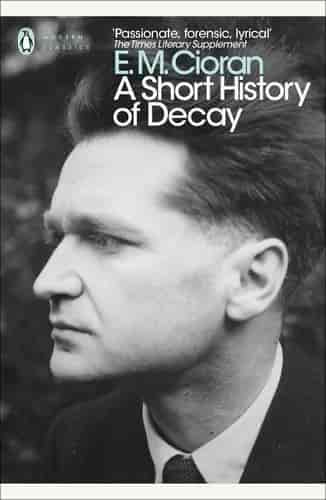
Poor man. Poor mankind.
Man starts over again everyday, in spite of all he knows, against all he knows.
For myself, I am not pledged to the support of any system. I am a plain and honest man, one who is not carried away by party spirit, one who has no ambition to be head of a sect; I am content with the place where God has set me; I see nothing, next to God himself, which is better than my species; and if I had to choose my place in the order of creation, what more could I choose than to be a man! I am not puffed up by this thought, I am deeply moved by it; for this state was no choice of mine, it was not due to the deserts of a creature who as yet did not exist. Can I behold myself thus distinguished without congratulating myself on this post of honour, without blessing the hand which bestowed it? The first return to self has given birth to a feeling of gratitude and thankfulness to the author of my species, and this feeling calls forth my first homage to the beneficent Godhead. I worship his Almighty power and my heart acknowledges his mercies. Is it not a natural consequence of our self-love to honour our protector and to love our benefactor?
One must choose between making a man or a citizen, for one cannot make both at the same time.