Quotes about honour
82 quotes · 62 authors
Quotes
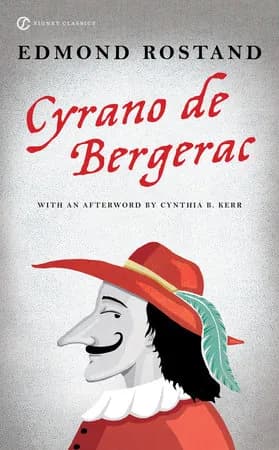
You strip from me the laurel and the rose!
Take all! Despite you there is yet one thing
I hold against you all, and when, tonight,
I enter Christ's fair courts, and, lowly bowed,
Sweep with doffed casque the heavens' threshold blue,
One thing is left, that, void of stain or smutch,
I bear away despite you …
My panache.
What say you? It is useless? Ay, I know
But who fights ever hoping for success?
I fought for lost cause, and for fruitless quest!
You there, who are you! — You are thousands! Ah!
I know you now, old enemies of mine!
Falsehood!
Have at you! Ha! and Compromise!
Prejudice, Treachery! …
Surrender, I?
Parley? No, never! You too, Folly, — you?
I know that you will lay me low at last;
Let be! Yet I fall fighting, fighting still!
When issues of events like these my father is waiting for, are hanging in the scales of fate, the mind has the advantage of changing the principle of expectation three times, without which it would not have power to see it out.Curiosity governs the first moment; and the second moment is all economy to justify the expense of the first — and for the third, fourth, fifth, and sixth moments, and so on to the day of judgment — 'tis a point of HONOUR.I need not be told, that the ethic writers have assigned this all to Patience; but that VIRTUE, methinks, has extent of domination sufficient of her own, and enough to do in it, without invading the few dismantled castles which HONOUR has left him upon the earth.
He wanted me to understand two big things: First, that nobody, no group, is above others. Public servants are obliged to level with everybody, whether or not they'll like what he has to say. And second, that politics was a matter of personal honor. A man's word is his bond. You give your word, you keep it. For as long as I can remember, I've had a sort of romantic notion of what politics should be- and can be. If you do politics the right way, I believe, you can actually make people's lives better. And integrity is the minimum ante to get into the game. Nearly forty years after I first got involved, I remain captivated by the possibilities of politics and public service. In fact, I believe- as I know my grandpop did- that my chosen profession is a noble calling.
Had I been wrong, this would still have been the honorable thing to do.
I am very glad, however, to find out that I was right.
p. 626
Chivalry!-why, maiden, she is the nurse of pure and high affection-the stay of the oppressed, the redresser of grievances, the curb of the power of the tyrant-Nobility were but an empty name without her, and liberty finds the best protection in her lance and her sword.
The idea that feminism is the first group that has ever denounced rape is a gross libel to men. Throughout history, rape has been condemned by honorable men. Honorable men do not murder; honorable men do not steal; honorable men do not rape. It goes all the way back through history. Tarquin’s rape of Lucretia caused the fall of the tyrants and the beginning of the Roman Republic. The idea that somehow suddenly feminism miraculously found out that women were being exploited and raped throughout history is ridiculous.
p. 273
From all evil against which the law bars you, you should be barred, at an infinite distance, by honour, by conscience, and nobility. Does the law require patriotism, philanthropy, self-abnegation, public service, purity of purpose, devotion to the needs of others who have been placed in the world below you? The law is a great thing, — because men are poor and weak, and bad. And it is great, because where it exists in its strength, no tyrant can be above it. But between you and me there should be no mention of law as the guide of conduct. Speak to me of honour, of duty, and of nobility; and tell me what they require of you.
Perhaps we are both doing what we think right. But what we think right is so damned different that there can be nothing between us in the way of concession. There is nothing possible between us but honour and death.
Danforth: Do you mean to deny this confession when you are free?
Proctor: I mean to deny nothing!
Danforth: Then explain to me, Mr. Proctor, why you will not let —
Proctor: [With the cry of his whole soul] Because it is my name! Because I cannot have another in my life! Because I lie and sign myself to lies! Because I am not worth the dust on the feet of them that hang! How may I live without my name? I have given you my soul; leave me my name!
One striking characteristic of modern education is the unanimous disapproval of exploiting the powerful feeling of shame. … Yet in ancient education, e.g. in the Socratic dialogs, this very arousal of shame is a chief device; the teacher greets the hot flush as a capital sign that the youth is educable, he has noble aims. Such a youth has dignity in his very shame.
The difference seems to be that we cannot offer available opportunities for honor, we do not have them; and therefore we must protect what shreds of dignity the youth has. Since he has no future, if we make him ashamed of his past and present, he is reduced to nothing. In other ages, the community had plenty of chances of honor, and to belong to the community itself was an honor.
p. 149
Boys today hardly aspire to immortal honor, the honor of self-fulfilling achievement. It is highly disapproved of in the code of the organized system. Instead, they devote themselves to protecting their “personal honor” against insults; and conversely they dream of the transient notoriety which will prove that they are “somebody,” which they doubt. The personal honor that they protect does not include truthfulness, honesty, public usefulness, integrity, independence, or virtues like that. A reputation for these things does not win respect, it has no publicity value; it’s believed to be phony anyway, and if it’s true, the person is hard to get along with.
p. 150