Quotes
Time travel destabilizes history.
History is a child of contingency; so many events depend on critical misunderstandings or transient encounters that even the apocryphal butterfly’s wing is apt to stir up a storm in short order.
p. 177
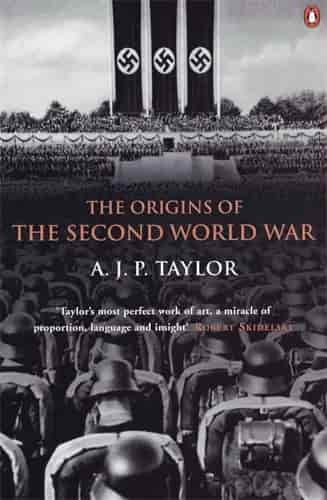
In my opinion, statesmen are too absorbed by events to follow a preconceived plan. They take one step, and the next follows from it. The systems are created by historians, as happened with Napoleon; and the systems attributed to Hitler are really those of Hugh Trevor-Roper, Elizabeth Wiskemann, and Alan Bullock.
p. 98
With the destruction of history, contemporary events themselves retreat into a remote and fabulous realm of unverifiable stories, uncheckable statistics, unlikely explanations and untenable reasoning.
They made two thousand years ago seem like yesterday, and yesterday look like today, just as today would, in time, look like tomorrow. (p. 128).
Ruins—antique ruins at least—are what is left when history has moved on. They are no longer at the mercy of history, only of time. (p. 207).
“Some of us prefer history to legends, lady,” DeWar said heavily, “and sometimes everybody can be wrong.”
p. 37
A history of Hitler has to be a history of his power — how he came to get it, what its character was, how he exercised it, why he was allowed to expand it to break all institutional barriers, why resistance to that power was so feeble. But these are questions to be directed at German society, not just at Hitler.
The present enshrines the past—and in the past all history has been made by men.
One widely articulated paradigm was based on the assumption that the end of the Cold War meant the end of significant conflict in global politics and the emergence of one relatively harmonious world. The most widely discussed formulation of this model was "the "end of history" thesis advanced by Francis Fukuyama. "We may be witnessing, Fukuyama argued, "… the end of history as such: that is, the end point of mankind's ideological evolution and the universalization of Western liberal democracy as the final form of human government." … The future will be devoted not to great exhilarating struggles over ideas but rather to resolving mundane economic and technical problems. And, he concluded rather sadly, it will all be rather boring.
p. 31
The West won the world not by the superiority of its ideas or values or religion (to which few members of other civilizations were converted) but rather by its superiority in applying organized violence. Westerners often forget this fact; non-Westerners never do.
p. 51
Christianity and Islam have changed irrevocably the moral reflexes of the world. The philosopher Herakleitos said with profound truth that you cannot step twice into the same river. The perpetual stream of human nature is formed into ever-changing shallows, eddies, falls and pools by the land over which it passes. Perhaps the only real value of history lies in considering this endlessly varied play between the essence and the accidents.
Americans experience time in two distinct ways—as religious people and as people of no religion. Just so, we experience ourselves as a historical people and as people who are not implicated by history.