Quotes
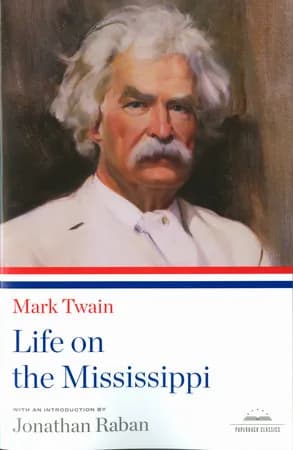
In the South the war is what A.D. is elsewhere; they date from it.
The world and the books are so accustomed to use, and over-use, the word 'new' in connection with our country, that we early get and permanently retain the impression that there is nothing old about it.
What we may be witnessing is not just the end of the Cold War, or the passing of a particular period of post-war history, but the end of history as such … That is, the end point of mankind's ideological evolution and the universalization of Western liberal democracy as the final form of human government.
Writing the history of the present is always a very different thing from writing the history of the distant past. The history of the distant past depends entirely on literary and documentary sources; the history of the present always involves unwritten material as well as documents. But the difference was much greater in the days of Thucydides than it is now.
p. 82
Every period in history has its own punishments, and ours has a multitude.
The collective manifestations of the insanity that lies at the heart of the human condition constitute the greater part of human history. It is to a large extent a history of madness.
If the history of humanity were the clinical case history of a single human being, the diagnosis would have to be: chronic paranoid delusions, a pathological propensity to commit murder and acts of extreme violence and cruelty against his perceived “enemies” – his own unconsciousness projected outward. Criminally insane, with a few brief lucid intervals.
Myth deprives the object of which it speaks of all history. In it, history evaporates.
p. 151
The history of the Victorian Age will never be written: we know too much about it. For ignorance is the first requisite of the historian – ignorance, which simplifies and clarifies, which selects and omits, with a placid perfection unattainable by the highest art.
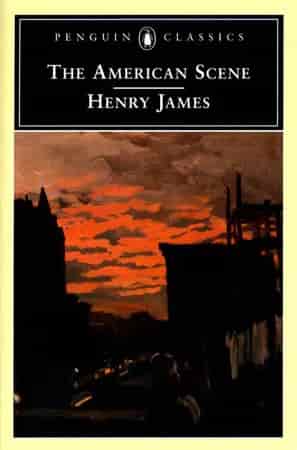
These adventures of the critical spirit were such mere mild walks and talks as I almost blush to offer, on this reduced scale, as matter of history; but I draw courage from the remembrance that history is never, in any rich sense, the immediate crudity of what "happens," but the much finer complexity of what we read into it and think of in connection with it.
p. 182
Along the way she’d acquired a powerful conviction that history was a series of accidents—God was either absent or playing a very elaborate practical joke (the Eschaton didn’t count, having explicitly denied that it was a deity)—and that the seeds of evil usually germinated in the footprints of people who knew how everybody else ought to behave and felt the need to tell them so.
p. 294
The first time Wednesday saw a flag she had to look away, unsure whether to laugh or cry. Patriotism had never been a huge Muscovite virtue, and to see the way the fat woman in the red pants held on to her flag as if it were a life preserver made Wednesday want to slap her and yell Grow up! It’s all over! Except it also felt like...like watching Jerm, aged three, playing with the pewter pot containing Grandpa’s ashes. Abuse of the dead, an infection of history.
p. 277