Quotes
“A teacher?” Vyborg gasped. “They got rid of him in Mexico because he was teaching unauthorized garbage. Do you want him teaching his blasphemies here?”
Berkowitz’s smile diminished by less than a millimeter. “Freedom of thought is not blasphemous, Sammi. He’s a great teacher.”
p. 134
Yes, they’d learned plenty of lessons from the enemy, but so what? Where you learned your lessons didn’t matter. That you learned them did.
p. 183
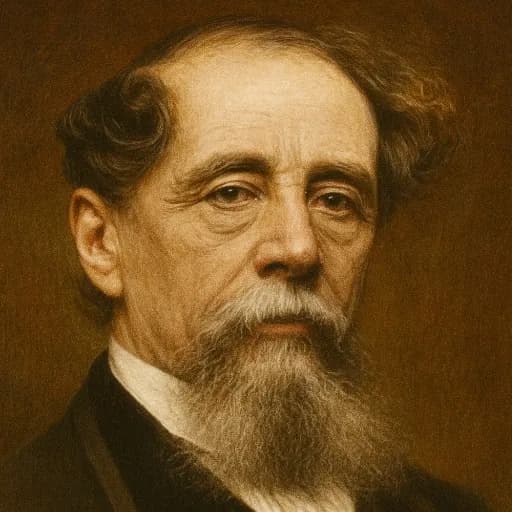
Now, what I want is, Facts. Teach these boys and girls nothing but Facts. Facts alone are wanted in life. Plant nothing else, and root out everything else. You can only form the minds of reasoning animals upon Facts: nothing else will ever be of any service to them. This is the principle on which I bring up my own children, and this is the principle on which I bring up these children. Stick to Facts, sir!
Minerva House … was "a finishing establishment for young ladies," where some twenty girls of the ages from thirteen to nineteen inclusive, acquired a smattering of everything and a knowledge of nothing.
Who knows what schools will be like twenty-five years from now? Or fifty? In time, the type of student who is currently a failure may be considered a success. The type who is now successful may be regarded as a handicapped learner — slow to respond, far too detached, lacking in emotion, inadequate in creating mental pictures of reality. Consider: what Thamus called the "conceit of wisdom" — the unreal knowledge acquired through the written word — eventually became the pre-eminent form of knowledge valued by the schools. There is no reason to suppose that such a form of knowledge must always remain so highly valued.
Technological competition ignites total war, which means it is not possible to contain the effects of a new technology to a limited sphere of human activity... What we need to consider about the computer has nothing to do with its efficiency as a teaching tool. We need to know in what ways it is altering our conception of learning, and how, in conjunction with television, it undermines the old idea of school.
In the United States, we can see such collisions everywhere... but... most clearly in the schools, where two great technologies confront each other in uncompromising aspect for the control of students' minds. On the one hand, there is the world of the printed word with its emphasis on logic, sequence, history, exposition, objectivity, detachment, and discipline. On the other there is the world of television with its emphasis on imagery, narrative, presentness, simultaneity, intimacy, immediate gratification, and quick emotional response. Children come to school having been deeply conditioned by the biases of television. ...children who cannot organize their thought into logical structure even in a simple paragraph, children who cannot attend to lectures or oral explanations for more than a few minutes at a time... They are failures because there is a media war going on, and they are on the wrong side — at least for the moment.
In introducing the personal computer to the classroom, we shall be breaking a four-hundred year-old truce between the gregariousness and openness fostered by orality and the introspection and isolation fostered by the printed word. Orality stresses group learning, cooperation, and a sense of social responsibility... Print stresses individualized learning, competition, and personal autonomy. Over four centuries, teachers, while emphasizing print, have allowed orality its place in the classroom, and have therefore achieved a kind of pedagogical peace between these two forms of learning, so that what is valuable in each can be maximized. Now comes the computer, carrying anew the banner of private learning and individual problem-solving. Will the widespread use of computers in the classroom defeat once and for all the claims of communal speech? Will the computer raise egocentrism to the status of a virtue?
Once upon a time, when he was still an innocent child, he believed that cleverness was the only yardstick that mattered, that as long as he was clever enough he would attain everything he desired. Going to university put him in his place. The university showed him he was not the cleverest, not by a long chalk. — Chapter 8, page 65.
That symbol always reminded me of that historic educational effort called “No child left behind,” which actually meant “No child gets ahead,” for compliance meant dumbing everything down so no one would learn more than the least capable. “Enough for all” really meant “Too little for everybody.”
p. 155
I mentioned that the small god said she brought the asteroid because of what man had become, and they retorted that man might not have become that if we had been relentless in our education of our young people and had not perpetuated ignorance under the guise of cultural sensitivity and the politically correct.
p. 498
As previously announced, we are already studying how to remedy the problems with your schools. The causes of their failures are many, ramified, and deeply entrenched in local politics. The most amazing thing about the situation is that fifty years ago, a century ago, your schools were far better than they are now! They taught fewer subjects and taught the better, with far more success and far less jargon. Everyone agreed then that children were children, that is, impulsive, naive, and ignorant creatures in need of training. No one suggested then that schools or teachers had to put up with hostility or violence or that students had “rights” to such behavior or that freedom of speech included rudeness in the classroom. Persons could be expelled from school and sometimes were. Children were expected to be good citizens and mannerly, and the schools taught citizenship and manners. A necessary adjunct to the school was the truant officer, who sought out and detained any child under eighteen who was not in school, and children did not get out of school until they could read and write and do arithmetic. As is true on so many worlds, the theoreticians and politicians have ruined a good thing.
p. 236