Quotes about ecology
222 quotes · 87 authors
Quotes
Look at the legacy of poor Eve's exile from Eden: the land shows the bruises of an abusive relationship. It’s not just land that is broken, but more importantly, our relationship to land.
p. 9
For all of us, becoming indigenous to a place means living as if your children's future mattered, to take care of the land as if our lives, both material and spiritual, depended on it.
p. 9
Regenerative economies that reciprocate the gift are the only path forward. To replenish the possibility of mutual flourishing, for birds and berries and people, we need an economy that shares the gifts of the Earth, following the lead of our oldest teachers, the plants. They invite us all into the circle to give our human gifts in return for all we are given. How will we answer?
If ever a society could be said to meet all the mythological criteria of the next lost civilization—a society that ticks all the boxes—is it not obvious that it is our own? Our pollution and neglect of the majestic garden of the earth, our rape of its resources, our abuse of the oceans and the rainforests, our fear, hatred and suspicion of one another multiplied by a hundred bitter regional and sectarian conflicts, our consistent track record of standing by and doing nothing while millions suffer, our ignorant, narrow-minded racism, our exclusivist religions, our forgetfulness that we are all brothers and sisters, our bellicose chauvinism, the dreadful cruelties that we indulge in, in the name of nation, or faith, or simple greed, our obsessive, competitive, ego-driven production and consumption of material goods and the growing conviction of many, fuelled by the triumphs of materialist science, that matter is all there is—that there is no such thing as spirit, that we are just accidents of chemistry and biology—all these things, and many more, in mythological terms at least, do not look good for us.
The impact of fungal diseases is increasing across the world: Unsustainable agricultural practices reduce the ability of plants to form relationships with the beneficial fungi on which they depend. The widespread use of antifungal chemicals has led to an unprecedented rise in new fungal superbugs that threaten both human and plant health.
p. 8
I pointed out that, according to Bev, half the ecological disasters in the world occurred when people removed “pests” or predators without thinking through the consequences.
p. 147
The solution to global warming is not to fix the world, but to fix ourselves.
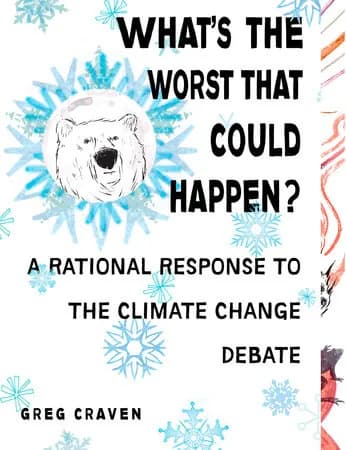
Climate change demands that we consume less, but being consumers is all we know. Climate change is not a problem that can be solved simply by changing what we buy—a hybrid instead of an SUV, some carbon offsets when we get on a plane. At its core, it is a crisis born of overconsumption by the comparatively wealthy, which means the world’s most manic consumers are going to have to consume less.
As environmental author Kenneth Brower writes, ‘The notion that science will save us is the chimera that allows the present generation to consume all the resources it wants, as if no generations will follow. It is the sedative that allows civilization to march so steadfastly toward environmental catastrophe. It forestalls the real solution, which will be in the hard, nontechnical work of changing human behavior. p. 289
New breakthrough technologies can make it easier, but we've already got, right now, everything we need to accomplish the task of transforming our energy economy away from fossil fuels. Except the willingness.
p. 218
Even depressions end. Climate chaos may not.
p. 195
Earth has been regarded for centuries as a giant self-regulating machine, absorbing all changes, great and small, and diluting their effects until they become invisible on a global scale. Mankind has taken that stability for granted. Careless of consequences, we have watched as forests were cleared, lakes poisoned, rivers dammed and diverted, mountains leveled, whole plains dug out for their mineral and fuel content. And nothing disastrous happened. Earth tolerated the insults, and always she restored the status quo.
Always—until now. Until finally some hidden critical point has been passed. The move away from a steady state is signalled in many ways: by increasing ocean temperatures, by drought and flood, by widespread loss of topsoil, by massive crop failure, and by the collapse of worldwide fishing industries.
p. 69