Quotes about children
263 quotes · 149 authors
Quotes
We have preachers and savants who dilate endlessly on the sanctity of family and childhood but who tolerate a system in which a casual observer can correlate a child's social origin with its physical well-being.
“My father says I have too much curiosity for my own good.”
Captain Henshaw chuckled. “He’s wrong there; too much curiosity never hurt anyone. When a boy has too little, that’s the time to start worrying.”
p. 16
I am about to do a very un-ambassadorial thing ... I am about to tell you what I really feel. ... We are gathered here, friends ... to honor [the Hundred Martyrs to Democracy], children dead, all dead, all murdered in war. It is customary on days like this to call such lost children men. I am unable to call them men for this simple reason: that in the same war in which [the Martyrs] died, my own son died. My soul insists that I mourn not a man but a child.I do not say that children at war do not die like men, if they have to die. To their everlasting honor and our everlasting shame, they do die like men, thus making possible the manly jubilation of patriotic holidays.But they are murdered children all same.And I propose to you that if we are to pay our sincere respects to the hundred lost children of San Lorenzo, that we might best spend the day despising what killed them; which is to say, the stupidity and viciousness of all mankind.Perhaps, when we remember wars, we should take off our clothes and paint ourselves blue and go on all fours all day long and grunt like pigs. That would surely be more appropriate than noble oratory and shows of flags and well-oiled guns. ... [I]f today is really in honor of a hundred children murdered in war ... is today a day for a thrilling show? The answer is yes, on one condition: that we, the celebrants, are working consciously and tirelessly to reduce the stupidity and viciousness of all mankind.
Parents are frequently inclined, because of a time-flattered sense of security, to take their children for granted. Nothing ever has happened, so nothing ever will happen. They see their children every day, and through the eyes of affection; and despite their natural charm and their own strong parental love, the children are apt to become not only commonplaces, but ineffably secure against evil. […] The astonishment of most parents at the sudden accidental revelation of evil in connection with any of their children is almost invariably pathetic. […] But it is possible. Very possible. Decidedly likely. Some, through lack of experience or understanding, or both, grow hard and bitter on the instant. They feel themselves astonishingly abased in the face of notable tenderness and sacrifice. Others collapse before the grave manifestation of the insecurity and uncertainty of life—the mystic chemistry of our being. Still others, taught roughly by life, or endowed with understanding or intuition, or both, see in this the latest manifestation of that incomprehensible chemistry which we call life and personality, and, knowing that it is quite vain to hope to gainsay it, save by greater subtlety, put the best face they can upon the matter and call a truce until they can think. We all know that life is unsolvable—we who think. The remainder imagine a vain thing, and are full of sound and fury signifying nothing.
I have said elsewhere that parents are the bones on which children sharpen their teeth.
Maybe what we really want is for our children to be the dominant ones! Maybe I'm trying to see my own ambitions fulfilled in them, and that would be wrong, so I should be content with what they are.
That's what survival means, for me. I thought it was a matter of staying alive, but it isn't. Nobody lives forever anyway. It's how you're remembered. It's what your children thought of you, what they think of you after you're dead. That's survival.
Marriage is about banality. Its purpose is banality, to create an environment of surpassing safety and predictability for young children to grow up in, the foundation of life, the root of inner peace.
"[I]f you ask me, most people have children just as their own enthusiasm about life begins to wane. A child allows us to revisit the excitement we once felt about, well...everything. A generation later, our grandkids bump up our enthusiasm yet again. Reproducing is a kind of booster shot to keep us loving life."
And, afterward, when a child was naughty or disobedient, its mother would say:
"You must pray to the good Santa Claus for forgiveness. He does not like naughty children, and, unless you repent, he will bring you no more pretty toys."But Santa Claus himself would not have approved this speech. He brought toys to the children because they were little and helpless, and because he loved them. He knew that the best of children were sometimes naughty, and that the naughty ones were often good. It is the way with children, the world over, and he would not have changed their natures had he possessed the power to do so.
"In all this world there is nothing so beautiful as a happy child," says good old Santa Claus; and if he had his way the children would all be beautiful, for all would be happy.
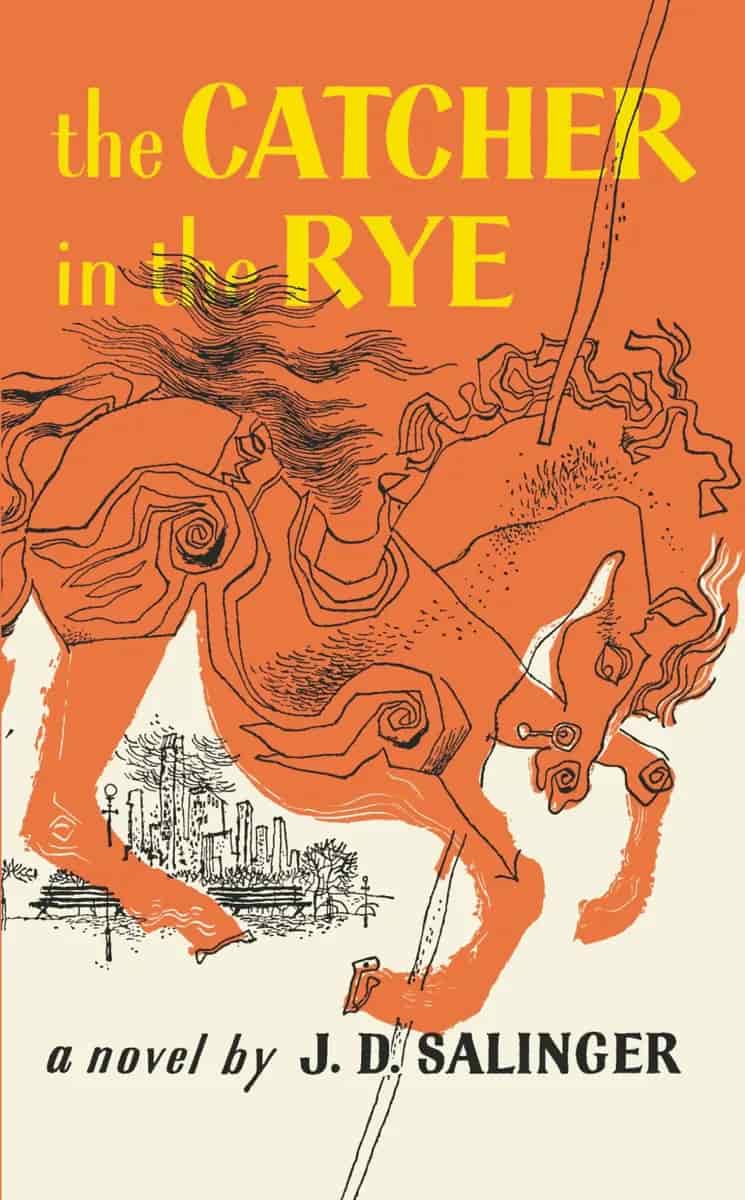
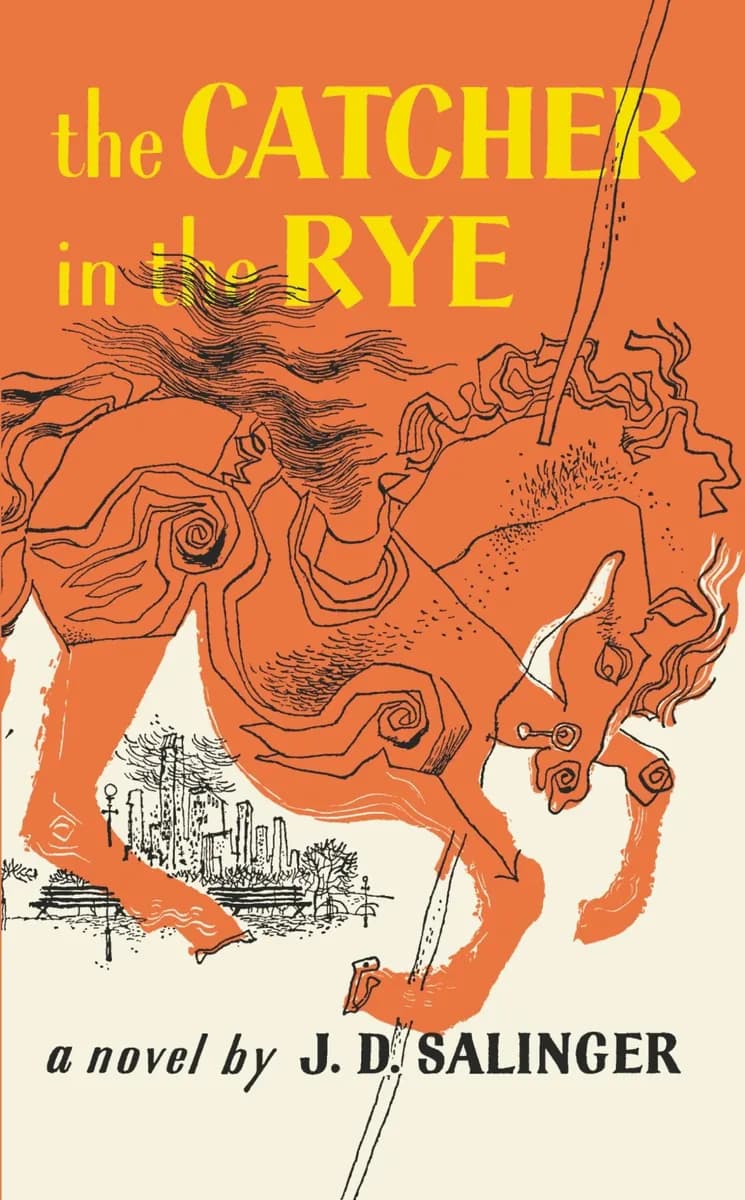
Then the carrousel started, and I watched her go around and around. There were only about five or six other kids on the ride, and the song the carrousel was playing was "Smoke Gets in Your Eyes." It was playing it very jazzy and funny. All the kids kept trying to grab for the gold ring, and so was old Phoebe, and I was sort of afraid she'd fall off the goddam horse, but I didn't say anything or do anything. The thing with kids is, if they want to grab the gold ring, you have to let them do it, and not say anything. If they fall off they fall off, but it's bad if you say anything to them.