Quotes about birth
24 quotes · 14 authors
Quotes
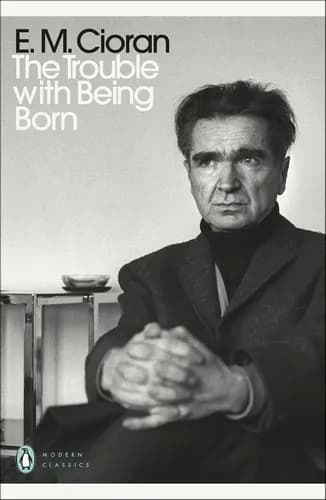
We do not rush toward death, we flee the catastrophe of birth, survivors struggling to forget it. Fear of death is merely the projection into the future of a fear which dates back to our first moment of life. We are reluctant, of course, to treat birth as a scourge: has it not been inculcated as the sovereign good — have we not been told that the worst came at the end, not at the outset of our lives? Yet evil, the real evil, is behind, not ahead of us. What escaped Jesus did not escape Buddha: "If three things did not exist in the world, O disciples, the Perfect One would not appear in the world. …" And ahead of old age and death he places the fact of birth, source of every infirmity, every disaster.
I used to ask myself, over a coffin: “What good did it do the occupant to be born?,” I now put the same question about anyone alive.
Three in the morning. I realize this second, then this one, then the next: I draw up the balance sheet for each minute. And why all this? Because I was born. It is a special type of sleeplessness that produces the indictment of birth.
There was a time when time did not yet exist. ... The rejection of birth is nothing but the nostalgia for this time before time.
In the fact of being born there is such an absence of necessity that when you think about it a little more than usual, you are left—ignorant how to react—with a foolish grin
The real, the unique misfortune: to see the light of day. A disaster which dates back to aggressiveness, to the seed of expansion and rage within origins, to the tendency to the worst which first shook them up.
I do not forgive myself for being born. It is as if, creeping into this world, I had profaned a mystery, betrayed some momentous pledge, committed a fault of nameless gravity. Yet in a less assured mood, birth seems a calamity I would be miserable not having known.
I know that my birth is fortuitous, a laughable accident, and yet, as soon as I forget myself, I behave as if it were a capital event, indispensable to the progress and equilibrium of the world.
From the blood of Medusa
Pegasus sprang.
His hoof of heaven
Like melody rang.
p. 181
This is, indeed, the sublime and special romance of the family. It is romantic because it is a toss-up. It is romantic because it is everything that its enemies call it. It is romantic because it is arbitrary. It is romantic because it is there. So long as you have groups of men chosen rationally, you have some special or sectarian atmosphere. It is when you have groups of men chosen irrationally that you have men. The element of adventure begins to exist; for an adventure is, by its nature, a thing that comes to us. It is a thing that chooses us, not a thing that we choose. Falling in love has been often regarded as the supreme adventure, the supreme romantic accident. In so much as there is in it something outside ourselves, something of a sort of merry fatalism, this is very true. Love does take us and transfigure and torture us. It does break our hearts with an unbearable beauty, like the unbearable beauty of music. But in so far as we have certainly something to do with the matter; in so far as we are in some sense prepared to fall in love and in some sense jump into it; in so far as we do to some extent choose and to some extent even judge—in all this falling in love is not truly romantic, is not truly adventurous at all. In this degree the supreme adventure is not falling in love. The supreme adventure is being born. There we do walk suddenly into a splendid and startling trap. There we do see something of which we have not dreamed before. Our father and mother do lie in wait for us and leap out on us, like brigands from a bush. Our uncle is a surprise. Our aunt is, in the beautiful common expression, a bolt from the blue. When we step into the family, by the act of being born, we do step into a world which is incalculable, into a world which has its own strange laws, into a world which could do without us, into a world that we have not made. In other words, when we step into the family we step into a fairy-tale.
It is as painful perhaps to be awakened from a vision as to be born.
What misery! and all these girls, broken by fatigue, were silly enough to come here at night and make babies, more flesh to toil and suffer! It would never end while they went on getting themselves filled with starvelings. Ought they not rather to stop up their wombs and close their thighs tight against approaching disaster? But then, perhaps he was only harbouring these dismal thoughts because he resented being alone when all the others were pairing off to take their pleasure.