Quotes about beauty
333 quotes · 199 authors
Quotes
Desire mediocrity in all things, even in beauty. A pleasant attractive countenance, which inspires kindly feelings rather than love, is what we should prefer; the husband runs no risk, and the advantages are common to husband and wife; charm is less perishable than beauty; it is a living thing, which constantly renews itself, and after thirty years of married life, the charms of a good woman delight her husband even as they did on the wedding-day.
Moreover, I maintain that the charm which these corsets are supposed to produce is in the worst possible taste; it is not a pleasant thing to see a woman cut in two like a wasp—it offends both the eye and the imagination. A slender waist has its limits, like everything else, in proportion and suitability, and beyond these limits it becomes a defect. This defect would be a glaring one in the nude; why should it be beautiful under the costume?
What is there to kindle the hearts of lovers for whom this perfection is nothing, for whom the loved one is merely the means to sensual pleasure? Nay, not thus is the heart kindled, not thus does it abandon itself to those sublime transports which form the rapture of lovers and the charm of love. Love is an illusion, I grant you, but its reality consists in the feelings it awakes, in the love of true beauty which it inspires. That beauty is not to be found in the object of our affections, it is the creation of our illusions. What matter! do we not still sacrifice all those baser feelings to the imaginary model? and we still feed our hearts on the virtues we attribute to the beloved, we still withdraw ourselves from the baseness of human nature.
She has everything against her, our faults and her own weakness and timidity; her beauty and her wiles are all that she has. Should she not cultivate both? Yet beauty is not universal; it may be destroyed by all sorts of accidents, it will disappear with years, and habit will destroy its influence. A woman's real resource is her wit; not that foolish wit which is so greatly admired in society, a wit which does nothing to make life happier; but that wit which is adapted to her condition, the art of taking advantage of our position and controlling us through our own strength. Words cannot tell how beneficial this is to man, what a charm it gives to the society of men and women, how it checks the petulant child and restrains the brutal husband; without it the home would be a scene of strife; with it, it is the abode of happiness. I know that this power is abused by the sly and the spiteful; but what is there that is not liable to abuse? Do not destroy the means of happiness because the wicked use them to our hurt.
Taste is formed partly by industry and partly by talent, and by its means the mind is unconsciously opened to the idea of beauty of every kind, till at length it attains to those moral ideas which are so closely related to beauty. Perhaps this is one reason why ideas of propriety and modesty are acquired earlier by girls than by boys, for to suppose that this early feeling is due to the teaching of the governesses would show little knowledge of their style of teaching and of the natural development of the human mind. The art of speaking stands first among the pleasing arts; it alone can add fresh charms to those which have been blunted by habit. It is the mind which not only gives life to the body, but renews, so to speak, its youth; the flow of feelings and ideas give life and variety to the countenance, and the conversation to which it gives rise arouses and sustains attention, and fixes it continuously on one object. I suppose this is why little girls so soon learn to prattle prettily, and why men enjoy listening to them even before the child can understand them; they are watching for the first gleam of intelligence and sentiment.
The toilet may attract notice, but it is the person that wins our hearts. Our finery is not us; its very artificiality often offends, and that which is least noticeable in itself often wins the most attention. The education of our girls is, in this respect, absolutely topsy-turvy. Ornaments are promised them as rewards, and they are taught to delight in elaborate finery. "How lovely she is!" people say when she is most dressed up. On the contrary, they should be taught that so much finery is only required to hide their defects, and that beauty's real triumph is to shine alone.
Moreover, though there are figures that require adornment there are none that require expensive clothes. Extravagance in dress is the folly of the class rather than the individual, it is merely conventional.
Sophie is not beautiful, but in her company men forget beautiful women, and beautiful women are dissatisfied with themselves.
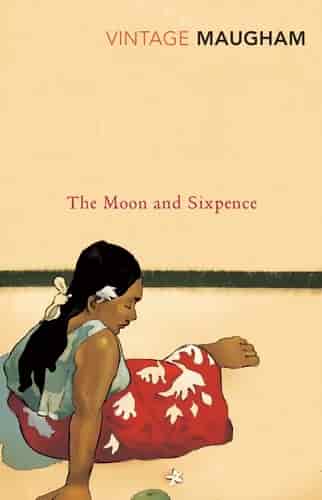
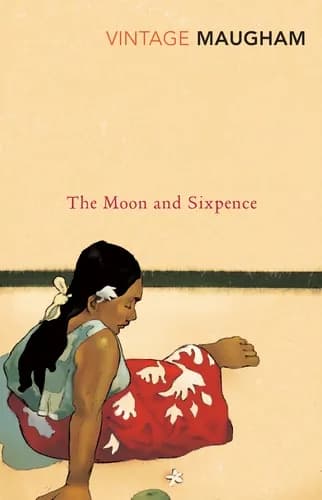
Beauty is an ecstasy; it is as simple as hunger. There is really nothing to be said about it. It is like the perfume of a rose: you can smell it and that is all.
p. 140
The poignancy which all beauty has.
p. 87
It's asking a great deal that things should appeal to your reason as well as your sense of the aesthetic.
A mathematician is only perfect insofar as he is a perfect man, sensitive to the beauty of truth.
Beauty is meaningless until it is shared.